
Exploring Morocco's Representation in French Documentaries
In a significant cultural event set against a backdrop of regional and international sensitivities, France Télévisions recently aired two special documentary evenings dedicated to Morocco, commemorating the 70th anniversary of the nation's independence. This initiative featured two prominent works that reflect on the shared history between Rabat and Paris, while also revisiting a relationship that has oscillated between tension and rapprochement over the decades. However, this renewed media focus cannot be divorced from the current political climate, particularly as it follows a wave of official Algerian anger triggered by a French media piece that sharply criticized the Algerian government's practices.
The first documentary, titled "Je t’aime moi non plus–France-Maroc" and directed by Benoît Bringer, presents a cinematic narrative of the complex relationship between the two countries, which the film describes as "doomed to understanding." The second documentary, set to air soon, emphasizes the pivotal role of Mohammed V in Morocco's independence, under the title "Mohammed V, père de l’indépendance marocaine." The timing of these documentaries coinciding with the 70th independence anniversary carries an explicit political overture from Paris towards Rabat, according to Lahcen Aqrati, an expert in international relations.
Aqrati articulated that this media endeavor is indicative of a newly emerging French understanding of Morocco's geopolitical and geostrategic significance within the region. He pointed out that the normalization of relations is rooted in France's acknowledgment of Morocco's sovereignty over Western Sahara, a development that lays the groundwork for a new strategic future. The documentaries, by highlighting key historical milestones, reinterpret the close cooperation that dates back to the era of the late King Mohammed V, who is celebrated as a national hero of independence, through to the consolidation of ties under King Hassan II, extending to the present day under King Mohammed VI.
Political Implications of Documentary Broadcasting
Current dynamics showcase Morocco as a significant regional power with a robust presence in Africa, a status that has historically led to diplomatic strains, peaking with the Pegasus affair. Nevertheless, the current documentaries convey political goodwill and a forward-looking message, signifying that Morocco no longer sees itself in a subordinate role but rather asserts an equal partnership with France. This shift reflects a profound change in the French approach towards Morocco.
Rachid Lazrak, the head of the North Africa Studies Center, noted that the series of French media broadcasts reveals a restructuring of France's representations in the Maghreb, with a clear political logic emerging: Morocco is now portrayed in French public media as a strategic partner, accompanied by a historical and political narrative that fosters closeness and reconstruction, while Algeria is often depicted through a more confrontational lens, especially during moments of tension.
Lazrak further emphasized that the airing of documentaries focusing on the depth of Franco-Moroccan relations, following a heated exchange with Algeria over a controversial French television program, is more than mere programming coincidence. It symbolizes a shift in France's priorities in North Africa from a strained relationship with Algeria, characterized by suspicion and friction, to a cooperative relationship with Morocco rooted in symbolic investment and diplomatic groundwork for deeper partnerships.
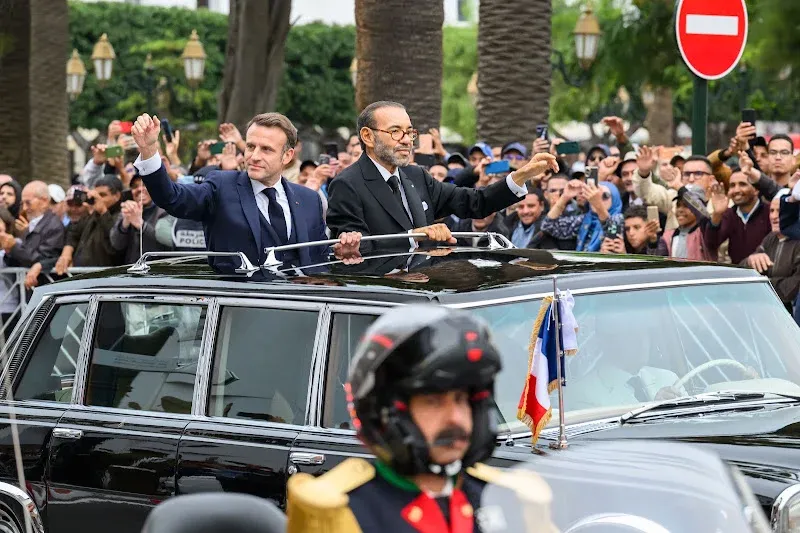
He suggested that this is not simply a temporary media maneuver aimed at pressuring Algeria, but rather a reflection of a deeper political transformation within France, which has been solidified since the summer of 2024 when President Emmanuel Macron publicly endorsed Morocco's autonomy proposal as the sole basis for a resolution. This stance was reiterated during his official visit to Rabat in October 2024, marking a clear diplomatic repositioning.
In conclusion, the current media coverage and French documentaries appear to serve the symbolic and cultural function of this political transition, preparing French public opinion and reshaping the narrative around Morocco in the French media landscape, rather than serving as a standalone pressure tool. While Paris certainly benefits indirectly from this positioning in managing tensions with Algeria, the underlying realities suggest that the pressure on Algeria is a beneficial side effect of a larger strategic French decision.
As reported by hespress.com.