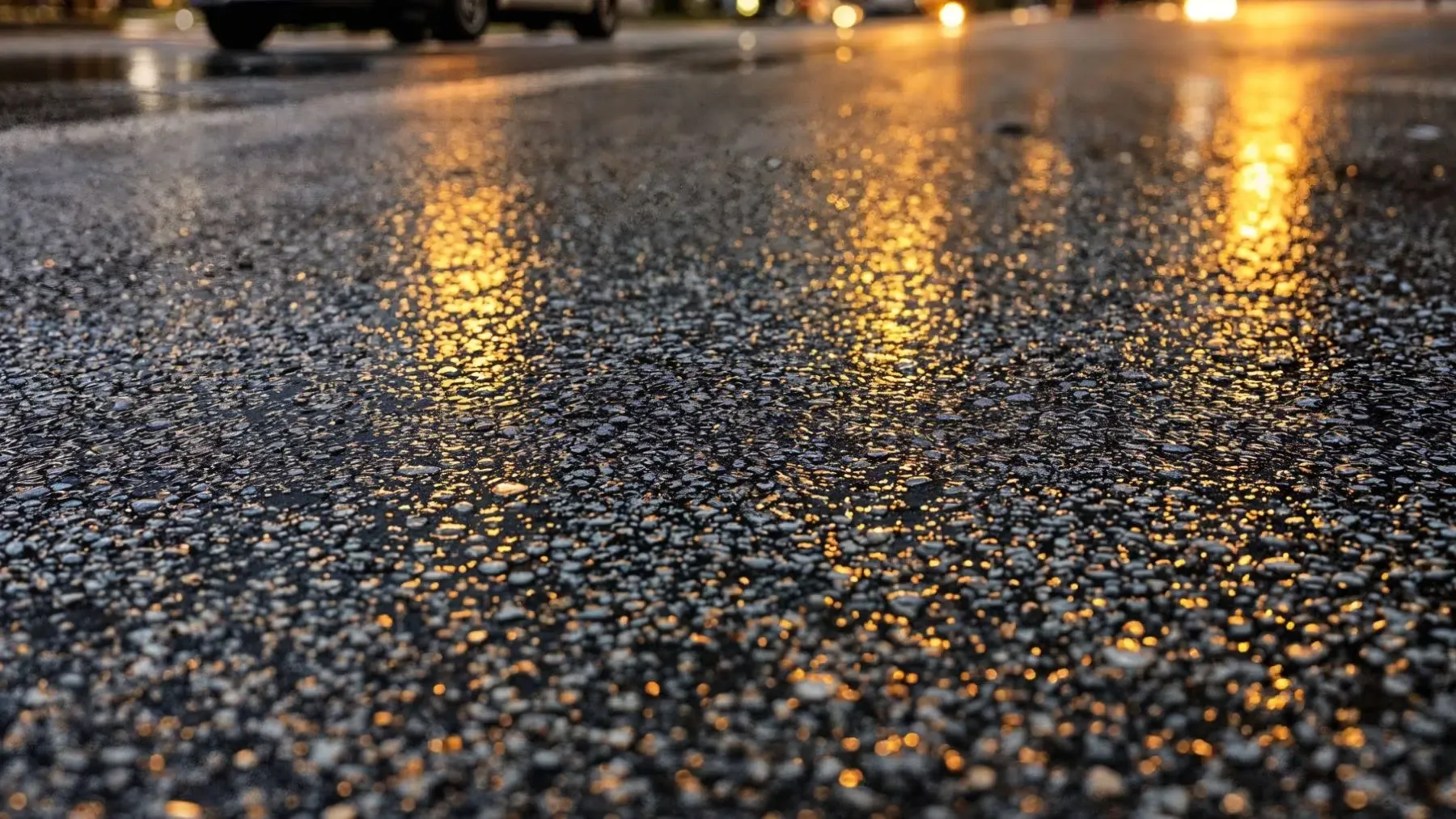

Morocco has initiated the implementation of an innovative **porous pavement** in the cities of **Marrakech** and **Agadir** as part of a sustainable urban development program launched in 2023. Unlike conventional asphalt, this unique material absorbs rainwater and releases it through evaporation, thereby reducing the heat accumulation on urban surfaces and mitigating the risk of flooding.
The Issues with Traditional Asphalt
Conventional asphalt absorbs up to **95% of solar radiation**, posing significant challenges in cities like Marrakech, where air temperatures can soar to 40 °C, causing street surfaces to exceed 60 °C. This phenomenon generates the **urban heat island effect**, keeping cities uncomfortably warm even during the night. The urgent need to address these escalating temperatures has prompted innovative solutions that not only maintain urban aesthetics but also promote environmental sustainability.
How Sponge Streets Operate
The new pavement features a network of **microscopic holes** that facilitate several critical functions: it filters water down to the subsoil instead of directing it into drainage systems, releases moisture through evaporation acting as a **natural cooling mechanism**, and enhances tire grip while minimizing vehicle noise. The immediate benefits of this innovative approach are multifaceted. Firstly, it significantly enhances **road safety** by quickly draining water, thereby reducing the risk of aquaplaning. Secondly, the reduction in surface temperatures leads to **less tire wear**, thereby prolonging the lifespan of vehicles. Furthermore, the porous surface prevents flooding by ensuring that heavy rain does not overwhelm drainage systems, while also increasing the efficiency of electric vehicles' range by reducing air conditioning demands during hot weather.
However, despite the promising initial results, there are technical challenges that need to be addressed, including **construction and maintenance costs**, durability issues with heavy truck and bus traffic, and the necessity for **constant cleaning** to prevent dust from clogging the pores and reducing absorption capacity. The porous pavement complements other green solutions like **eco-asphalt** and reflective or permeable surfaces, which are crucial in curbing the urban heat island effect. These alternatives help in thermal absorption reduction, filtering rainwater, and generating natural cooling effects, ultimately leading to cooler and more livable urban environments.
The environmental and social impacts of this initiative are noteworthy. It leads to **energy savings** as less air conditioning is required in nearby buildings, reduces pollution by minimizing smog formation through lower temperatures, and fosters a **circular economy** by being manufactured from recycled tires, plastics, and road debris, thus decreasing the carbon footprint.
The Moroccan commitment to implementing **sponge streets** represents a significant step forward in urban adaptation to climate change. By transforming traditional gray infrastructure into functional surfaces, the country aims to create cooler, safer, and more resilient cities that provide tangible environmental and social benefits.
As reported by noticiasambientales.com.