
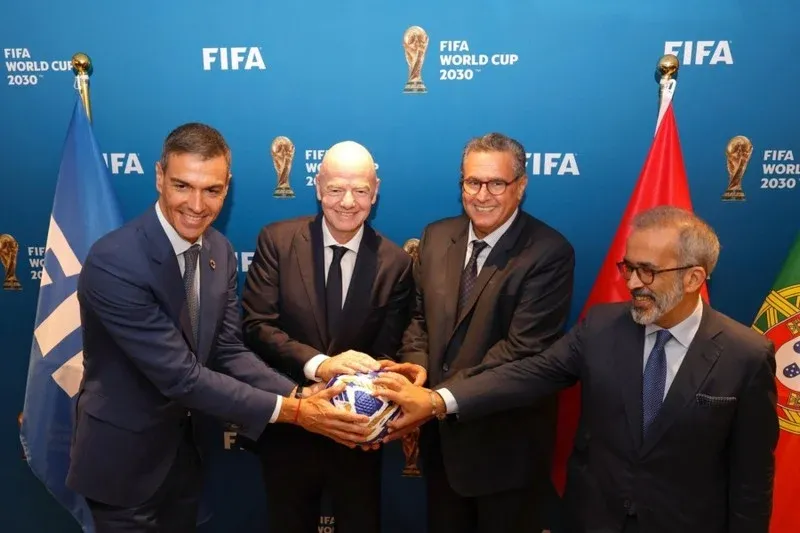

Morocco's Determined Pursuit for the 2030 World Cup Final
In the competitive landscape surrounding the hosting of the 2030 World Cup final, Morocco is firmly asserting its intentions to secure this prestigious event. A reliable source from Morocco has confirmed to Hespress that the nation is fully committed to its right to host the final, dismissing any prior agreements that might have favored Spain. This determination aligns with Morocco's comprehensive strategy, which aims to meet the technical and organizational standards set forth by FIFA. Central to this ambition is the grand construction of the Hassan II Stadium, alongside unprecedented investments in sports and logistical infrastructure, reflecting Morocco's growing presence in international football institutions.
Strategic Infrastructure Developments and Competitive Edge
Morocco is no longer merely a partner in the tri-nation bid alongside Spain and Portugal; it is positioning itself as a serious contender with substantial chances of hosting the World Cup's pivotal match. The progress of planned projects and the dynamic nature of Morocco's bid have sparked discussions about the competitive race between Casablanca and Madrid for the final's venue. The Hassan II Stadium, currently under construction in the vicinity of Casablanca, boasts a capacity of 115,000 spectators, making it a formidable rival to Madrid's iconic Santiago Bernabéu Stadium.
The Moroccan project extends beyond just building a colossal stadium; it encompasses a broader vision that includes developing transportation networks, expanding airports, and enhancing hotel and sports facilities. These initiatives are not solely linked to the World Cup but are part of a national strategy to position Morocco as a key player in hosting major sporting events. This strategic focus adds significant weight to Morocco's bid in the eyes of FIFA, particularly as the organization increasingly prioritizes sustainability, accessibility, logistical connections, and service quality in its evaluation of stadiums.
On the other hand, Spain is advocating for the Santiago Bernabéu Stadium, which has undergone extensive renovations and is backed by its historical significance and the global stature of Real Madrid. While these attributes have traditionally provided Spain with an advantage, Morocco's compelling project has begun to change the narrative, even influencing how the Spanish media discusses the issue.
Reflecting this shift, the Royal Moroccan Football Federation publicly refuted claims made by former Spanish Football Federation president Luis Rubiales, who alleged that Morocco had previously agreed to grant Spain the final match hosting rights. A spokesperson for the federation emphasized that such statements are "false and unrealistic," asserting that only Moroccan institutions are authorized to manage the World Cup bid's details, further confirming Morocco's unwavering stance in the competition for this highly sought-after hosting privilege.
In the backdrop of these developments, Spanish outlet "El Mundo" has revealed intriguing insights into the dynamics of the tri-nation bid. It suggests that Morocco's inclusion was not merely a numerical addition but has significantly altered the balance of power within the project. Initially, the idea of a joint hosting arrangement emerged in 2018 between Spain and Portugal, but it wasn't until March 2023 that Morocco officially joined, following the decision to exclude Ukraine.
The recent upheaval within the Spanish Football Federation after Rubiales' departure has diminished Spain's influence in certain football decision-making circles. In contrast, Morocco has strengthened its position through stable sports institutions, accelerated project completions, and enhanced relationships with FIFA, transitioning from a partner to a genuine competitor for the World Cup final hosting rights. As Morocco's infrastructure projects progress, particularly the Hassan II Stadium, and as transportation and airport development accelerate, the kingdom's image as an early investor in all facets of the bid is being solidified. This transformation is not merely a recent phenomenon but rather the culmination of years of strategic development, propelled by Morocco's historic performance in the Qatar 2022 World Cup and its successful hosting of various continental and international competitions, thereby increasing its credibility with international sports bodies.
As reported by hespress.com.
