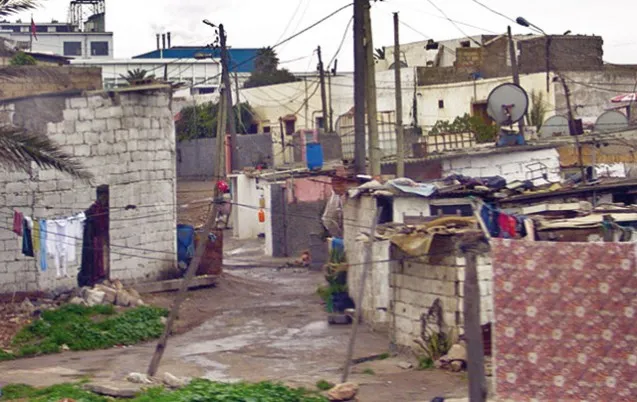

Accelerated Strategy for Slum Clearance
Morocco is rapidly advancing its comprehensive strategy aimed at the eradication of slum housing, a crucial initiative that involves the restructuring of priority metropolitan areas through a substantial financial commitment amounting to tens of billions of dirhams. The objective of this ambitious plan is to effectively address the challenges posed by shantytowns and buildings at risk of collapse by the year 2028, as highlighted in a recent analysis published by L’Economiste daily. This proactive approach underscores the government's commitment to improving living conditions and ensuring safety for its citizens.
According to statistics released by the Housing Ministry, there has been a significant rise in the number of households residing in slum areas, increasing from 270,000 during the first census in 2004 to an alarming 496,253 by the end of September 2025. This represents an astounding 83 percent increase. However, the government has already taken steps to address this issue by accommodating 370,384 families and mobilizing over 61 billion dirhams in resources. The interventions have primarily focused on rehousing, which constitutes 71 percent of the initiatives, while direct relocations account for 17 percent, and urban restructuring projects make up the remaining 11 percent.
Transformative Public Efforts and Future Plans
In recent years, the pace of public efforts to tackle slum housing has accelerated significantly. The annual average of households treated from 2018 to 2021 was around 6,200, but this figure surged to 18,000 families per year starting in 2022. Notably, the rate of new shantytown growth has plummeted, decreasing from an average of 104,000 additional families per year between 2012 and 2021 to approximately 6,800 households annually in the recent period, marking a remarkable 35 percent reduction in the expansion flow between 2021 and 2025. L’Economiste reports that 62 cities have achieved near-total resolution of slum conditions, with the national completion rate for the “Cities Without Slums” initiative currently at 72 percent. This objective will soon extend to include the Laâyoune-Saquia El Hamra region.
To address the approximately 120,000 remaining households in shantytowns, the 2024-2028 program introduces a new approach that emphasizes public-private partnerships and the development of social housing options, with apartments capped at 300,000 dirhams. This initiative will be supported by mobilizing developer stock through calls for expressions of interest, alongside direct housing assistance. Priority will be given to high-pressure urban centers, with significant funding allocated for ongoing resorption efforts: Casablanca-Settat aims to accommodate 62,000 families by 2027 with over 15.64 billion dirhams in financial support, of which 9.44 billion is state-funded; Marrakech-Safi has outlined two agreements to provide housing for 30,500 households in Marrakech by 2028, with 7.92 billion dirhams allocated, in addition to interventions on 500 substandard homes in Safi worth 126 million dirhams; and Rabat-Salé-Kénitra has earmarked 3.6 billion dirhams to rehouse 12,000 households.
Beyond the resorption of shantytowns, the government is also addressing the safety of buildings at risk of collapse under Law 94-12, facilitated by the National Urban Renovation Agency and specific financial instruments. Since 2012, a total of 84 agreements valued at 8.32 billion dirhams have successfully addressed 26,811 substandard buildings out of 43,000 identified, achieving a completion rate of 62 percent, with the remaining 16,189 structures currently under intervention. Targeted initiatives extend to the capital and the medinas of Tangier, Asilah, Tétouan, and Ouazzane, supported by a digital platform designed to monitor renovation projects. Furthermore, the direct housing assistance program has benefitted over 111,000 individuals, with an outstanding allocation of 9.1 billion dirhams, ensuring that homeownership remains a viable option through to the end of 2028.
As reported by northafricapost.com.