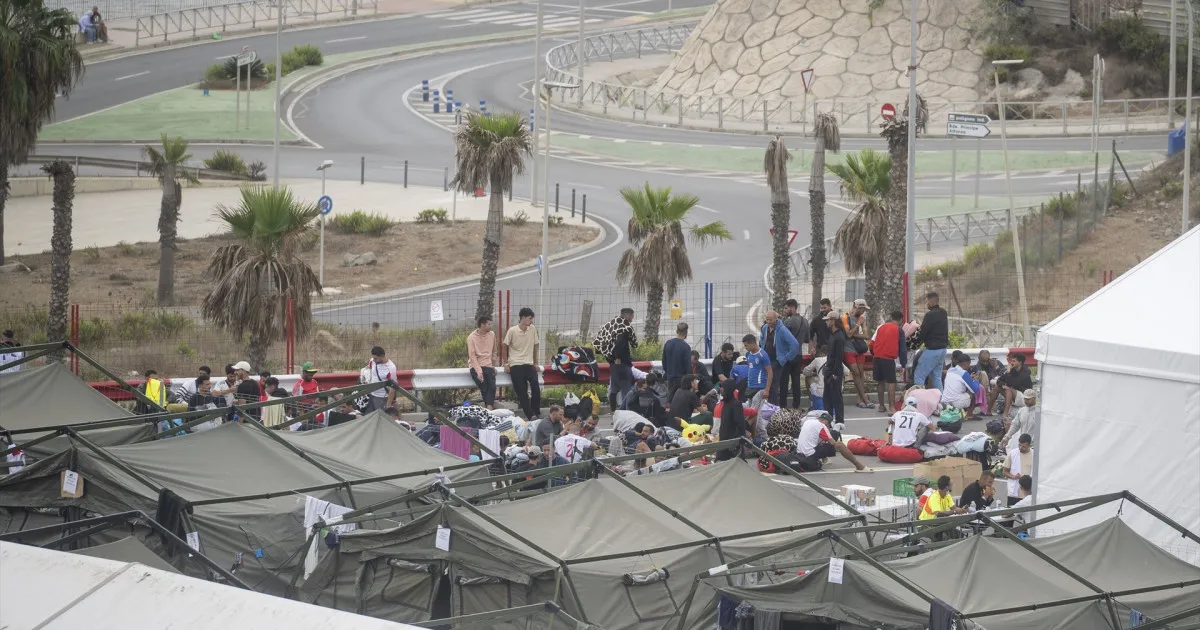
In a significant development on Saturday, a large contingent of would-be migrants, primarily from sub-Saharan Africa, was apprehended in northern Morocco close to the border with Ceuta, a Spanish exclave. This interception comes just two weeks after an unprecedented attempt by tens of thousands of individuals to breach the border, highlighting the ongoing challenges associated with migration in this region.
Reports indicated that 294 individuals were detained during this operation, with a considerable number being Moroccan nationals while others hailed from various sub-Saharan African nations. An official, who preferred to remain anonymous, characterized the operation as a routine measure aimed at curtailing irregular migration attempts toward Ceuta. Although the official did not disclose the specific number of arrests, they emphasized that the intervention was part of broader security measures established to thwart further crossings into Spanish territory.
Historically, the forested areas surrounding Ceuta and Melilla—Spain’s other North African exclave—have served as staging grounds for migrants seeking a route into Europe, especially during the summer season. This persistent influx of individuals has prompted Moroccan authorities to bolster their security protocols amid concerns of another mass crossing.
Migrants Driven by Conflict and Economic Despair
Among those caught in the recent crackdown was 22-year-old Abdessamad Dawad from Sudan, who shared that conflict and insecurity in his homeland compelled him to seek a better life in Europe. He expressed his desperation, stating, "I want to come to Europe because my country of origin, Sudan, is plagued by problems and insecurity." Another Sudanese migrant, Chams Edine Yakoub, aged 25, echoed similar sentiments, expressing his pursuit of improved economic opportunities. He lamented, "In Ceuta, in Europe, people are better cared for. There’s no work here. There’s no money. There’s no housing. There is absolutely nothing, I swear." These testimonies underscore the dire circumstances driving many individuals to risk their lives in search of refuge and prospects.
In light of the recent surge in migration attempts, Moroccan authorities have implemented enhanced security measures. These measures are partially aimed at countering a wave of misinformation circulating online, which falsely claimed that the border would be opened. Reports from Moroccan news outlets indicate that over 60 individuals have been arrested in recent days on suspicions of promoting irregular migration through social media channels.
Recent Events Highlight Border Tensions
This latest operation follows a chaotic episode two weeks prior when approximately 72,000 individuals, predominantly Moroccans, managed to cross into Ceuta over a few days, exerting immense pressure on the small territory, which has a population of around 84,000. In the aftermath of this mass crossing, most of the entrants were returned to Morocco, but the event was marred by tragic incidents and conflicting reports regarding fatalities. Moroccan authorities reported recovering the bodies of 11 individuals during the tumult, whereas Spanish officials placed the death toll at a staggering 80. Furthermore, the Moroccan Association for Human Rights, a prominent NGO, has estimated that at least 141 lives were lost during these harrowing events.
Ceuta and Melilla represent the only land borders between the European Union and Africa, serving as focal points for migrants aspiring to enter Europe. In recent years, Moroccan and Spanish authorities have increased cooperation on issues of migration and border security; however, large-scale migration attempts across these fortified borders continue to occur with alarming regularity.
As reported by rfi.fr.