Morocco's Financial Strategy: Introducing Sovereign Bonds
On Friday, Morocco announced the issuance of sovereign bonds amounting to $750 million in the international market. According to a report from the Moroccan official news agency, the bonds are divided into two segments: the first totaling $500 million with a repayment period extending until 2022, and the second comprising $250 million to be repaid by 2042. However, the report did not disclose the interest rate or the financial institutions involved in this operation. A senior official from Morocco's Ministry of Economy and Finance, who requested anonymity, confirmed in a statement to Anadolu Agency that the country plans to issue financial bonds worth $1 billion within weeks.
Last Tuesday, it was reported that Nizar Baraka, Morocco's Minister of Economy and Finance, traveled to London to discuss the potential issuance of these bonds. The Moroccan government has acknowledged that the country is facing an economic crisis, having recorded a budget deficit estimated at 7.1% at the beginning of this year. Idriss Azmi, the Moroccan minister responsible for the budget, had previously stated in an interview with Anadolu Agency that the Moroccan economy is grappling with "financial difficulties," which he attributes to external factors such as rising energy prices.
Debt Management and Economic Challenges
Earlier this year, the Moroccan government ruled out the option of resorting to international markets to address the foreign currency crisis, considering that the country's external debt is estimated to be around 57% of its Gross Domestic Product (GDP). The government emphasized the importance of keeping this ratio below 60% of GDP to fulfill Morocco's commitments to the International Monetary Fund (IMF). In August, Morocco entered into an agreement with the IMF to secure a credit line of $6.2 billion, although the government insists it will only utilize this line if absolutely necessary.
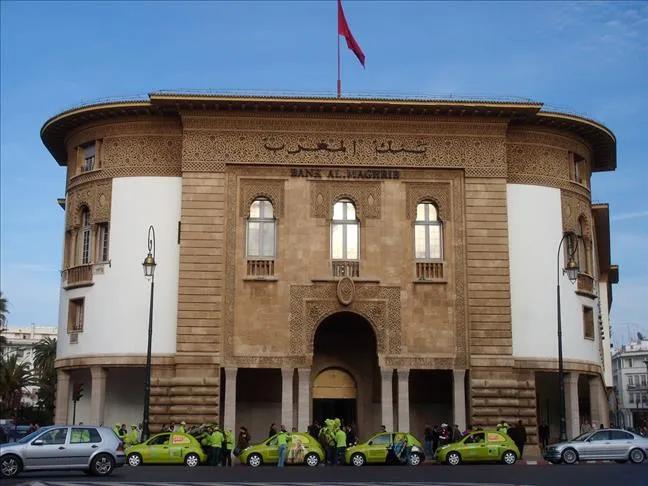
In December of last year, Morocco issued sovereign bonds worth $1.5 billion, which were divided into two parts: the first part worth $1 billion with an interest rate of 4.25% and a repayment period of 10 years, while the second part, valued at $500 million, is to be repaid in 30 years with an interest rate of 5.5%. Additionally, Morocco is currently experiencing a decline in foreign currency reserves, which stood at $16.985 billion at the end of March, equivalent to 145.2 billion dirhams, sufficient to cover the country's imports of goods and services for four months and three days, according to the Moroccan central bank.
This decline has been attributed to a 2% drop in tourism revenues and a 2.9% reduction in remittances from Moroccans living abroad by the end of February, despite foreign direct investments reaching $1.18 billion during January and February, compared to $614 million during the same period in 2012, as stated by Abdellatif Jouahri, the governor of the Moroccan central bank. The Moroccan government has committed to maintaining the country's foreign currency reserves at a level sufficient to cover at least four months of imports of goods and services.
As reported by aa.com.tr.