Morocco's Strategic Initiative for Water Management
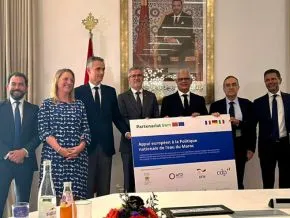
In a significant move to bolster its National Water Policy, Morocco has officially launched a comprehensive program worth 3.7 billion dirhams (approximately $402.2 million) in collaboration with the European Union delegation and the embassies of Germany, Italy, and France in Rabat. Announced by the Ministry of Equipment and Water on June 2, this initiative aims to enhance the governance of water resources in the Kingdom by focusing on four essential priorities. These include improving the understanding of water resources, managing the impacts of extreme weather events, strengthening institutional capacities in the water sector, and facilitating technical assistance and expertise exchange between Moroccan and European institutions.
The financial framework of this ambitious program is bolstered by a contribution of 514.4 million dirhams from the European Union, complemented by three loans amounting to around 3.2 billion dirhams from various European financial entities. Nizar Baraka, Morocco’s Minister of Equipment and Water, emphasized the importance of preserving water resources for future generations, underscoring that water remains a cornerstone of national sovereignty. He highlighted the proactive measures taken by the Kingdom in managing its water resources, which are becoming increasingly vital in the face of ongoing challenges.
Addressing Water Scarcity through Innovative Solutions
Morocco faces significant challenges regarding water scarcity, exacerbated by climate change, increased demand, ongoing drought conditions, and below-average rainfall. The country has entered its seventh consecutive year of drought as of 2025, a situation that poses serious threats not only to its water resources but also to its overall economic stability. In response to these pressing concerns, Morocco has initiated various measures to ensure a reliable water supply, including the construction of dams, development of water-transfer infrastructure, wastewater reuse, and the implementation of water efficiency programs for both drinking water and irrigation systems.
Among these strategies, seawater desalination has emerged as a crucial component of Morocco's water security plan. The government aims to satisfy over 50% of its drinking water requirements through desalination by the year 2030, while also supplying water to extensive agricultural regions, thereby reinforcing national food security. This multifaceted approach not only addresses immediate water supply challenges but also prepares the Kingdom for future uncertainties, ensuring sustainable access to this vital resource.
As reported by ecofinagency.com.