
Morocco's Strategic Advancements in Battery Manufacturing
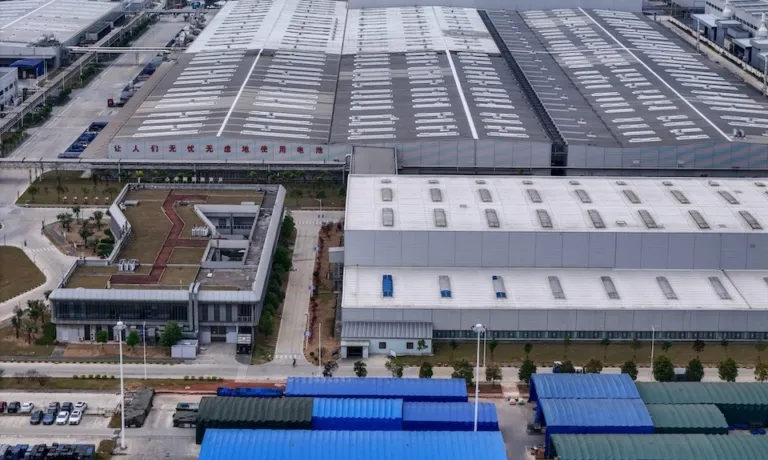
Morocco has emerged as a pivotal player in Africa's burgeoning battery manufacturing landscape, successfully attracting development finance, Chinese investments, and strategic factory agreements. This transformation has positioned the North African nation as a viable hub for creating a comprehensive and bankable ecosystem dedicated to battery production. A critical milestone in this journey was marked by the African Development Bank (ADB) approving a substantial $114 million loan for Gotion High-Tech, a Sino-German battery manufacturer, to establish a gigafactory in Morocco. This funding represents one of the largest commitments from development financiers towards an African battery project, illustrating a growing trend where financial institutions are beginning to back large-scale battery manufacturing initiatives across the continent.
This financial endorsement is not an isolated event; it follows a wave of investments from Chinese firms that are increasingly diversifying their operations to include battery manufacturing and essential components. For instance, Falcon Energy Materials, based in Abu Dhabi, has made strides in this sector by launching a pilot project for anode materials production in Jorf Lasfar, near Casablanca, with plans to produce 25,000 tonnes annually. This project is bolstered by partnerships with reputable Chinese companies, highlighting the collaborative efforts driving Morocco's battery industry.
In addition to Gotion's gigafactory, Morocco has also secured a $300 million agreement with BTR New Material Group to develop a cathode materials plant in Tangier. Furthermore, a joint venture between Cobco, a Chinese-Moroccan collaboration, has unveiled a battery components factory expected to support the production needs for nearly one million electric vehicles each year once fully operational. These initiatives not only enhance Morocco's vehicle manufacturing capabilities but also create an integrated ecosystem where battery materials, components, and vehicle production work in harmony, setting a precedent for other nations in the region.
BYD's Ambitious Plans for South Africa
In contrast to Morocco's established pathway, South Africa presents a different opportunity for Chinese automaker BYD, renowned as the world’s leading producer of battery electric and plug-in hybrid vehicles. Rather than focusing solely on vehicle assembly, BYD is exploring the feasibility of local battery manufacturing within the country. This strategic pivot was made evident during the recent launch of BYD Finance in partnership with South African banking group Absa, where company executives articulated their vision extending beyond mere vehicle sales to encompass local production capabilities.
BYD's extensive background in battery technology positions it uniquely to tap into South Africa's potential as a manufacturing hub. The South African government is proactively updating its Critical Minerals and Metals Strategy and has proposed expanding automotive incentives to foster local value addition in EV battery production. Such policy initiatives are designed to attract battery manufacturers while encouraging regional mineral processing, which could significantly benefit BYD's operations if it moves forward with local production. This approach not only aims to reduce dependence on imported components but also aligns with existing and forthcoming incentive programs that could bolster the company's manufacturing endeavors.
In summary, Morocco's rapid advancements in battery manufacturing serve as a compelling model for the rest of Africa, showcasing how a combination of Chinese investment, supportive government policies, and development finance can create a thriving battery production environment. Meanwhile, South Africa is in the process of establishing a conducive framework for attracting similar investments, albeit with substantial groundwork still needed. Ultimately, the experiences of these two nations illustrate that while mineral resources are vital, a cohesive and stable industrial policy is essential for fostering a robust battery industry capable of supporting Africa's electric vehicle market. The ADB's backing of Gotion's factory emphasizes a growing recognition among development finance institutions of the importance of supporting battery manufacturing as a vital component of the EV supply chain.
As reported by chinaglobalsouth.com.