
RABAT (ILO News) – Morocco has emerged as the first country in the Arab region and the second in Africa to adopt a national strategy dedicated to the care economy and care work. This landmark initiative signifies a crucial advancement in promoting gender equality, creating decent jobs, expanding social protection, and fostering inclusive growth. Developed under the guidance of the Ministry of Solidarity, Social Integration, and Family (MSISF), in collaboration with the International Labour Organization (ILO) and UN Women, this strategy is founded on a multi-year process of evidence generation, public policy dialogue, and technical assistance.
In response to demographic changes, including an aging population, evolving family structures, and the increasing demand for care services, the strategy outlines measures that encompass the entire lifecycle. This includes provisions for early childhood, maternity protection, paternity leave, parental leave, support for the elderly, individuals with disabilities, and those in situations of dependency or vulnerability.
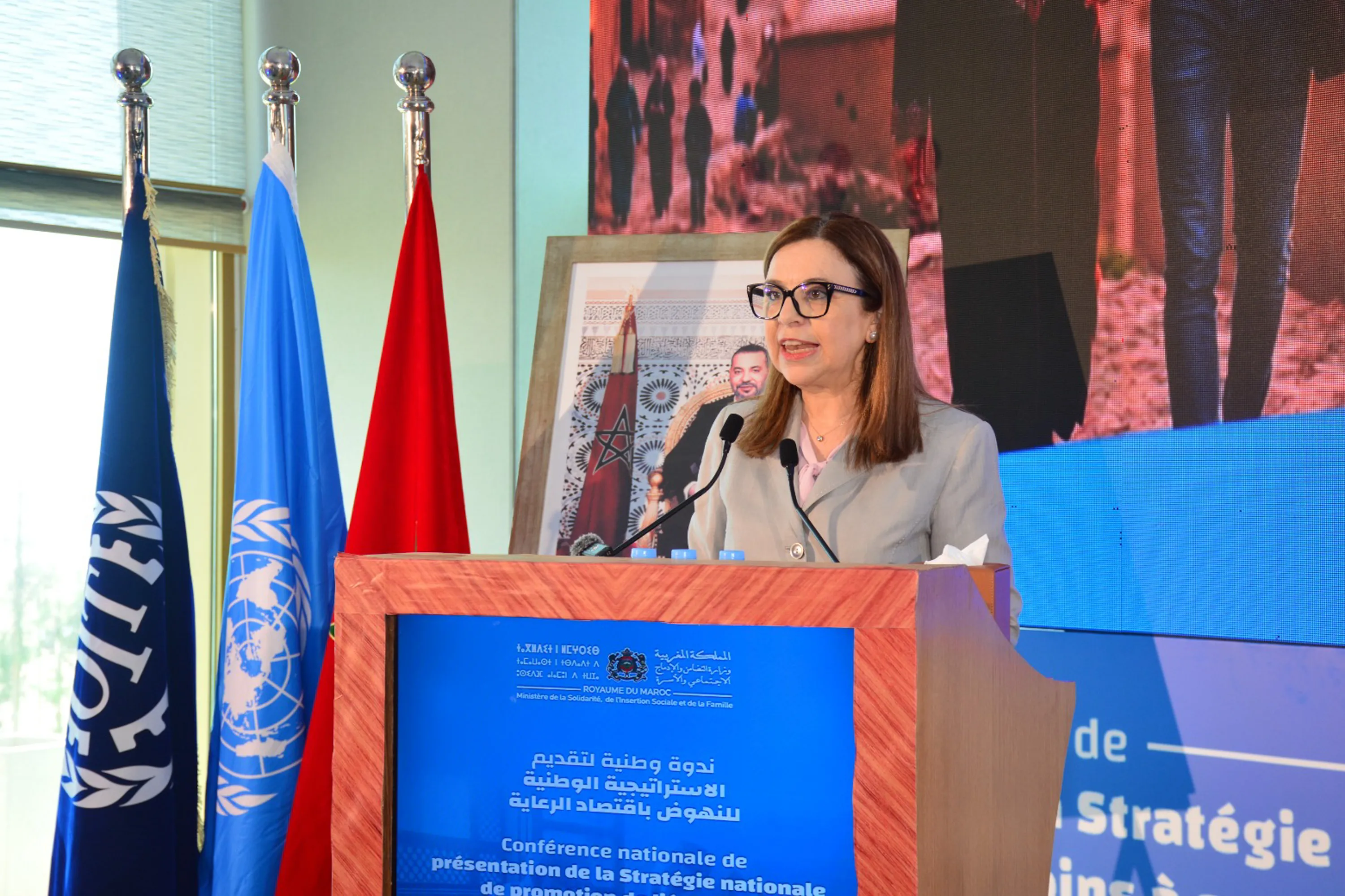
The strategy was unveiled during a national conference that brought together representatives from the government, social partners, the private sector, development partners, and civil society organizations. It proposes a coordinated approach that spans the entire lifecycle, aiming to position care as a cornerstone of Morocco's social and economic development.
Naïma Ben Yahia, Morocco's Minister of Solidarity, Social Integration, and Family, delivered an opening speech at the launch of the National Strategy for the Care Economy and Care Work in Rabat. She underscored that the launch of this strategy reflects the commitment of His Majesty King Mohammed VI to building a robust social state, grounded in Moroccan specifics, national achievements, and the Kingdom's international commitments. This strategy represents the culmination of a participatory process, transitioning the responsibility of care from being primarily shouldered by families—especially women—to a shared responsibility that contributes to decent job creation, women’s empowerment, professionalization of care professions, development of local services, and improved care for affected populations. Ultimately, it aims to transform the care economy into a genuine lever for inclusive and sustainable development.
This initiative not only sets a precedent for Morocco but also paves the way for other countries in the region to address demographic changes while creating decent jobs, expanding access to social protection, enhancing gender equality, recognizing unpaid care work, and promoting more inclusive growth.
The launch aligns with the International Youth Skills Day and highlights the essential role of skill development in professionalizing care professions, enhancing service quality, and meeting the growing demand for qualified personnel.
Chidi King, Chief of the Gender, Equality, Diversity, and Inclusion Branch at the International Labour Organization, expressed optimism regarding Morocco's pioneering role. She stated, "Morocco is now the first country in the Arab region and the second in Africa to integrate care work and the care economy into a national strategy. We hope this initiative will pave the way for other countries in the region, as investing in care is tantamount to investing in decent work, equality, fair labor markets, sustainable development, and resilient economies."
For UN Women, investing in the care economy is also deemed crucial for accelerating progress towards gender equality. Nyaradzayi Gumbonzvanda, UN Women’s Deputy Executive Director, emphasized that care should no longer be viewed as a private responsibility predominantly borne by women. Instead, it should be recognized as a public good, an essential service, a source of decent employment, and a pillar of inclusive and resilient economies. This strategy marks a significant advancement for Morocco and aligns with our shared vision of transforming care systems into a foundation for equality, dignity, and sustainable development.
According to analyses that supported the strategy’s development, ambitious investment in the care economy could lead to the creation of a substantial number of jobs by 2035, while also increasing women's participation in the labor market and improving access to quality care services.
The Moroccan Ministry of Solidarity, Social Integration, and Family is committed to implementing an integrated and sustainable national care system, in line with the Royal Vision aimed at building a more equitable, efficient, and sustainable social state, while sharing this experience internationally.
The International Labour Organization will continue to support the Moroccan government in the implementation of the National Strategy for promoting the care economy and care work, in accordance with the International Labour Conference resolution on decent work and the care economy, the 5R framework for decent care work, and the decent work agenda.
UN Women will continue to support Morocco in strengthening care systems, promoting the recognition, reduction, and redistribution of unpaid care work, and developing decent and remunerated jobs in the care sector as a foundation for gender equality, women’s economic empowerment, and inclusive and resilient economies.
As reported by ilo.org.