
World Cup 2030: A Landmark Event for Morocco
The curtains will soon close on the largest edition of the FIFA World Cup in history, and discussions have already begun regarding another potential expansion for the tournament in 2030. This unprecedented event is being hosted across three nations: the United States, Mexico, and Canada, featuring 48 teams instead of the traditional 32. Consequently, the total number of matches has surged from 64 to an astonishing 104. In four years, the World Cup will extend its reach to six countries, with FIFA President Gianni Infantino hinting at the possibility of including 64 teams. This article will explore the key details surrounding the upcoming World Cup in 2030.
Format and Logistics of the 2030 World Cup
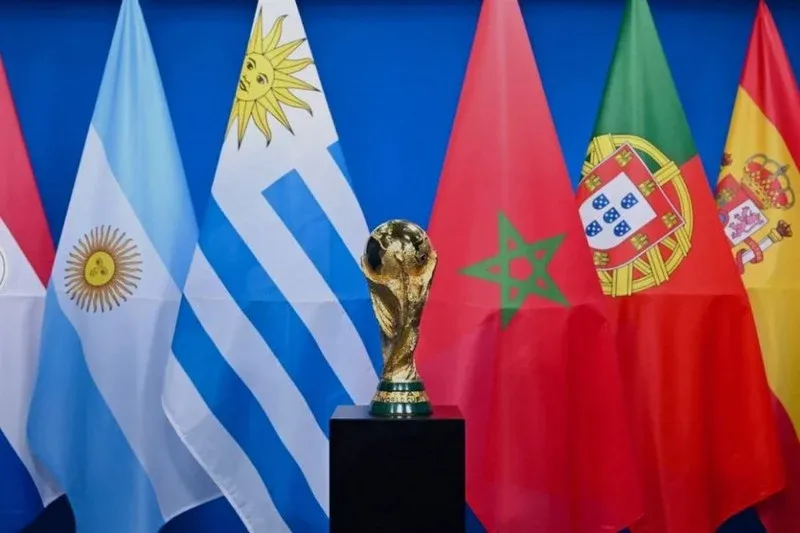
The majority of the matches during the World Cup 2030 will be held in Spain, Portugal, and Morocco. To commemorate the centenary of the inaugural World Cup in Uruguay in 1930, a total of three matches will take place in Argentina (Buenos Aires), Paraguay (Asunción), and Uruguay (Montevideo). These initial matches are strategically scheduled to allow participating teams ample time to acclimate after their transition to Europe and Africa, with their second matches set to occur approximately 11 to 12 days after the opening match.
The tournament is slated to run from June 8 to July 21, making it the longest World Cup in history, spanning 44 days. However, there are serious logistical concerns regarding the inclusion of 64 teams. A tournament featuring 64 teams would necessitate 128 matches, which is a significant increase of 24 matches from the current format, essentially doubling the number of matches held during the 2022 Qatar World Cup. This increase would require a greater number of games to be played in South America, which raises transportation challenges. Nevertheless, Infantino has asserted that the idea merits further exploration.
In terms of stadiums, the current plans indicate that six venues in Morocco, three in Portugal, and eleven in Spain will host matches. The iconic Camp Nou in Barcelona, with a projected capacity of 103,000 after renovations, and the new Hassan II Stadium near Casablanca, expected to accommodate 115,000 spectators, will be among the largest stadiums in the world.
The qualification process for the World Cup 2030 will also see significant changes, particularly in Europe, aligning it more closely with the league-style format used in European club competitions. Currently, teams compete in groups of four or five, playing home-and-away matches. The group winner qualifies directly, while the runner-up has a chance through playoffs. Under the new system, the top 36 European teams will be split into three groups of 12, with each team playing six matches against different opponents. The top teams will qualify for the World Cup, while additional spots will be determined through playoff matches.
The hosting nations will automatically qualify, and adjustments may also take place across other continental federations if the 64-team format is approved. The implications of hosting the tournament across three continents will have significant political ramifications for global football. The current rotation system means that North America, Europe, Africa, and South America will be ineligible to host the 2034 World Cup, paving the way for Saudi Arabia to step forward as a candidate to host the tournament, bolstered by its close ties with FIFA President Gianni Infantino.
As reported by hespress.com.