
Morocco's Commitment to Bilateral Relations with Spain
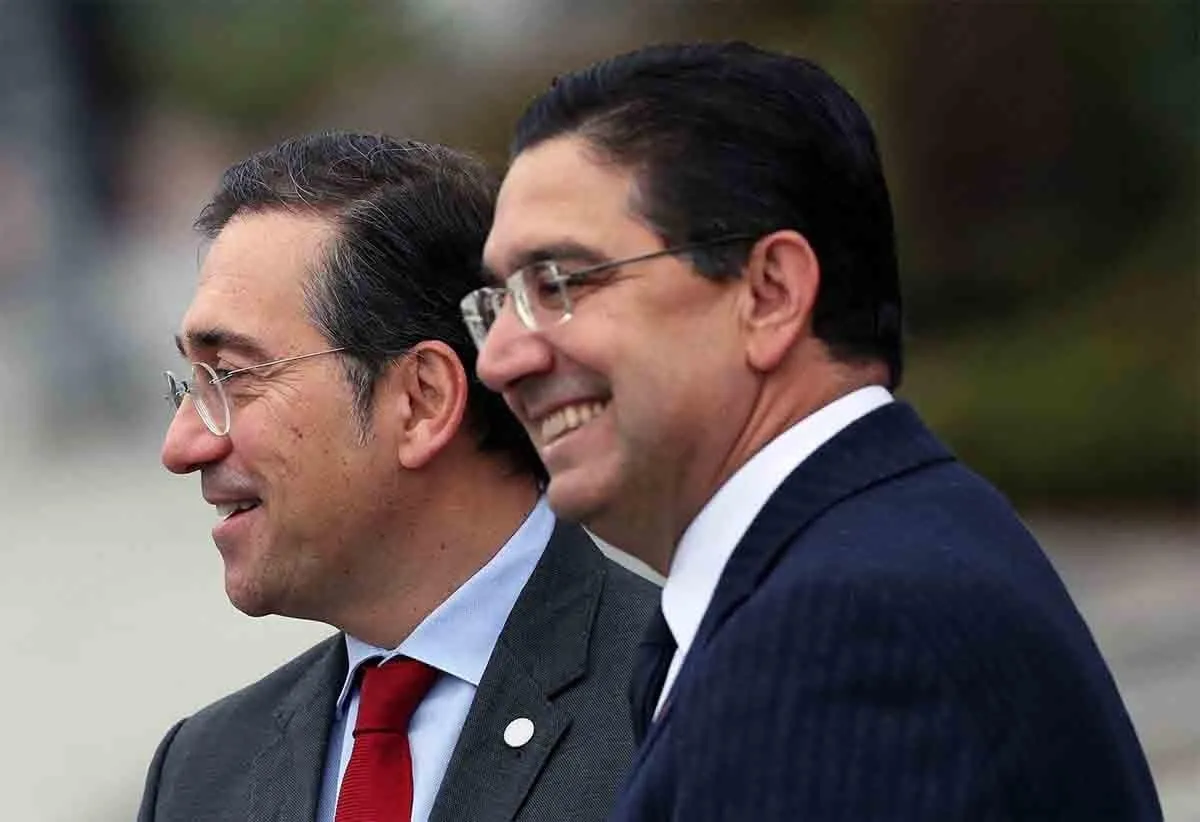
Morocco has firmly reiterated its commitment to the diplomatic framework established with Spain in 2022, emphasizing the significance of fostering constructive bilateral relations. This statement came in response to the Moroccan Foreign Minister, Nasser Bourita, who addressed political factions in Madrid that have criticized cooperation in migration management and other contentious issues. The essence of Rabat's stance is rooted in the historical Joint Declaration from April 2022, signed by King Mohammed VI and the Spanish Prime Minister, Pedro Sánchez. This agreement is viewed as the cornerstone of modern cooperation between Morocco and Spain, founded on principles of mutual respect, transparency, and the avoidance of unilateral actions. These guidelines have enabled both nations to navigate challenges without succumbing to recurring diplomatic crises.
Migration Bottlenecks and Repatriation Challenges
Bourita highlighted the numerous areas of agreement that have allowed the two Mediterranean neighbors to progress despite occasional friction points. He stressed that continuous communication and collaboration are preferred methods for resolving disputes, in lieu of public escalation or politicization. This approach has been pivotal in maintaining stability in a historically complex relationship. For Morocco, the bilateral relationship with Spain is not merely a strategic partnership but a necessary collaboration to address common challenges, including maritime security, counter-terrorism, and migration management. The Moroccan Foreign Minister urged Spanish legislators to recognize the long-term benefits of this partnership, rather than getting entangled in cyclical and unproductive controversies.
This reaffirmation coincided with a heated internal debate in Spain, where opposition parties — particularly conservatives and regional groups — have criticized Madrid's cooperative stance with Rabat on sensitive matters such as migration control, maritime borders, and the Western Sahara issue. Bourita directly addressed these criticisms, cautioning against a political narrative based on "unfounded accusations and sterile rhetoric." He accused certain political sectors in Spain of being disconnected from the current realities of Morocco and the strategic necessity of their bilateral cooperation. According to Bourita, these sectors fail to appreciate Morocco's evolving role in regional stability and development, opting instead for short-term political gains through demagoguery.
One of the most delicate issues in Morocco-Spain relations continues to be the management of migration and the repatriation of irregular migrants and unaccompanied minors. Madrid has faced ongoing criticism for delays in repatriating individuals to Morocco, a situation that Bourita claims is often misinterpreted or distorted by Spanish critics. He emphasized that Morocco has consistently shown a willingness to cooperate in safe and regulated readmission procedures. The bottleneck, he asserted, lies more with Spain's administrative and judicial structures than with Moroccan reluctance.
Morocco's position is clear: the responsibility for delays in repatriations largely rests on complex internal issues within Spain, including bureaucratic stagnation and political frictions among autonomous communities dealing with unaccompanied minors. This fragmentation complicates coordination and often paralyzes urgent transfers. By focusing on Spain's internal challenges, Bourita underscored that the blame for the stagnation in migration processes should not fall on Rabat. He characterized the deadlock as a cross-cutting administrative issue whose resolution necessitates political will and institutional harmonization within Spain.
The renewed diplomatic commitment between Morocco and Spain continues to leverage the momentum generated following the resolution of a significant rift in 2021. Bilateral trade, security cooperation, and logistical coordination have reached unprecedented levels as both nations work together with Portugal to co-host major international events like the 2030 FIFA World Cup. The collaboration extends beyond the economy and sports, emphasizing joint efforts in maritime surveillance and counter-terrorism, aimed at isolating their cooperation from internal political disputes. Maintaining direct communication channels remains a priority to ensure stability in the Mediterranean region.
In conclusion, Morocco's reaffirmation of the 2022 roadmap with Spain underscores the importance of a lasting partnership founded on respect and dialogue. While migration bottlenecks persist, the Moroccan Foreign Minister's critique of Spanish internal politics serves as a call for greater political maturity and pragmatism from Spanish legislators to preserve and deepen this essential bilateral relationship.
As reported by atalayar.com.