
Morocco's Trade Deficit Reaches New Heights
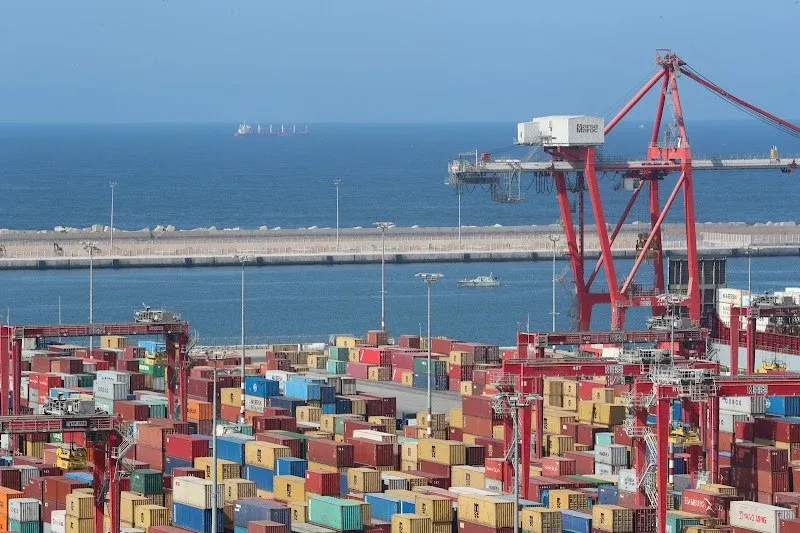
According to recent reports from the Office of Exchange in Morocco, the country has recorded a staggering trade deficit of 87.37 billion dirhams during the first quarter of 2026. This figure represents a notable increase of 23.9% compared to the same period last year. The report highlights that this deficit is primarily driven by a surge in goods imports, which rose by 11.1% to reach 208.2 billion dirhams, alongside a more modest increase in exports, which grew by 3.3% to total 120.7 billion dirhams. Consequently, the coverage rate has declined by 4.4 points, settling at 58%.
The increase in imports is particularly evident across various product categories. Raw materials saw a remarkable rise of 42.2%, accumulating to 13.05 billion dirhams. Additionally, imports of finished products intended for processing surged by 24.7% to 51.72 billion dirhams, while consumer-ready goods rose by 14.6% to 51.64 billion dirhams. Conversely, semi-finished products experienced a slight uptick of 2.1% to 40.02 billion dirhams, yet food products witnessed a decrease of 6% to 22.52 billion dirhams.
On the export front, the growth can be attributed mainly to positive developments in the aviation sector, which saw an increase of 12.6% to 8 billion dirhams, and the automotive industry, which expanded by 12.1% to 42 billion dirhams. However, not all sectors fared well; there were declines in exports from the textiles and leather industry, phosphates and their derivatives, electronics and electricity, as well as agriculture and food processing, with decreases of 14.1%, 7.4%, 4.7%, and 2.3%, respectively.
In parallel, the Office of Exchange reported a 16.1% increase in the services balance surplus, which now exceeds 38.7 billion dirhams. This positive trend is attributed to rising imports, which increased by 10.4% to 37.56 billion dirhams, and exports that climbed by 13.2% to 76.26 billion dirhams. This data underscores the complexities of Morocco's economic landscape as it grapples with a growing trade deficit while managing to maintain a surplus in services.
As reported by hespress.com.