
Launch of the Hajj Season in Morocco
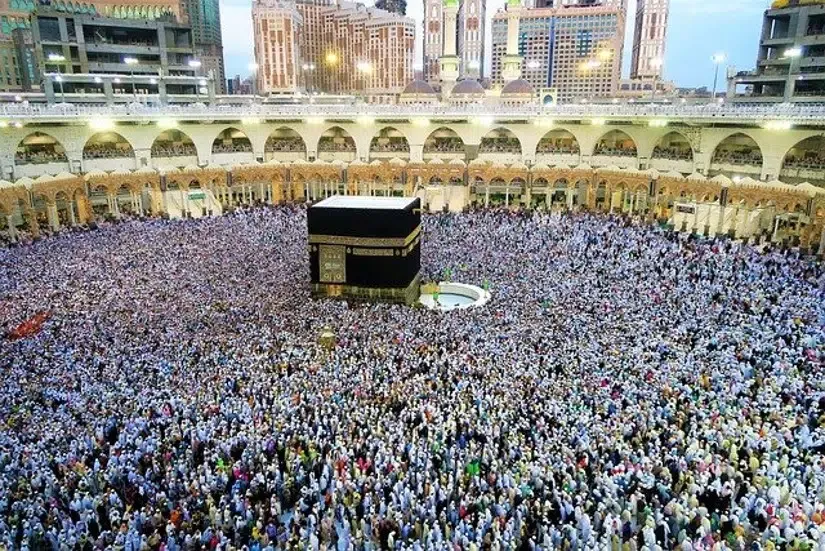
On May 4, 2026, the first group of Moroccan pilgrims departed from Rabat-Salé Airport en route to Mecca, marking the official commencement of the Hajj season. This event transcends mere religious observance; it carries significant societal and political implications. According to Ahmed Toufiq, the Minister of Habous and Islamic Affairs, a total of 78 flights have been scheduled for this season, with 69 of them heading directly to Medina. The return journey is planned to take place between May 31 and June 18, as reported by the state news agency MAP.
The organization of the pilgrimage involves tens of thousands of citizens and necessitates substantial administrative efforts. Traditionally, the Hajj in Morocco serves as a nexus between individual religious practice and state regulation, a dynamic that has become particularly evident in this year’s initial launch. Prior to their departure, the message from King Mohammed VI was read aloud, in his capacity as Amir Al-Mouminine (Prince or Leader of the Believers), outlining the religious framework of the pilgrimage. The monarch urged the faithful to act as “worthy representatives” of their nation, embodying the “noble values of Islam,” including righteousness, solidarity, and consideration for others, as noted by MAP.
State Coordination and Technological Integration
Beyond spiritual guidance, the King also emphasized that Moroccan civilization is founded on “unity, symbiosis, and connection with the constants and sacred symbols of the nation,” which has provided stability to the country. Thus, the pilgrimage is not merely described as a religious obligation but also as a moment of symbolic representation within the international Islamic context. Accompanying the religious framework is a pronounced institutional coordination. The responsible ministry not only organizes transportation and accommodation but also engages in long-term preparations. According to Idriss Morchid, a member of the Moroccan Hajj Mission, this preparation includes a six-month training program that addresses religious, legal, and organizational issues.
Moreover, Morocco is increasingly utilizing digital tools to standardize processes. The so-called “Nusuk” card consolidates personal data and facilitates access to the holy sites in Mecca. This initiative is complemented by the “Route to Mecca” program, which is now being implemented at Rabat-Salé Airport, allowing pilgrims to complete entry and customs formalities before their departure. Official reports indicate that this will significantly expedite processes upon arrival in Saudi Arabia.
The close coordination with Saudi Arabia is a crucial component of the pilgrimage organization. In his address, the King highlighted the “fraternal relations” with King Salman and Crown Prince Mohammed bin Salman and urged the pilgrims to adhere to Saudi regulations. This collaboration extends beyond operational matters, pointing to Morocco's involvement in a broader framework of Islamic states, where religious practice, diplomatic relations, and institutional cooperation intersect.
For the pilgrims themselves, the Hajj remains a religious and biographical pinnacle, as expressed to MAP. Concurrently, the extensive organization indicates that the state heavily structures the conditions of this experience. In an environment where there are rising expectations for security and efficiency, the pilgrimage increasingly becomes a measure of state capability and a domain where religious legitimacy and administrative governance converge.
As reported by maghreb-post.de.