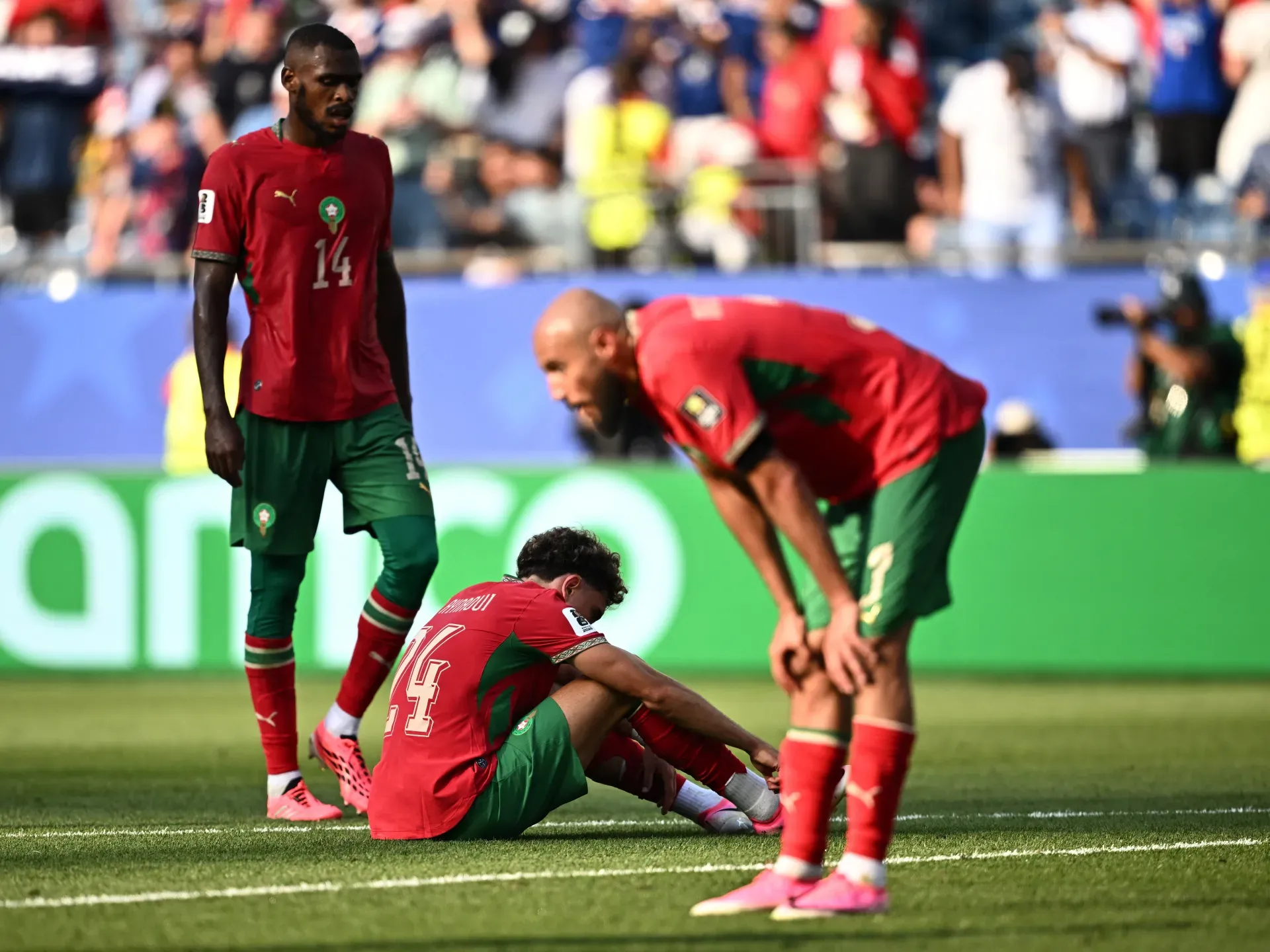

Morocco's journey in the 2026 World Cup came to an abrupt end with a 2-0 defeat to France in the quarterfinals, mirroring their previous encounter with the same formidable opponent in the semifinals of the last World Cup held in Qatar. Despite this setback, Morocco's aspirations are far from extinguished, especially as they prepare to co-host the upcoming World Cup in 2030 alongside Portugal and Spain. This next chapter is anticipated to be a significant opportunity for the Moroccan team, which aims to not only host but also compete vigorously for the prestigious trophy.
During the recent tournament, Morocco showcased commendable performances that positioned them as a strong contender. They became the first African nation to reach consecutive quarterfinals, having previously eliminated the Netherlands and providing a tough challenge to Brazil in their opening match of the tournament held across Canada, Mexico, and the United States. Initially, there were concerns regarding the team's prospects following a coaching transition just three months ahead of the tournament. However, Mohamed Ouahbi, who took over the senior coaching role from the junior ranks, managed to lead the team effectively, building on the momentum from their victory at the U-20 World Cup last year.
Looking forward, Morocco is keen to capitalize on their co-hosting role for the 2030 World Cup, which secures them a spot in the tournament. Ouahbi expressed confidence in the potential of his young squad, stating, “We have a young team who want to grow, who will continue to do so. We have talented players who will enable us to grow.” This optimistic outlook is coupled with a realistic acknowledgment of the challenges ahead, particularly the upcoming Africa Cup of Nations tournaments in 2027 and 2028, which will be critical for the team's development and success.
Historically, Morocco has faced difficulties in the Africa Cup of Nations, despite holding a prominent ranking on the continent. With only one championship win in 1976 and a controversial award of the 2025 title following Senegal's disqualification, the team's aspirations extend beyond just participation. Ouahbi emphasized the need for a solid qualification for the Cup of Nations and a determined effort to win, indicating that these steps are essential for establishing a team capable of achieving future dreams and securing titles.
As Morocco gears up for the Cup of Nations qualifiers set to commence in September, they will face teams like Gabon, Lesotho, and Niger, which are anticipated to provide a manageable challenge. Nevertheless, if Morocco harbors serious ambitions for success in the 2030 World Cup, they must seek out tougher opponents to refine their skills and enhance their competitiveness. Ouahbi reflected on the distinct nature of the Cup of Nations compared to the World Cup, noting, “Of course, the Cup of Nations is not the World Cup. This is a different type of competition, with opponents that have different styles of play,” highlighting the importance of adaptability and preparation for the diverse challenges that lie ahead.
As reported by aljazeera.com.