Morocco's Strong Stance on Maritime Security
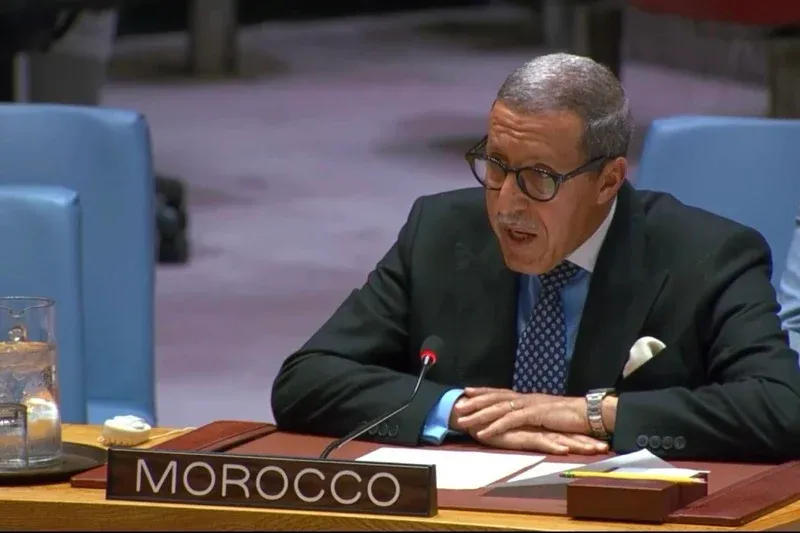
In a significant diplomatic declaration at the United Nations, Morocco's permanent representative to the organization, Omar Hilal, emphasized the country's condemnation of the utilization of straits and international maritime corridors as tools of pressure. This statement was made during a high-level open debate on maritime security held in New York, highlighting Morocco's commitment to safeguarding international waters from coercive practices.
During the session, chaired by Bahrain's Foreign Minister Abdul Latif bin Rashid al-Zayani, who is presiding over the Security Council for April, Hilal characterized the current maritime situation as "deeply concerning." He strongly denounced the employment of straits and international waterways as instruments of intimidation and extortion, particularly pointing out the veiled threats associated with the closure of the Strait of Hormuz, a crucial global energy artery.
Hilal asserted that no nation, regardless of its claimed justifications, has the right to hold the world hostage through its maritime passages. He argued that the seas are a shared legacy of humanity, insisting that they should not be used as bargaining chips by countries that have adhered to a doctrine of hostility for decades. Furthermore, he condemned the attacks occurring in the Arabian Sea, Gulf of Aden, and the Red Sea, conducted by armed groups acting on behalf of specific nations, labeling these acts as blatant violations of international law and the UN Charter.
Call for International Responsibility
In his address, Hilal called upon the international community to acknowledge its "historical responsibility," stressing that allowing geography to become a hostage of ideology and transforming maritime corridors into weapons in the hands of destabilizing states is unacceptable. He underscored that maritime security is no longer a secondary concern but has become a pivotal pillar of global peace and security, noting that over 90% of global trade flows through seas and oceans. Any infringement on maritime navigation or security poses a "direct assault on the economies of nations and their livelihoods."
Highlighting Morocco's unique geographical position at the confluence of Africa and Europe along the Strait of Gibraltar—one of the most strategic maritime passages worldwide—Hilal declared that freedom of navigation for Morocco is not merely a diplomatic choice but a legal obligation and an existential commitment dictated by geography, history, and the preservation of shared prosperity. He reaffirmed Morocco's unwavering respect for international maritime law principles.
Moreover, Hilal spotlighted Morocco's active role in ensuring regional and international maritime security through its participation in maritime cooperation frameworks and efforts to combat smuggling along its coastlines and those of its partners. He mentioned the significant momentum introduced by King Mohammed VI through the Atlantic initiative, which provides African coastal nations with access to the Atlantic Ocean, exemplifying solidarity, economic integration, and shared development, transforming geography from an obstacle into an opportunity for regional benefit.
Concluding his remarks, Hilal reiterated Morocco's full commitment to working alongside the international community to strengthen the security of vital maritime corridors, uphold international navigation freedoms, and protect maritime law from violations. He urged the Security Council to adopt clear positions appropriate for the current circumstances, warning that threats to our seas today will jeopardize our collective stability tomorrow.
As reported by hespress.com.