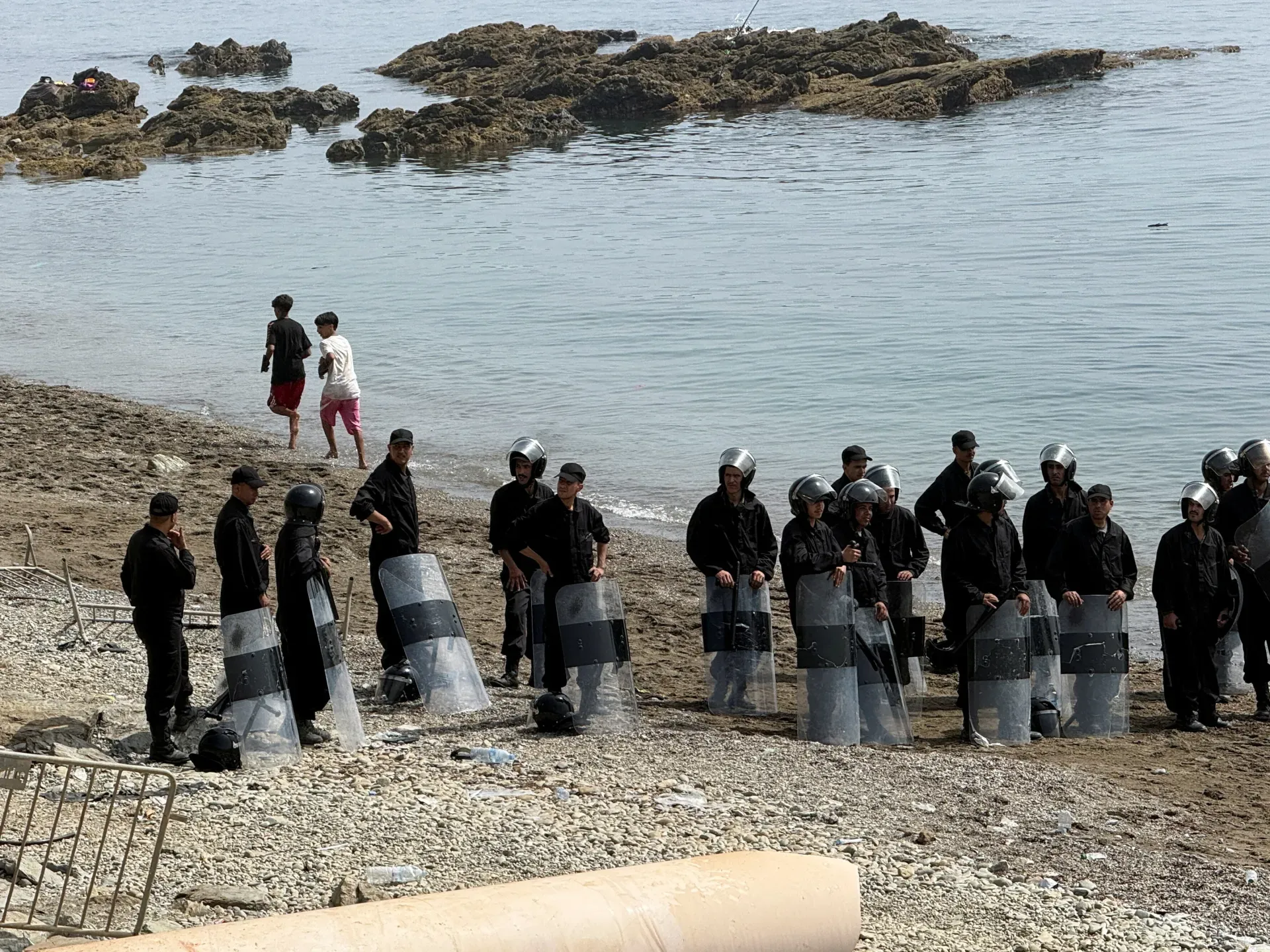

The Moroccan Ministry of Interior has announced a significant enhancement of security measures along its borders with the Spanish exclaves of Ceuta and Melilla. This initiative comes in response to a surge in cross-border migration attempts, ignited by a recent disinformation campaign circulating on social media that has called for mass crossings into Ceuta. Authorities have expressed their commitment to preventing further illegal entries, as they work diligently to address the complex situation unfolding at their borders.
In a statement released on Wednesday, the Ministry revealed that it has ramped up security protocols due to an alarming increase in attempts to cross into Spanish-administered Ceuta. This uptick was largely spurred by online messages suggesting that the border between the Moroccan town of Fnideq and Ceuta would open on August 15, coinciding with a public holiday in Spain. The Ministry reported that it had identified numerous publications and anonymous social media posts inciting collective illegal crossing attempts, which prompted the need for heightened vigilance.
Rachid El Khalfi, a spokesperson for the Moroccan Interior Ministry, emphasized that all necessary measures are being implemented to thwart any illegal crossings and to apprehend individuals attempting to participate in these ventures. In light of these developments, a group of suspected organizers has been summoned for questioning as part of an ongoing investigation. This proactive approach underscores Morocco's resolve to tackle the migration crisis effectively.
The situation escalated dramatically in late July when around 72,000 individuals from Morocco crossed into Ceuta irregularly, primarily by sea, within just a few days. In response to this crisis, Moroccan authorities have taken a firm stance against those facilitating these crossings. Notably, on August 7, seven Moroccan taxi drivers were sentenced to prison terms of up to six months and fined approximately $1,070 each for their roles in transporting migrants to the border. The national taxi union has criticized these penalties, describing them as severe and unexpected, especially given the lack of official directives prohibiting passenger transport.
While many of those who crossed have since been returned to Morocco by local and Spanish forces, local authorities in Ceuta report that around 2,000 people remain in the territory. Among them, approximately 1,000 are minors, who, under Spanish law, cannot be deported. The Moroccan Interior Ministry has urged Spanish authorities to expedite the repatriation of these children, highlighting the urgency of the situation.
In the aftermath of the migration crisis, Moroccan authorities have reported the recovery of 11 bodies, while Spanish officials estimate at least 80 fatalities. However, the Moroccan Association for Human Rights, a non-governmental organization, has raised concerns about the death toll, estimating that at least 141 individuals may have lost their lives during this tragic episode.
As reported by aljazeera.com.