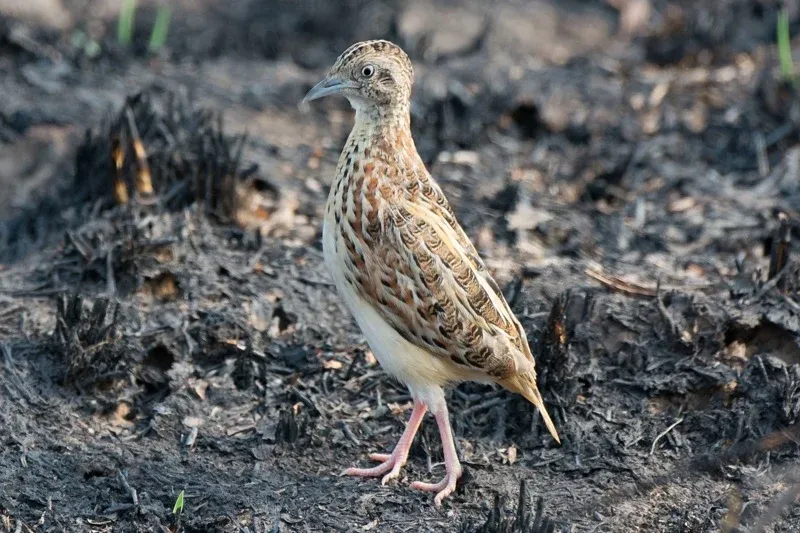

Conservation Efforts for the Zarkil Bird in Morocco
In a significant move towards wildlife conservation, Morocco's National Agency for Water and Forests has announced its ongoing commitment to a program aimed at preserving the endangered Zarkil bird, scientifically known as Turnix sylvaticus sylvaticus. This initiative is vital for protecting this vulnerable subspecies, which has been facing severe threats of extinction. The agency recently revealed the successful breeding of the first group of these birds in captivity, marking a promising step forward for their survival.
The agency's program encompasses various strategies, including monitoring and tracking wild populations of the Zarkil bird, breeding efforts in controlled environments, and preserving genetic diversity. Such measures are crucial for ensuring the long-term viability of this species, which has become increasingly difficult to spot in its natural habitat due to its remarkable ability to camouflage and hide.
Historically, the Zarkil bird thrived in agricultural and natural landscapes across the Mediterranean basin. However, its numbers have dramatically declined over the last few decades, leading to its near disappearance from most of its original range. Notably, Morocco remains one of the last bastions for these birds, with populations still found along the Atlantic coast in the Oualidia area, where traditional agricultural practices provide suitable habitats for their survival.
As part of the conservation efforts initiated in 2026, the program's initial focus has been on exploring and tracking the Zarkil bird populations in the wild. This effort has successfully led to the collection of several eggs, which have been incubated and hatched in captivity within Morocco. Consequently, this has resulted in the formation of the first captive-bred group of Zarkil birds, aimed at increasing their numbers outside their natural environment.
The first breeding nucleus is currently housed at the Ain Sebaa Zoo in Casablanca, serving as an essential reserve for the species’ conservation and potential future reintroduction into their historic ranges in Morocco. The agency emphasizes the importance of meticulous management of this breeding nucleus, focusing on aspects such as reproduction, health monitoring, and genetic management. This approach aims to maintain the highest possible level of genetic diversity within the captive populations, thereby enhancing their integration and future contributions to conservation efforts in their natural habitats.
This initiative aligns with Morocco's broader strategy for forest management from 2020 to 2030, which places a strong emphasis on biodiversity conservation, protection of endangered species, and the enhancement of knowledge and skills related to preserving the nation's natural heritage.
As reported by hespress.com.