
The Rise of Morocco as a Strategic Automotive Gateway
While the global automotive industry remains focused on the electrification transformation within Europe, a profound industrial revolution is quietly unfolding in Morocco, located just south of Europe and separated by a narrow body of water. Chinese automotive manufacturers and parts suppliers are rapidly developing Morocco into a strategic gateway to the European market at an unprecedented speed and scale. This trend represents a crucial strategic reference point for Chinese automotive companies aiming for a global presence.
Over the past five years, the global structure of the automotive industry has been significantly transformed by the rise of Chinese automotive manufacturers and suppliers, with Morocco emerging as the clearest reflection of this trend. According to statistics from consulting firm AlixPartners, Chinese companies have announced investments exceeding 100 billion euros in Morocco's automotive sector since the pandemic, and a noticeable acceleration has been observed since 2023. Morocco is becoming the preferred investment destination for Chinese automotive investments in global manufacturing hubs with optimal cost advantages.
Among the key low-cost hubs, the volume of foreign direct investment in Morocco's automotive sector ranks just behind Mexico; in terms of specialized automotive investments from China, Morocco has taken the lead ahead of competitors like Hungary, Poland, and Turkey. Remarkably, the speed and intensity of Chinese capital inflow into Morocco surpass all other sources: the annual investment volume has surged since the pandemic low, reaching an all-time high by 2025.
China's Expanding Footprint in Morocco's Automotive Industry
Among numerous investment projects, the gigafactory built by Gotion High-Tech in Kenitra stands out as particularly representative. This project boasts an investment sum exceeding 6 billion euros, with a planned total capacity of 100 GWh (the first phase of 20 GWh has already been confirmed) and is tailored to meet the demand of the European market. Volkswagen holds approximately 25% of Gotion High-Tech, a ownership structure that sends a clear signal to European investors: Morocco is becoming a vital hub in the emerging global battery ecosystem.
However, the expansion of Chinese companies goes far beyond battery cell manufacturing. A growing group of suppliers is establishing a more comprehensive industrial chain:
- Battery and materials sector: BTR covers materials for positive and negative electrodes, Shinzoom focuses on negative electrode materials, Tinci produces electrolytes, Hailiang manufactures copper foils for lithium batteries, and CNGR collaborates with Morocco's state holding company Al Mada to operate the battery recycling business.
- Traditional vehicle components: Lingyun manufactures body structures and fluid pipes, BTL supplies chassis and ADAS systems, and Kuntai provides interior materials, with clients including leading automakers like Tesla, BMW, Mercedes-Benz, Volkswagen, Stellantis, BYD, Chery, and Geely.
- Tire sector: Three Chinese manufacturers, Guizhou Tire, YongSheng Rubber, and Qingdao Sentury Tire, have announced plans to build new factories or expand existing ones in Morocco, with many explicitly stating that Morocco's trade agreements were a decisive factor in their investment decisions.
Morocco's emergence as a favored destination for the internationalization of the Chinese automotive industry chain stems from a confluence of several structural advantages:
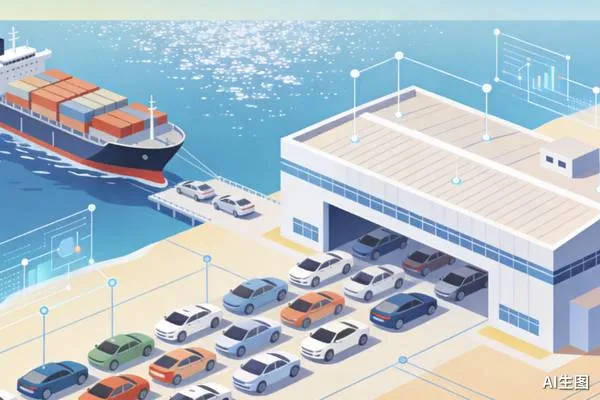
- Geography and logistics: The shortest distance between Morocco and Europe is only about 14 kilometers, with the Tangier port becoming one of the region's primary automotive export hubs, allowing products to be delivered on time to Germany and the UK within 8 to 10 days.
- Trade access: Morocco boasts a network of over 50 free trade agreements, granting it preferential access to key markets with over 1 billion consumers, including the European Union and the UK.
- Mature industrial ecosystem: Over the past fifteen years, continuous investments around Renault (Tangier, Casablanca) and Stellantis (Kenitra) have built a solid supplier base, skilled workforce, and complete industrial infrastructure. The localization integration rate of leading hubs has exceeded 60%, enabling new market entrants to quickly integrate into the existing system.
- Talent and cost advantages: Approximately 20,000 engineers and hundreds of thousands of technicians graduate from Moroccan universities each year. As one of the most cost-effective hubs near Europe, labor costs are about 50% lower than the average levels in Eastern Europe and Turkey.
- Upstream raw material advantages: Morocco holds over 70% of the world's known phosphate reserves, a critical raw material for lithium iron phosphate batteries, providing the country with a natural advantage in the upstream sector of the battery value chain.
Currently, around 90% of Morocco's automotive exports go to Europe, with primary destinations including France, Spain, Germany, and Italy, and this structure is expected to continue or even deepen.
The strategic value of Morocco for the Chinese automotive industry is comparable to that of Mexico for North America—it is evolving into a cost-effective production and export platform with tariff advantages on the doorstep of Europe. This provides Chinese automotive companies with a competitive nearshoring option, allowing them to be closer to European customers, shorten supply chains, and effectively circumvent potential trade barriers through an extensive network of trade agreements. Simultaneously, the rapid growth of Morocco's local electric vehicle market is creating new growth opportunities for sales of Chinese enterprises.
However, challenges and opportunities go hand in hand. The rapid accumulation of production capacities for Chinese electric vehicles and batteries enhances cost competitiveness but inevitably intensifies market competition. Additionally, accompanying conditions such as charging infrastructure must continue to improve to support long-term market growth potential.
In summary, China has become the primary driving force behind the development of Morocco's automotive industry, with investments spanning from tires and traditional vehicle parts to a complete ecosystem for electric vehicles and batteries. For Chinese automotive companies looking to establish a foothold in the European market, understanding the evolution of this structure is a crucial aspect of formulating their future strategy.
As reported by eu.36kr.com.