Morocco's Strategic Pipeline Initiative
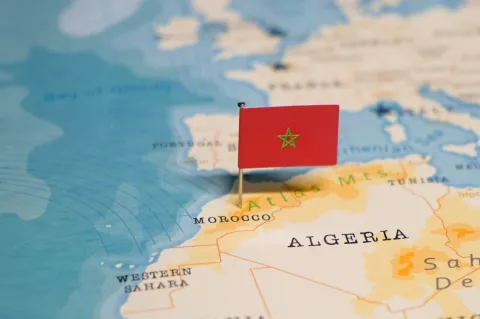
Morocco has announced significant advancements in the ambitious African Atlantic Gas Pipeline, a monumental project aimed at establishing a direct link between Nigeria and Morocco. This extensive pipeline initiative has recently entered a new phase following the successful completion of crucial engineering studies and the commencement of preliminary construction preparations, as detailed by Asharq Bloomberg. This pipeline is anticipated to play a vital role in enhancing energy security and facilitating gas supply from West Africa to European markets.
The pipeline is designed to extend nearly 6,900 kilometers (approximately 4,287 miles) across 13 countries along the western coast of Africa. Notably, the Moroccan segment alone represents a staggering investment of $25 billion, with a total length of 2,220 kilometers, comprising 1,830 kilometers of onshore infrastructure and 390 kilometers of offshore pipeline.
Infrastructure and Operational Details
To ensure the uninterrupted flow of natural gas through the 48-inch-diameter pipeline, Morocco's onshore segment will incorporate four strategically located compressor stations, which will be spaced between 300 to 320 kilometers apart. These facilities, situated near Boujdour, Tan-Tan, Agadir, and Safi, will span 64 hectares each and have been positioned close to ports and transport hubs to streamline logistical operations.
Furthermore, the pipeline will feature two vital receiving stations in Morocco. The first station will be responsible for receiving gas from offshore sources arriving from Mauritania, while the second will connect to the existing Maghreb-Europe Gas Pipeline, thus facilitating gas exports to European markets. To support the construction efforts, six temporary camps will be established along the route, each accommodating between 1,000 to 1,200 workers, which will not only manage pipe storage but also maintain equipment. Project planners have emphasized a commitment to local hiring, supported by specialized training programs to enhance workforce capabilities.
The offshore segment, which stretches 390 kilometers through Moroccan waters, will run from the Mauritanian maritime border to the Dakhla region, at varying depths of 15 to 100 meters. Near the coastline, an eight-kilometer portion of the pipeline will be buried and reinforced with a concrete coating, anti-corrosion lining, and cathodic protection to secure its structural integrity.
This pipeline is engineered with a projected operational lifespan of 40 years, and construction on the Moroccan segment is set to commence following a final investment decision, which stakeholders expect to finalize by the end of 2026. The onset of commercial operations is projected for the second quarter of 2031, marking a significant milestone in the region's energy landscape.
As reported by pipeline-journal.net.