
Reconstructing the Face of Early Homo Sapiens
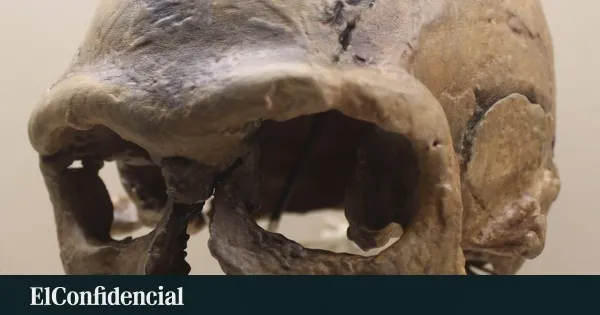
In a groundbreaking development, researchers in Morocco have successfully reconstructed the facial features of early Homo sapiens, dating back an astonishing 315,000 years. This remarkable achievement was made possible through advanced 3D modeling techniques applied to the ancient skull known as Irhoud-1, discovered in the Jebel Irhoud region. The meticulous process has not only provided a clearer picture of what our ancestors may have looked like but also has significant implications for understanding human evolution and migration patterns.
The Irhoud-1 skull, a pivotal find in paleoanthropology, has long been instrumental in reshaping our understanding of early human existence. Prior to this reconstruction, there were considerable gaps in our knowledge about the physical appearance of early Homo sapiens. The use of cutting-edge technology allowed scientists to create a lifelike model that reflects the anatomical features of these ancient beings, offering insights into their lifestyle, environment, and evolutionary adaptations.
Significance of the Discovery
This reconstruction not only sheds light on the physical characteristics of our ancient relatives but also raises intriguing questions about their behavior and survival strategies in a world vastly different from ours. The findings suggest that these early humans were not only capable of sophisticated tool-making but also likely exhibited social behaviors, which are essential for survival in challenging environments. As researchers continue to analyze the data derived from the Irhoud-1 skull, it is anticipated that more discoveries will emerge, further elucidating the complex narrative of human evolution.
As reported by elconfidencial.com.