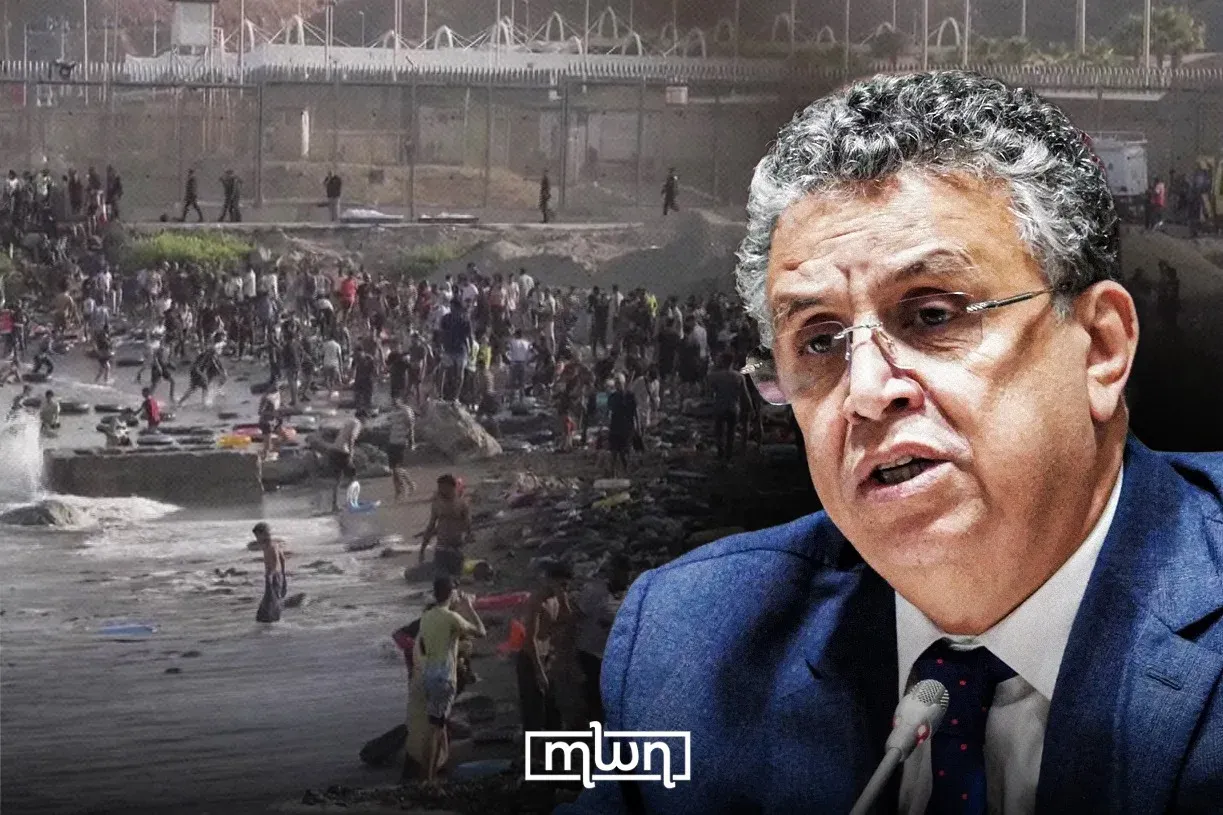

Morocco has formally requested the return of its minors currently residing in the Spanish enclave of Ceuta, with Justice Minister Abdellatif Ouahbi expressing frustration over what he describes as repeated hindrances from Spanish authorities in the repatriation process. In an interview with the German broadcaster DW, Ouahbi emphasized Morocco's long-standing commitment to resolving this issue and achieving an agreement with Spain regarding the return of these minors.
Ouahbi made it clear that the demand for the repatriation of Moroccan minors is not a recent development but an ongoing concern for the Moroccan government. He noted that discussions between Rabat and Madrid have been ongoing but have yet to yield a satisfactory resolution. According to the minister, the crux of the disagreement lies in Spain's reluctance to return the minors. He alleged that whenever Spain expresses willingness to repatriate, the process is often mired in bureaucratic obstacles, with Spanish officials presenting files that include children of other nationalities rather than the Moroccan minors in question. "When we point out that those children are not Moroccan and identify the Moroccan children whose return we are requesting, they do not bring them, claiming they could not find them or that they had disappeared," Ouahbi stated.
Highlighting Morocco's responsibility towards its children and their families, Ouahbi reiterated the nation's commitment to ensuring the safety of these minors. He firmly stated, "We remain committed, and we continue to demand the return of minors to Morocco because we are responsible for our children and for their families, and for protecting them and ensuring their safety." This responsibility, he argued, extends beyond mere legal obligations; it is a moral duty that Morocco takes seriously.
Minister Ouahbi Critiques Spain's Handling of the Situation
In his remarks, Ouahbi rejected any notion that Morocco shares responsibility for the plight of the minors in Ceuta, placing the blame squarely on Spanish authorities. He asserted that Morocco had forewarned Spain about the potential consequences of facilitating irregular migration involving minors, which could lead to further risks and dangers for these vulnerable children. "Of course not. We consider the Spanish side responsible for what happened because we warned them," he emphasized.
Furthermore, Ouahbi accused Spanish authorities of inconsistent stances regarding the repatriation of minors, suggesting that political factors may be influencing their decisions. He noted, "They demand the return of the minors and then backtrack on it. It seems that the issue involves more electoral calculations than legal decisions." This inconsistency not only complicates the process but also raises concerns about the welfare of the children involved.
Addressing the sensitive issue of Moroccan girls in Ceuta, Ouahbi expressed alarm over reports of alleged abuse, including sexual exploitation. He maintained that Morocco had consistently warned Spanish officials about the dangers these minors face, stating, "Of course we are following it. We warned Spain about this." He characterized the situation as a severe moral and political dilemma, urging Spain to take immediate action to return the Moroccan minors. "We are telling Spain: Return our children to us, and we will receive them," he said, underscoring the urgent need for a humanitarian response.
When asked how Morocco could persuade minors who had left voluntarily to return to their families, Ouahbi questioned the appropriateness of allowing minors to make such significant decisions independently. He argued, "Can an adolescent or a minor decide their own future? The family decides." He maintained that the separation of children from their families under the guise of protecting their interests is unjustifiable and against international law, asserting that Morocco has a fundamental duty to protect its children.
Seeking Dialogue Over Conflict
Despite the ongoing tensions, Ouahbi expressed a desire for dialogue rather than confrontation with Spain, indicating that there are no current plans to pursue international legal action if the situation does not improve. "Spain is a friend, and we will reach an agreement with them," he stated, emphasizing that friendship entails collaboration in seeking solutions rather than escalating crises. He reiterated Morocco's readiness to resume discussions with Madrid, expressing hope that productive meetings could be held in the near future. "We want to find a common solution with Spain," he concluded, framing the matter as fundamentally humanitarian.
As reported by moroccoworldnews.com.