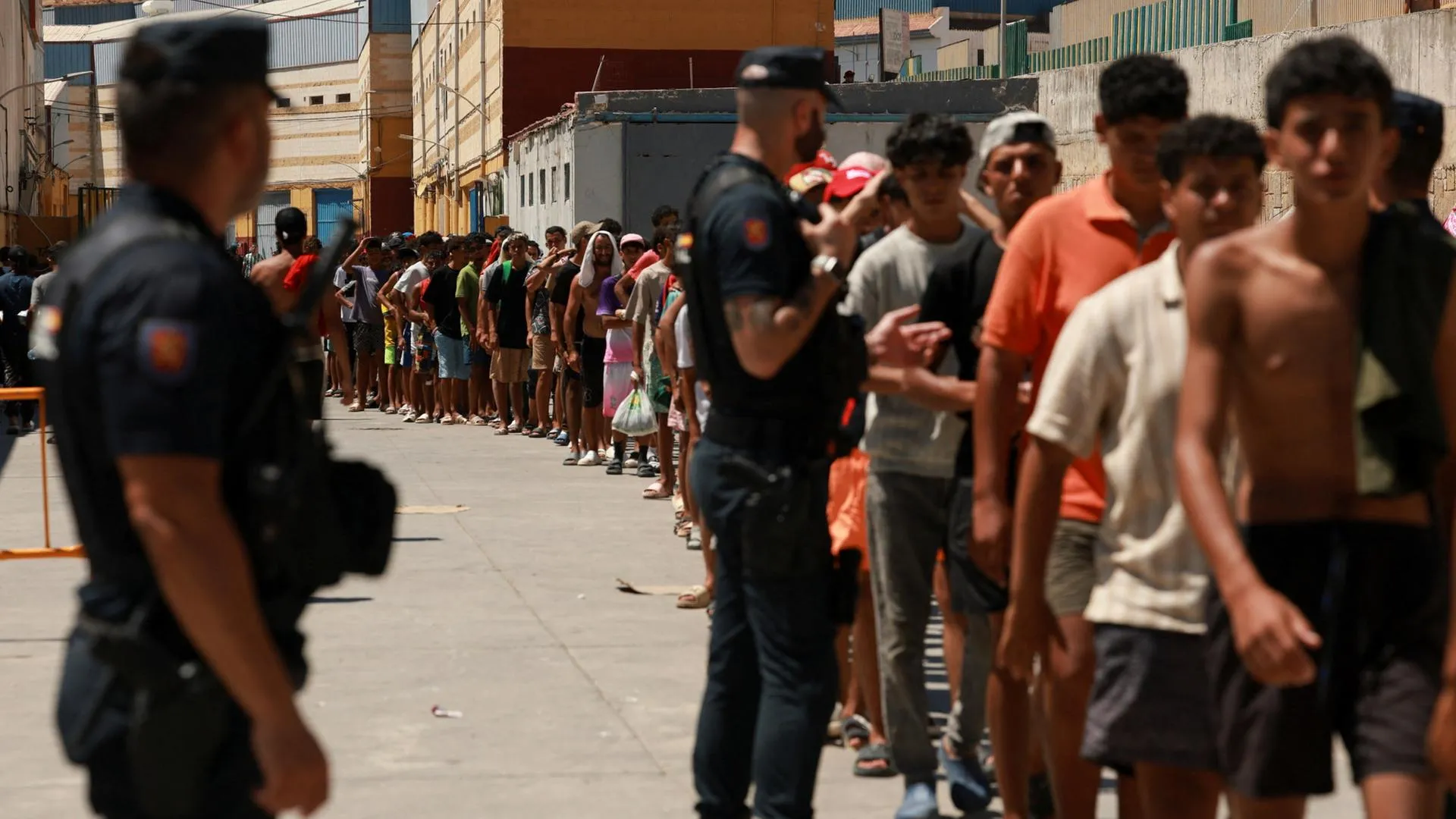

Morocco has issued a warning regarding a possible influx of migrants to Ceuta this coming weekend, with social media platforms being flooded with calls that are largely based on misinformation. In response to these developments, the European Union is taking a firmer stance on holding social media platforms accountable for the dissemination of false information.
Brussels is keen to avoid inciting panic, with officials emphasizing that the upcoming weekend should not be viewed as a significant date in the migration context. "When you mention the 15th of August, it is not a special date for us. We must protect our borders every day and at all times," remarked EU officials this week. However, the reality on the ground appears to be more concerning, as staff from EU Commissioner for Migration Magnus Brunner have traveled to the Spanish enclave of Ceuta. Their mission, in collaboration with border guards, Europol, and asylum experts, is to assess the situation firsthand.
The Moroccan authorities have raised alarms about "suspicious and misleading calls" circulating online, suggesting that thousands of individuals from Morocco may attempt to cross into Spain on August 15. These warnings have been echoed by various social media posts, which contributed to a recent surge of migrants into Ceuta, resulting in tragic consequences where over a hundred lives were lost during the perilous crossing.
In light of these events, the European Union is determined to prevent such tragedies from recurring. This has led to discussions with major platforms like TikTok, Instagram, and Facebook, prompting TikTok and Meta to activate their crisis response mechanisms. According to EU spokesperson Balazs Ujvari, these companies are now collaborating with local fact-checkers to address misinformation effectively.
The framework for this response is based on the Digital Services Act (DSA), which outlines the responsibilities of major platforms in Europe regarding content dissemination. In Europe, platforms like TikTok bear some responsibility for the content they share, necessitating their cooperation with fact-checkers such as the AFP news agency and the Spanish organization Newtral to identify and flag false news reports.
As the EU remains uncertain about the emergence of another wave of migration towards Ceuta, the political ramifications of the situation continue to reverberate throughout Europe. Spain and Italy are closely monitoring their borders, and leaders like Italy's Prime Minister Giorgia Meloni and Denmark's Prime Minister Mette Frederiksen are calling for stricter European migration policies. Moreover, there are demands for an increase in personnel and expanded powers for the border protection agency Frontex, a matter that the EU plans to address this autumn.
As reported by tagesschau.de.