
Overview of Morocco's 2027 Financial Bill
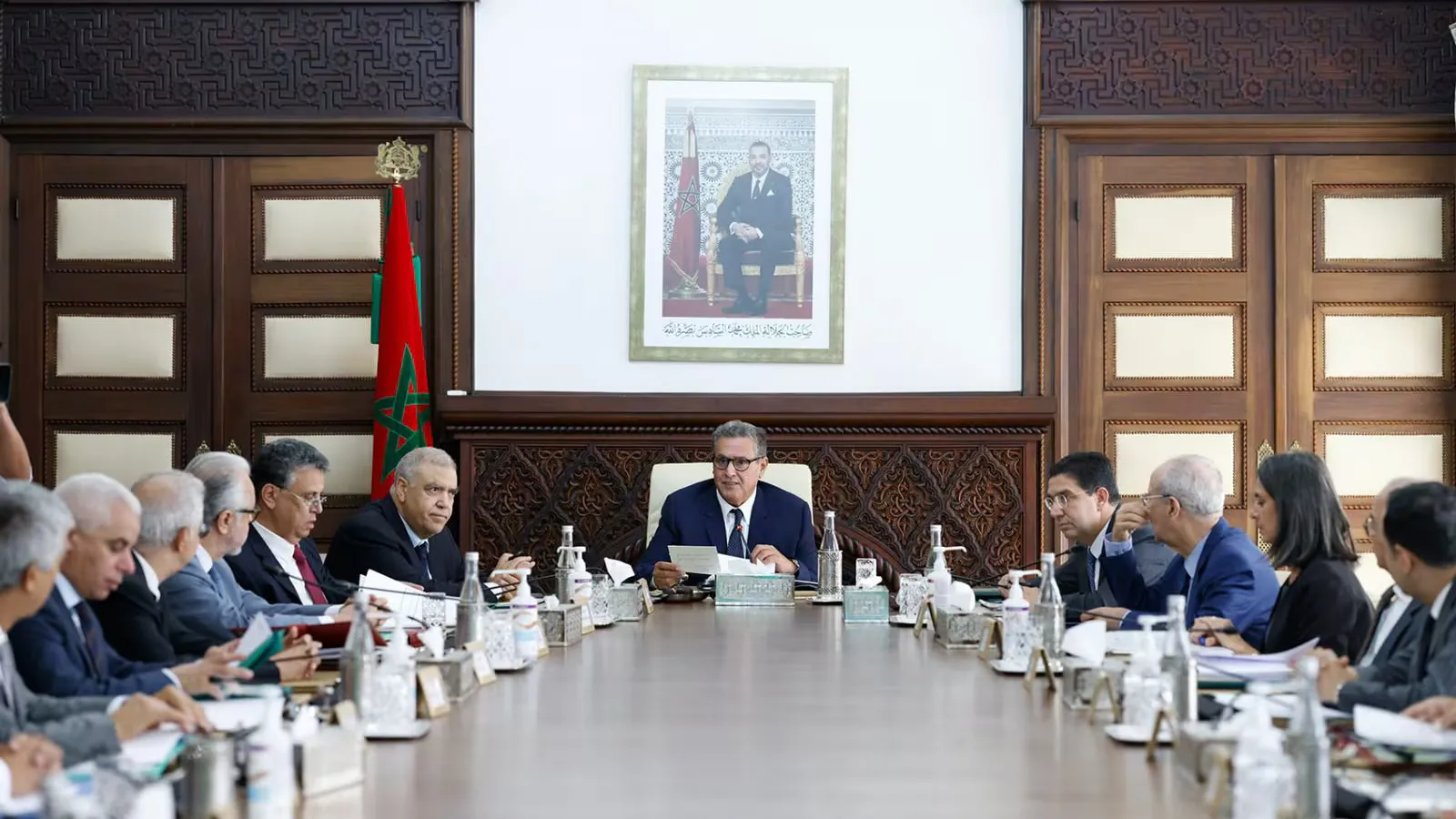
In a continuation of the precedent set in 2021, Morocco is poised to witness a scenario where the draft budget law will be crafted by the outgoing government while its implementation will fall to the next team elected by the populace. This unique situation imbues the upcoming budget with a transitional character, indicating a period of adjustment and adaptation as the country gears up for a new administrative phase.
Strategic Investment and Economic Priorities
Aligned with the royal directives, particularly those articulated in the Throne Speech that calls for the commencement of a new development cycle based on consolidating achievements and advancing essential reforms, the framing letter for the budget highlights several critical priorities. A fundamental objective is to solidify Morocco’s economic gains, enhancing its position among emerging economies while actively working to diminish territorial and social disparities through an integrated development approach.
Among the key initiatives is a commitment to a substantial public investment in infrastructure, targeting strategic projects that will bolster the nation’s capabilities. This includes the expansion of the national highway network, which currently boasts nearly 1,800 kilometers, and the continuation of significant projects such as the Rabat-Casablanca continental highway and the Guercif-Nador West Med route. Additionally, the enhancement of road infrastructure will be underscored by pivotal projects like the Aïn Aouda–Oued Zem expressway, as well as the connection of Nador West Med port to the national road network.
The railway sector is also set to experience significant advancements, with plans to extend the high-speed train line between Kénitra and Marrakech, establish regional express networks in various regions including Casablanca-Settat and Marrakech-Safi, and modernize the existing railway fleet. Furthermore, to facilitate seamless integration between rail and air transport, Casablanca’s airport will be linked to the high-speed line through a new train station intended to serve as an intermodal hub connecting road, high-speed train, and regional rail networks.
In response to water stress, securing water resources remains a top priority for the government. Plans are in place to continue the construction of dams and enhance interconnections between hydraulic basins. The national seawater desalination program is another critical focus, aiming to achieve a production capacity of 1.7 billion cubic meters by 2030. In the short term, three major desalination plants are expected to commence operations, including those in Dakhla and Safi, alongside the grand Casablanca station. Additionally, new renewable energy-based desalination projects are being developed in various regions, with operations expected to start between 2029 and 2030.
The 2027 budget will also support the implementation of the new Investment Charter, emphasizing job creation and directing investments toward priority sectors. Specific efforts will be made to support micro, small, and medium-sized enterprises (MSMEs) by improving their access to financing, establishing simplified guarantee mechanisms, and enhancing their access to public procurement.
The framing letter also indicates a transition into a new phase of advanced regionalization, where a significant increase in financial resources for regions—potentially reaching at least 12 billion dirhams annually starting in 2027—will act as a central lever for this reform. Furthermore, measures to support purchasing power will continue, particularly through subsidies for butane gas, sugar, and flour, with an estimated cost exceeding 13 billion dirhams. Additionally, programs aimed at eradicating substandard housing will persist, with large-scale resettlement operations planned in regions like Casablanca-Settat, Marrakech-Safi, and Rabat-Salé-Kénitra.
On the macroeconomic front, the framing document emphasizes the importance of maintaining macroeconomic balances, with the goal of progressively reducing the budget deficit and stabilizing public debt at sustainable levels. The government is calling for a rationalization of public spending and an enhancement of state resources, urging ministries and public institutions to prepare their proposals based on available financial capacities while rigorously prioritizing needs. This includes a focus on controlling the wage bill through strict oversight of job creation, which must be justified by actual needs related to the implementation of reforms and the improvement of public service quality.
Rationalizing operational expenditures will also be a major focus, limited to essential needs, particularly targeting reductions in water and electricity consumption costs, vehicle rentals, and administrative building expenses. Additionally, travel, mission, accommodation, and event organization costs will be subject to stringent controls to uphold administrative principles of exemplary conduct. Public investment will prioritize projects that are either subject to royal instructions or outlined in agreements with international partners, accelerating the completion of ongoing projects. Investment proposals will also need to reflect the actual execution capacities of administrations and their performance in budget management.
The government further calls for enhanced coherence and complementarity among projects, particularly at the territorial level, paying special attention to rural, mountainous, and oasis regions. The document stresses the necessity of regularizing the land situation for projects in compliance with legal frameworks regarding expropriation, aiming to minimize disputes through preventive measures and alternative dispute resolution methods in public contracts. In the spirit of rationalization, the letter recommends minimizing expenses related to vehicle procurement and the construction and equipping of administrative buildings. It specifies budget caps for each department and institution pertaining to operational and investment expenses, with the concerned administrations invited to submit their proposals to the Ministry of Economy and Finance by August 31, 2026, to finalize the allocation of funds that will be integrated into the 2027 budget law.
Ultimately, the 2027 budget emerges as both a continuation of the vital reforms initiated under royal guidance and a transitional framework, as it will be formulated by an outgoing majority and executed by a future governmental team.
As reported by fr.le360.ma.