
Morocco's Agricultural Expansion in Western Sahara
Morocco has long employed agriculture as a central strategy to assert its sovereignty over Western Sahara, a territory it has occupied since the Green March ordered by King Hassan II in 1975. By developing significant agricultural infrastructure on Sahrawi soil, the Moroccan kingdom has sought to modernize its trade agreement with the European Union (EU), thereby circumventing a European Court of Justice ruling that deemed the inclusion of Sahrawi products in the agreement illegal. This strategic maneuver is designed to ensure that Morocco can continue to benefit from commercial preferences, specifically regarding agricultural products cultivated in the contested region.
The Moroccan government argues that its activities in Western Sahara yield positive impacts on the territory, a perspective that has been accepted by the EU Council. The Council holds that for a non-autonomous territory like Western Sahara, obtaining "implicit consent" from its inhabitants suffices, as they receive a "specific, tangible, substantial, and verifiable benefit" from the exploitation of local natural resources, proportional to the level of such exploitation.
Greenhouse Development Projects Under the Generation Green Plan
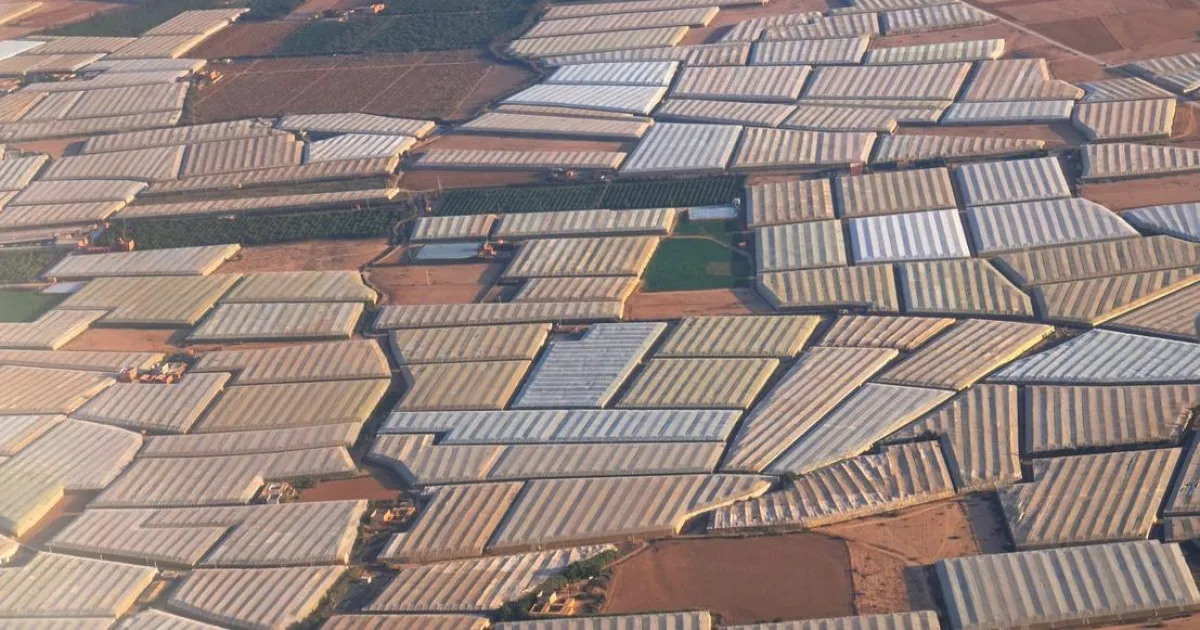
One of Morocco's flagship initiatives aimed at furthering its resource exploitation in Western Sahara is the establishment of 5,000 hectares of greenhouses on the disputed land. This ambitious plan is part of the Generation Green Plan (2020-2030), championed by King Mohammed VI, which has already seen the first 1,090 hectares prepared for bidding. The 35 parcels announced by the Moroccan Agricultural Development Agency (ADA) fall under the "Dakhla Irrigation Project," emphasizing the integration of a desalination plant and a wind farm located 75 kilometers from Dakhla. The estimated cost of these facilities is approximately 170 million euros. In alignment with the agreement text reviewed by El Debate, the EU is expected to provide initial funding to the region, focusing on key sectors such as water, energy, desertification control, and sustainable development practices.
According to ADA, the deadline for submitting bids for these lands is set for August 31, 2026. The water supplied by the desalination plant will be charged separately from the annual rental cost and will exclusively be allocated for crop irrigation. The bidding specifications detail an annual rental price for each plot, ranging from about 640 euros per year for the smallest plot of 9.7672 hectares to 4,250 euros per year for the largest one at 64.8040 hectares.
The terms of the EU-Morocco partnership agreement stipulate that fruits and vegetables originating from Western Sahara entering the EU must be identified with a reference to the product's region. However, the EU may grant Moroccan authorities the necessary permits to issue conformity certificates, thereby placing Morocco in a position of authority over these products.
As reported by eldebate.com.