
Morocco's Political Landscape: Akhannouch's Party Seeks Continued Governance
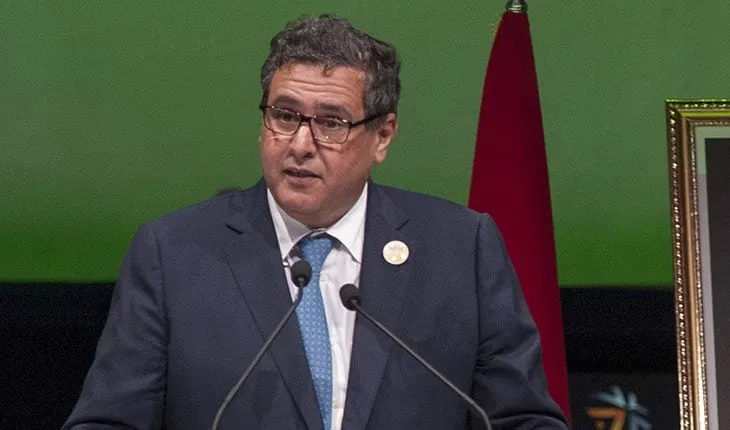
The Moroccan political scene is currently experiencing significant dynamics as the National Rally of Independents (RNI), led by Aziz Akhannouch, expresses its strong desire to remain a vital component of the forthcoming government formation. The party has articulated this ambition as a necessary step to address the challenges ahead and to continue building on the achievements of the past. This intention is contingent upon a decision from the party's national council, which has been called to convene in order to delegate the authority needed to navigate the ongoing political consultations effectively.
This declaration comes on the heels of a meeting between key leaders of Akhannouch's party and the Authenticity and Modernity Party (PAM), spearheaded by Fatima Zahra Mansouri, the government head assigned by King Mohammed VI. This meeting is part of the broader discussions surrounding the formation of the new government. The RNI's statement was not merely a wish to persist in governance; it also included commendation for Akhannouch’s management of the coalition government and his efforts to maintain its coherence throughout the previous term, despite what the party described as challenging circumstances. The RNI is keen to highlight the accomplishments of its ministers during their tenure.
Political analysts have noted that despite the RNI's acknowledgment of a decline in its electoral performance—having reduced its parliamentary seats from 102 to 66—the party is attempting to frame this outcome as a natural cost of governance during a difficult period. The party emphasizes its commitment to interpreting the electoral messages and enhancing its operational and communicative effectiveness in the future.
The consultations for government formation have not been without their moments of public scrutiny, particularly during the reception of the RNI delegation by Mansouri. The delegation included RNI leader and Speaker of the House of Representatives, Rachid Talbi Alami, who has been linked to a leaked audio recording threatening to deny the newly joined PAM member, Fouzi Lekjaâ, a position in the Ministry of Economy and Finance. Lekjaâ was present during the meeting, sitting alongside Alami, which raised eyebrows in political circles.
The duration of this meeting, reportedly lasting only about fifteen minutes, has led to various interpretations among observers. Some suggest that this brevity indicates an existing consensus based on prior experiences, while others speculate it may signal underlying disagreements stemming from the previous electoral campaign tensions. Nonetheless, the length of the meeting alone does not suffice to draw definitive conclusions regarding the discussions that transpired.
For some analysts, the current stance of the RNI does not bode well for a renewed coalition experience with PAM, particularly since tensions between the two parties escalated during the electoral campaign. Mansouri later reassured that “there are no red lines” regarding future government alliances. However, one of the most striking comments that have revived discussions on this topic came from Hicham Mahajri, a prominent RNI parliamentarian, who stated during a television program that future government formation discussions must adhere to party structures and organizational procedures. He explicitly voiced his personal opposition to a coalition with the RNI, citing the need for change in the agricultural ministry, which the RNI has held for an extended period.
Mahajri's remarks ignited debates, with academic Omar Sharqawi noting in a social media post that the constitutional norms dictate that party leaders should exercise discretion and restraint during government consultations to avoid undermining the royal mandate. He emphasized that the government formation process represents a crucial moment that directly impacts the constitutional responsibilities of the appointed Prime Minister, paving the way for royal approval.
Contrarily, some observers interpreted Mahajri's comments as reflecting internal discussions within PAM regarding a potential coalition with the RNI, while others dismissed it as merely a personal opinion. In this context, the RNI's declaration of its desire to continue in government signifies that the party wishes to enter negotiations from a position of strength rather than as mere spectators awaiting decisions from others.
According to journalist Abdallah Kouzi, some national council meetings of the parties involved may only serve a formal purpose, suggesting that PAM’s national council meeting could result in a pre-established decision against collaborating with the RNI in the upcoming government. Blogger Mohamed Sebai conveyed a more straightforward reading, asserting that the RNI will likely find itself outside the next government, predicting that the new coalition could comprise PAM, the Istiqlal Party, the Popular Movement, and the Socialist Union, leaving the RNI sidelined.
Strategic Sector Distribution: A Major Sticking Point
Sebai noted that the critical issue lies in the distribution of strategic sectors, with the RNI typically vying for ministries with substantial budgets and investment programs, such as the Ministry of Agriculture. This is crucial for establishing a strong presence in rural areas and building relationships with local influencers. On the other hand, the Istiqlal Party is expected to demand significant portfolios, while PAM will aim to retain control over key sectors, including finance and agriculture. This scenario suggests that a coalition between Istiqlal and the RNI may prove challenging, potentially favoring Istiqlal in the negotiations, thereby excluding the RNI from government.
Sebai further posited that integrating the Popular Movement and the Socialist Union into the government might be less contentious regarding the distribution of major portfolios, allowing them to leverage their return to power to enhance their political and territorial presence. Thus, the real struggle will not solely revolve around entry into the government but rather about who will dominate the strategic sectors that confer significant political and operational influence.
The RNI's expression of its intention to remain within the government has become a prominent topic of discussion across social media in recent hours, with some critics deeming the situation a farce of epic proportions, while others liken the party's return to governance to a scenario where elections never occurred, underscoring that voters have made their preferences known and did not place the RNI in a leading position.
As reported by alquds.co.uk.