
Morocco's Diplomatic Push for World Cup 2030 Final
In a bold move that could see Morocco snatch the organization of the final match of the upcoming **2030 FIFA World Cup** from Spain, the North African nation has launched a diplomatic campaign aimed at promoting the final to be held at the **Santiago Bernabéu Stadium** in Madrid. This initiative, commissioned by King [Mohamed VI](https://theobjective.com/etiqueta/mohamed-vi/), is currently unfolding in the **United States** with prominent figures such as Moroccan Ambassador to the U.S., **Youssef Amrani**, and the President of the Moroccan Football Federation, **Fouzi Lekjaa**, at the forefront. They are actively seeking to secure substantial support from all confederations ahead of the critical vote expected in late 2026.
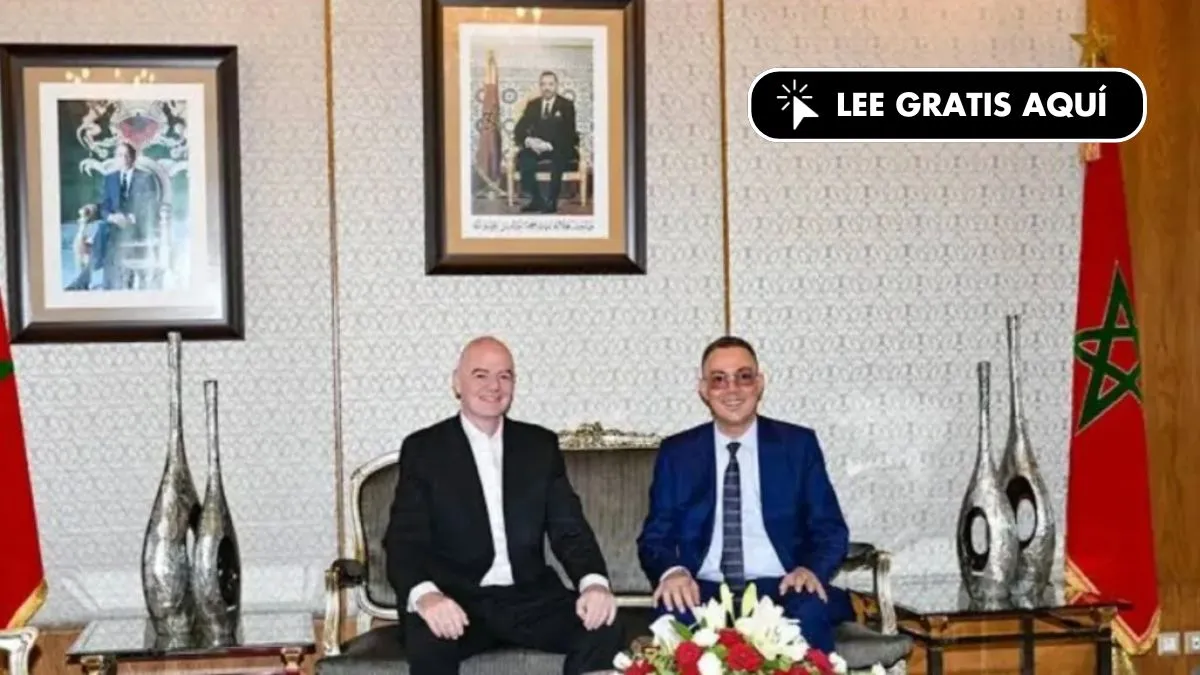
While the Spanish Football Federation had been confident that the final would take place in Madrid or, as an alternative, Barcelona, growing anxiety has begun to permeate their ranks. Morocco has reportedly gained the backing of FIFA President [Gianni Infantino](https://theobjective.com/etiqueta/gianni-infantino/), having met with him on several occasions in recent weeks. Infantino has asserted that hosting the final in the new Casablanca stadium, currently under construction and set to become the largest stadium in the world, would not only be a historic event but also yield an estimated profit of €150 million more than a final held in Madrid.
The Stakes in the World of Football Diplomacy
Beyond the FIFA World Cup, there is another significant contest taking place involving Mexico, the United States, and Canada, with diplomatic maneuvers occurring in the box seats of stadiums in locations such as Monterrey and Houston. Spanish diplomatic sources consulted by [THE OBJECTIVE](https://theobjective.com/) describe Morocco's influence campaign as being particularly active during the World Cup, capitalizing on the presence of the FIFA Council at the event to bolster its bid for the coveted 2030 final. In their view, Morocco has already taken a lead over Spain in this quest.
Fouzi Lekjaa, who is not only the President of the Moroccan Football Federation but also serves as the delegate minister for the government of Aziz Akhannouch in budgetary matters, is the key figure driving these efforts. He wields considerable influence over spending decisions, and the upcoming World Cup is a priority for King Mohamed VI. Lekjaa has been actively engaging with many of the 37 FIFA Council members present at the World Cup, promoting the Moroccan candidacy by highlighting that it is backed by a budget without limits. Notably, Lekjaa himself is a member of this global football governance body.
Furthermore, Lekjaa has established a close relationship with FIFA President Gianni Infantino, having shared attendance at two matches involving the Moroccan national team during the World Cup. In a notable instance, Infantino was seen at the Monterrey match against the Netherlands accompanied by his daughter, who wore a Moroccan jersey. The Spanish delegation now seems resigned to the likelihood of losing Infantino’s support—who holds a decisive vote—when the decision is made later this year, expected in December. Nonetheless, they hope to retain backing from several confederations they have previously engaged, including UEFA, where no betrayals are anticipated at this stage.
Despite the challenging landscape, the RFEF remains determined and does not consider the battle lost; however, they acknowledge that the situation has become significantly more complex. Their concerns are amplified by the effective lobbying efforts spearheaded by Lekjaa and the vital diplomatic support provided by Ambassador Amrani, who enjoys strong connections with the U.S. administration. His experience as a former ambassador in South Africa, Mexico, and Colombia further enhances his diplomatic clout, given that these countries have influential roles within the FIFA Council.
According to the sources consulted, Morocco’s diplomatic endeavors and its ability to influence FIFA members are significantly outpacing the efforts being made by Spain’s government under Pedro Sánchez, which had previously opened the door for Morocco's inclusion in its joint candidacy with Portugal.
Historical tensions have resurfaced, as the rivalry for the 2030 final intensified following Morocco's entry into the bid. Initially, the final was expected to be held at the refurbished Santiago Bernabéu, marking it as the third stadium globally to host two finals, alongside Brazil's **Maracanã** and Mexico's **Estadio Azteca**, having previously hosted the 1982 final.
Morocco's offensive for the final is primarily driven by economic profitability. King Mohamed VI has assured FIFA that there will be no budgetary limits for the construction of the Hassan II Stadium, which will boast a seating capacity of **115,000**—1,000 more than North Korea's Primero de Mayo Stadium. Furthermore, Morocco claims that hosting the final in Casablanca would yield over €150 million in additional revenue compared to Madrid or Barcelona, potentially approaching €200 million, mainly through ticket sales which are currently priced around **$5,000**. This substantial capacity advantage of approximately 27,000 more seats at the Hassan II compared to the Bernabéu serves as a compelling argument for many international delegates involved in the decision-making process.
As reported by theobjective.com.