
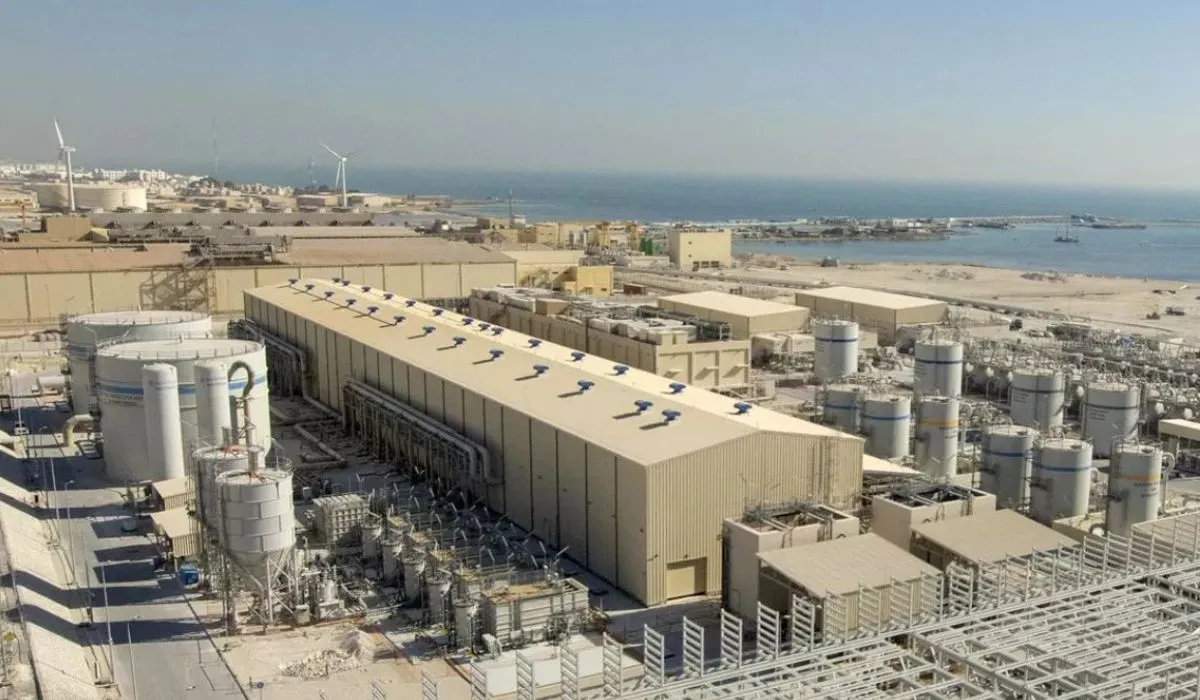

Morocco's Bold Move Against Water Scarcity
After enduring seven years of escalating drought, Morocco is taking decisive action to combat its water scarcity crisis. The nation has unveiled an ambitious plan to establish four of the world's ten largest desalination plants by 2031. This initiative aims to provide clean drinking water to 60% of the Moroccan population, significantly benefiting the agricultural sector, especially the tomato industry, which relies heavily on water for its production that competes in European markets against Spanish produce. Currently, only Gulf nations like Saudi Arabia and the United Arab Emirates lead in desalination technology, while Spain, which shares similar climatic conditions and geographical proximity, has not made comparable advancements. In fact, past projects in Spain have been marred by corruption scandals, such as the well-known Acuamed case.
Decades of Neglected Water Management
The water deficit in Morocco did not arise overnight; it has been a longstanding issue that has now escalated into a crisis due to prolonged droughts. Historically, Moroccan farmers relied on rainwater to cultivate barley, wheat, and oats in small plots, which sufficed for generations. However, by the mid-20th century, the kingdom began constructing dams to increase water capture and boost agricultural production. Yet, by the 1990s, experts warned that agricultural demand was outstripping available supply. Farmers resorted to digging wells, depleting aquifers—natural underground reservoirs that provide a buffer against drought.
Instead of reversing course, Morocco accelerated its agricultural initiatives. In 2008, it launched the Green Plan, spearheaded by former Prime Minister Aziz Ajanuch, which subsidized water-intensive and non-native crops. While the plan brought economic benefits and job creation to rural areas, the environmental costs became unsustainable, leading to the cultivation of watermelons in regions with scant rainfall and the export of tomatoes from nearly depleted aquifers. Independent expert Mohamed Bazza criticized the strategy, stating that Morocco did exactly the opposite of what was necessary, as agriculture now consumes 85% of the country's water resources.
With seven consecutive years of drought turning a structural problem into an emergency, Morocco's largest reservoirs are now critically low. Last year, King Mohammed VI urged for an acceleration of desalination plans to address the crisis.
Currently, Morocco operates 17 desalination plants with a total annual production of 345 million cubic meters of water. Four additional plants, with a combined capacity of 540 million cubic meters, are under construction and expected to be completed by 2027, including a major facility in Casablanca. The long-term goal is to produce 1.7 billion cubic meters of desalinated water annually by 2030, a significant increase from the current 9% of the population relying on desalinated sources to 60%.
The largest desalination plant will be located near Tiznit in the south, with a capacity of 350 million cubic meters per year, serving both urban centers and agricultural regions known as the country’s breadbasket. Other plants will be constructed in Nador, Tangier, and Rabat, the latter in partnership with the French group Veolia. By 2031, Morocco aims to have four of its desalination facilities ranked among the ten largest in the world, a feat previously dominated by Gulf states.
The technology driving this transformation is reverse osmosis, where seawater is pressurized through rolled membranes that retain salts while allowing clean water to pass through. This method has dramatically reduced desalination costs, making it feasible for countries that previously could not afford such technology. Simultaneously, Morocco is developing renewable energy projects that will provide clean, low-cost energy to its desalination plants. However, the process generates brine as a byproduct, which is returned to the ocean, potentially harming marine ecosystems and contributing to rising water temperatures.
The tangible impact of these efforts is already evident in the Souss-Massa region, where a plant inaugurated near Agadir in 2022 supplies 45% of its output to local agricultural operations, providing potable water to 1.6 million people. A network of pipes transports water to farm hangars where tomatoes are cultivated on plastic beds with imported mulch, irrigated by drip systems. From there, these tomatoes are sent to packaging facilities like Karam Green Agri, one of Morocco's largest exporters, with packaging labeled for Tesco or Lidl, destined for European markets.
However, this infrastructure has its limitations. The pipelines extend only about 40 kilometers inland, beyond which citrus orchards suffer and farmers struggle. Some farms have laid off workers, while those who remain have switched to cactus cultivation, a gamble in itself. Desalination primarily benefits large exporters who can afford the higher costs of desalinated water, which is approximately double that of groundwater, creating disparities in agricultural viability.
Spain has committed to financing €340 million for these projects, including the Agadir plant operated by the Spanish firm Cox. The largest desalination facility under construction in Africa, the Casablanca plant at Sidi Rahal, is being developed by Acciona, which won the contract in November 2023, with an estimated cost of €887 million. This financial support from Spain includes €250 million from the Internationalization of the Company Fund (FIEM), around €60 million backed by Cesce, and an additional €31 million loan through Cofides. Spain's public funding significantly contributes to the infrastructure that will position Morocco as the world's third-largest desalination power, trailing only Saudi Arabia and the UAE, all while Spain lacks a similar national program to address its own water management challenges.
Moreover, the Casablanca desalination project is also highlighted in the technical dossier for a joint bid for the 2030 World Cup, showcasing Morocco's ability to manage the water demands of such a large-scale event, further strengthening its candidacy to host the tournament's final.
As reported by vozpopuli.com.
