
Morocco's Green Hydrogen Initiative in the Sahara
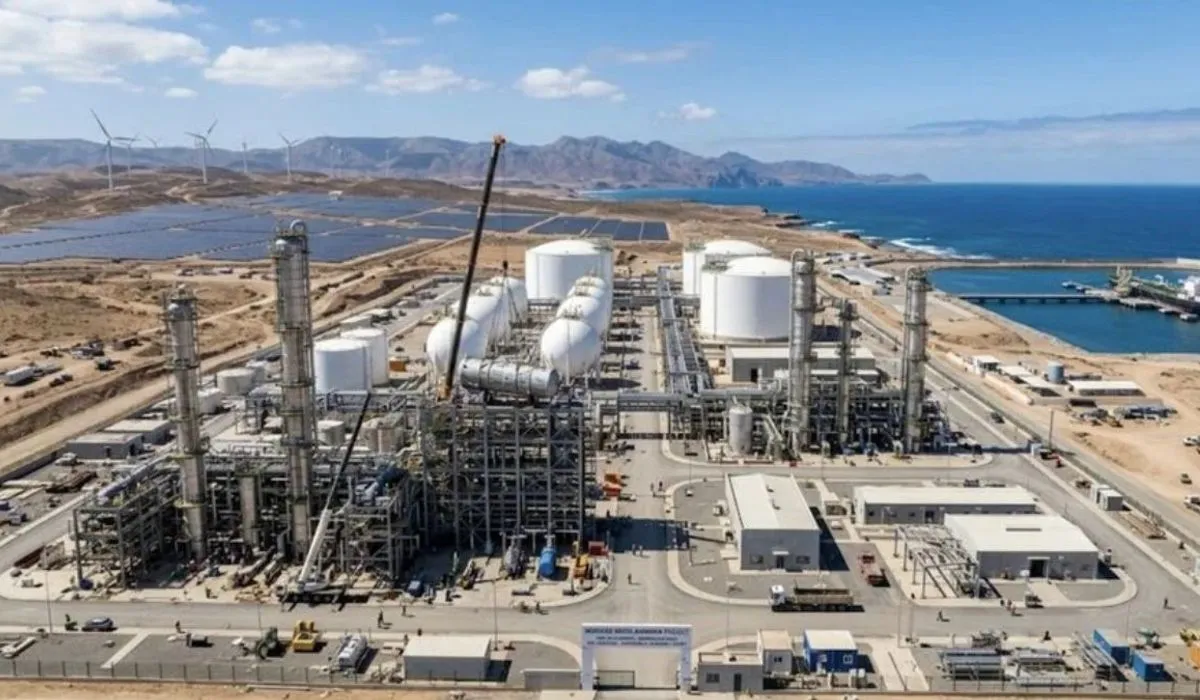
Morocco has embarked on a groundbreaking project to construct a green hydrogen production complex in the Dakhla region, adjacent to the Sahara Desert. This ambitious endeavor aims to position Morocco as a key supplier of renewable energy to Europe, with projections indicating an annual production capacity of 560,000 tons by 2030. The Moroccan Ministry of Investment, Convergence, and Public Policy Evaluation is focusing on the development of solar plants, desalination facilities, ammonia production plants, and various renewable energy initiatives to support this vision.
Located approximately 80 kilometers south of Tan-Tan, where the Sahara Desert increasingly overtakes any sign of vegetation, Morocco is developing a site that remains off the tourist maps. The absence of nearby cities, paved roads, and visible infrastructure from the air belies the scale of this project, which represents one of the continent's most ambitious efforts to convert sunlight and wind into exportable fuel for Europe. Major players in the energy sector, including TAQA Morocco, Moeve, and ORNX, have submitted plans to the Moroccan authorities to establish green hydrogen production plants in the Guelmim-Oued Noun region, located in the southernmost part of the country. Collectively, these projects aim to exceed 10 gigawatts (GW) of renewable energy capacity, a figure comparable to that of ten medium-sized nuclear reactors operating simultaneously, or double the total wind power capacity installed in Portugal.
The Desert as a Powerhouse
The choice of location for these plants is strategic, as the Guelmim region boasts over 3,000 hours of sunshine per year, making it one of the most lucrative areas globally for photovoltaic electricity generation. Additionally, the wind patterns in this region are described as exceptional for high-altitude turbines, significantly reducing the cost of renewable electricity production compared to the European average. This reduction in production costs has the potential to lower the final price of hydrogen produced, addressing the longstanding economic challenges that have hindered the competitiveness of green hydrogen technology over the past decade.
The green hydrogen produced at these facilities is expected to be transported initially in the form of ammonia—a compound that simplifies storage and maritime transportation—or directly through pipelines to the Iberian Peninsula and southern Europe. Morocco already has natural gas infrastructure connected to Spain via the Maghreb-Europe Gas Pipeline, which traverses the Strait of Gibraltar, although its current usage is limited due to the diplomatic crisis of 2021.
Among the three developers, TAQA Morocco, a subsidiary of the Emirati energy giant TAQA, is the most established in the Moroccan electricity sector and is currently the furthest along in project development. Moeve, a company with Spanish-Portuguese origins that emerged from Cepsa's transition to renewable fuels, has been negotiating long-term supply agreements with potential European buyers for months. ORNX, the least known of the trio, contributes high-efficiency electrolysis technology specifically designed for extreme temperature conditions—a critical factor in a region where summer temperatures can exceed 45 degrees Celsius. The timelines for these projects indicate that initial operational phases could commence between 2029 and 2031, provided that financing conditions and environmental authorization procedures progress smoothly. Similar initiatives in Saudi Arabia and Australia have faced delays ranging from two to four years due to challenges in securing long-term private investment.
Despite its promise, the green hydrogen sector still grapples with high production costs. In 2024, the average production cost in Europe hovered around 4.5 euros per kilogram, compared to less than 1.5 euros for grey hydrogen derived from natural gas or blue hydrogen with carbon capture. Moroccan projects aspire to bring their costs below 2 euros per kilogram by leveraging solar irradiation and the scale of their facilities. However, achieving this goal remains contingent on continued reductions in electrolyzer prices, a trend that is not guaranteed amid ongoing supply chain tensions for critical components. Additionally, partners and Moroccan authorities must address the costs associated with desalinating water for green hydrogen production. While the projected energy output for these facilities seems supported by solar plants and desalination facilities, the financial implications remain uncertain.
Spain is closely monitoring Morocco's movements in this sector. For years, Spain has sought to establish itself as a green hydrogen corridor between North Africa and Central Europe, with the proposed BarMar—an undersea pipeline between Barcelona and Marseille—serving as a crucial component of this infrastructure. If Morocco solidifies its production capacity in the Sahara while Spain maintains its interconnection infrastructure, the country could emerge as a major distributor of a fuel that the European Union needs to import to meet its 2050 climate targets. As one of the leading green energy producers in Europe, much of the surplus energy sold to France or the central continent originates from Spanish solar and wind resources. The emergence of Morocco as an energy partner for the EU may compel the Spanish government to reassess its energy policy strategy, particularly as the introduction of Moroccan green hydrogen could dilute Spain's influence in European energy discussions.
As reported by vozpopuli.com.