
Morocco is embarking on a transformative journey in its military strategy, aiming not merely to be a purchaser of armaments but to establish itself as a genuine producer of defense technology. This bold initiative is being significantly bolstered by an unexpected partnership with India. Historically, Morocco's defense model has revolved around partial assembly or licensed production of Western equipment, which limited its control over the entire industrial process. However, the new collaboration with India marks a paradigm shift, introducing comprehensive technology transfer, full-scale manufacturing, and joint development rather than mere assembly.
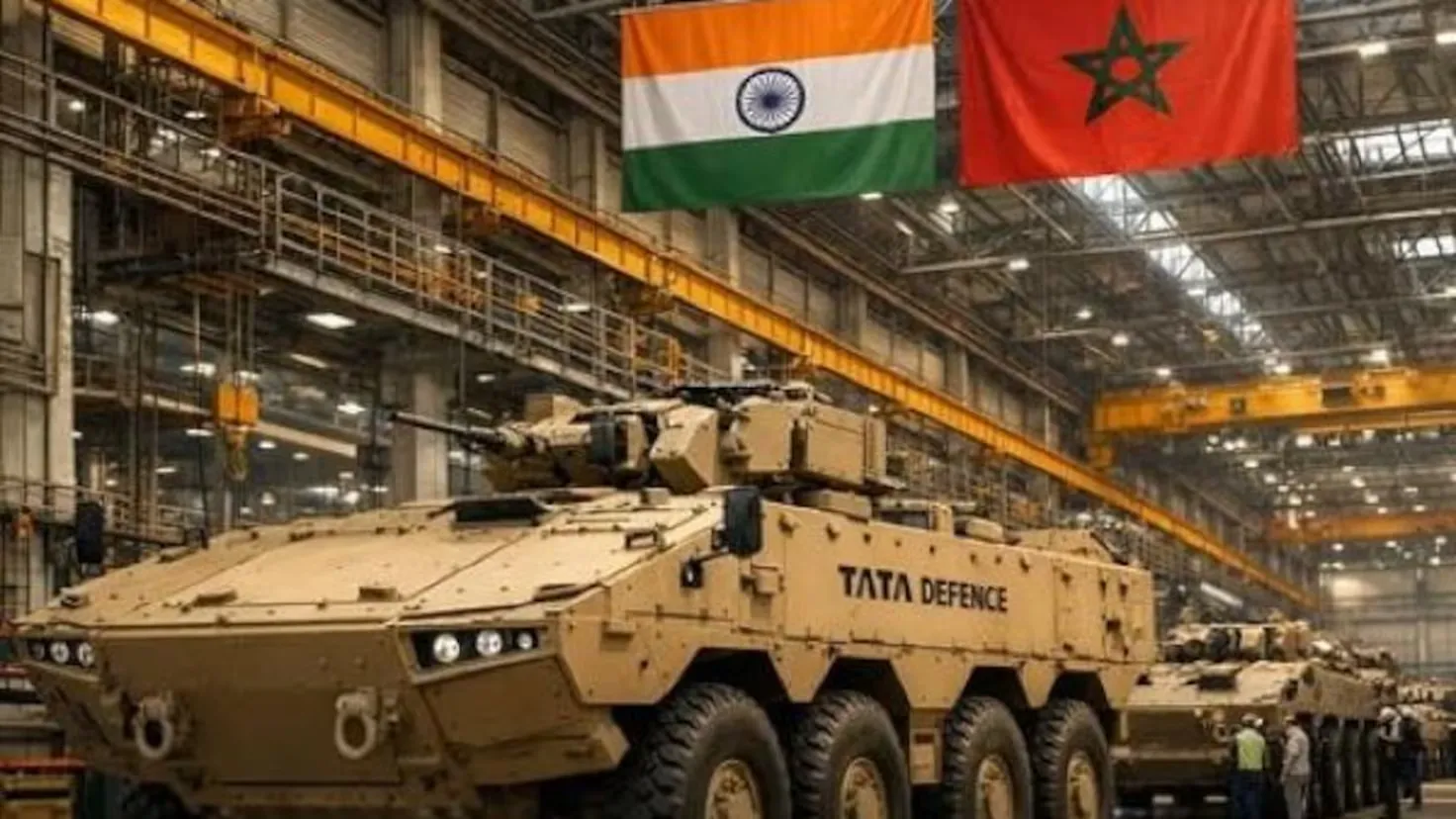
A striking example of this collaboration can be seen in the Tata Advanced Systems facility located in Berrechid, near Casablanca, where WhAP 8x8 armored vehicles are being manufactured. This project transcends mere industrial activity; it signifies the beginning of a national military value chain with a progressive integration of local components—targeting an ambitious 50% local content in the future, up from the current 35% sourced domestically.
The strategic direction of this movement is firmly supported by Morocco's political leadership. For several years, the Moroccan government has been working to build a self-sufficient defense base with the clear objective of producing domestically instead of relying solely on foreign purchases. This vision aligns with the directives of King Mohammed VI, who has positioned military industry within the framework of national development strategy and the enhancement of strategic capabilities, fostering agreements that encompass technology transfer and local training.
The crucial turning point in this endeavor comes with India. Unlike traditional partners such as the United States or various European powers, Morocco's relationship with New Delhi is rooted in the mutual sharing of production and knowledge. From Morocco's institutional perspective, the goal is to strengthen autonomy, ensuring a self-sufficient supply capacity in times of crisis and gaining greater control over the defense industrial cycle. A law passed on July 14, 2020, facilitated the creation of a framework designed to attract foreign companies under conditions requiring local production, prompting Morocco to seek partners willing to accept this model. Concurrently, specific industrial zones for defense have been developed, linking this growth with other strategic sectors such as automotive and aerospace, where Morocco already hosts significant international manufacturers.
India's involvement fits seamlessly into this strategy for two reasons. Firstly, India boasts its own industrial ecosystem capable of transferring technology. Secondly, it is eager to position itself as an alternative supplier in Africa, having established ties with Egypt’s industry and even exploring partnerships with Spanish firms for production. The agreement formalized between the two countries in a memorandum of understanding in 2025 extends beyond mere industrial cooperation; it encompasses training, cyber defense, and technical collaboration, highlighting a structural, long-term relationship rather than a sporadic engagement. Moreover, India perceives Morocco as a gateway to the African market as part of its strategy to export defense under the “Make with Friends” model.
Morocco's ambitions extend beyond domestic production. The plan aims to establish the country as a regional platform, leveraging its strategic geographic position between Europe and Africa, along with its political stability. Local production of systems such as armored vehicles is merely the initial step; the focus is on generating export capacity to African nations seeking to modernize their armed forces. This positioning becomes increasingly relevant in a global context where some traditional suppliers have reduced their presence, thus creating opportunities for new industrial players to emerge.
Simultaneously, the next stage in the industrial landscape is already being contemplated: advancing toward more complex systems. The collaboration with India is not confined to land vehicles; discussions have included the potential to expand the model into the aerospace sector, where Morocco has already established a solid civil industrial base. The key here is the incremental shift towards greater local integration in the design, development, and manufacturing processes.
Currently, approximately 150 aerospace companies operate within Morocco, featuring global players such as Airbus, Boeing, Safran, Thales, and Collins Aerospace. Collectively, they generate around €2.5 billion annually and provide over 25,000 direct jobs. Products range from structural components for fuselages, electrical wiring systems (EWIS), engine parts, to cabin interiors, destined for models like the Airbus A320 and Boeing 737. In fact, it is commonly understood within the sector that nearly every commercial aircraft includes parts produced in Morocco, underscoring the country’s actual integration into the global supply chain.
Notably, the French group Safran has decided to establish an assembly line for aircraft engines related to the Airbus A320neo in Morocco, with plans to produce hundreds of units annually. Projects of this nature imply genuine technology transfer and solidify Morocco's role in critical activities within the sector, moving beyond mere subcontracting. Similarly, Boeing has strengthened its presence through sustained industrial agreements since 2016, including the production of structures for the 737 MAX program and the creation of local supplier ecosystems.
As reported by as.com.