
Embracing the 2030 World Cup: A Milestone for Morocco
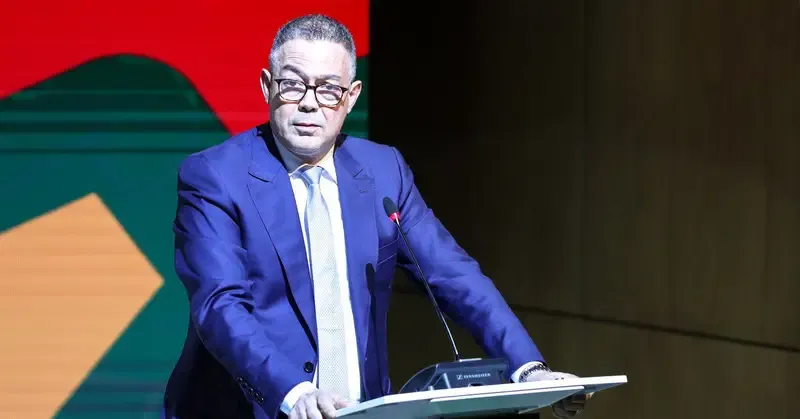
Fouzi Lekjaa, the president of the Royal Moroccan Football Federation, expressed that Morocco's role as a co-host for the 2030 FIFA World Cup alongside Spain and Portugal marks a significant achievement in the nation’s developmental journey over the past two decades. This prestigious event is anticipated to expedite the completion of several large-scale projects related to transportation and infrastructure, which have been in the pipeline. In an insightful interview with "Jeune Afrique," Lekjaa elaborated on how the planned high-speed trains, highways, and airports, although already scheduled, will see their timelines accelerated in preparation for the global sporting event, ensuring readiness for the occasion.
Furthermore, Lekjaa posits that the 2030 World Cup could serve as a powerful engine for economic growth, job creation, and youth integration. He envisions that hundreds of thousands of Moroccan and African youths will benefit from training programs aimed at enhancing their skills and fostering business development. In this context, he proposed a model that supports startups in transitioning into small and medium-sized enterprises, which can then evolve into larger companies. This approach emphasizes that the African dimension of the World Cup extends beyond merely organizing matches; it represents broader economic and developmental opportunities.
Cultural Synergy and Collaborative Efforts
In addition to the sporting and developmental aspects, Lekjaa highlighted the cultural and civilizational significance of the joint organization between Morocco, Spain, and Portugal. He believes that this collaboration will enhance the connection between the Mediterranean and African shores, showcasing the region as a hub for exchange, cooperation, and mutual success. Regarding the ongoing debate about which country will host the World Cup final in 2030, Lekjaa remarked that the notion of competition primarily arises from the Spanish side. He reaffirmed Morocco's commitment to adhering to the guidelines and regulations set forth by FIFA.
He also pointed out that a FIFA task force has already visited the proposed cities and facilities in Morocco, Spain, and Portugal, with decisions regarding the hosting duties to be made within the established timelines. Lekjaa firmly stated that Morocco is resolute in its stance to advocate for its right to host the final, representing the African continent in this joint endeavor, asserting that Africa deserves to host the World Cup final for the second time in a century.
Moreover, Lekjaa acknowledged the synergy between Morocco, Spain, and Portugal, emphasizing a philosophy of cultural and civilizational integration. He reiterated that Morocco will staunchly defend its rights and those of Africa to have a more prominent presence in this global event. In another part of the discussion, he touched on his relationship with Gianni Infantino, the president of FIFA, in the context of the upcoming FIFA presidency elections, clarifying that his support for Infantino does not equate to an unconditional endorsement of his character, but rather aligns with a vision that views football as a means to unify nations and peoples.
Lekjaa stressed that his interactions with Infantino and UEFA officials aim to foster the development of FIFA's governance and enhance internal balance mechanisms, cautioning that any management system lacking checks and balances remains susceptible to errors, even when decisions are made with good intentions. He emphasized the necessity for Infantino's agenda to be a subject of discussion and consultation with various federations, stating that his priority lies in ensuring the institution's stability and its adaptability to the evolving landscape of global football, encompassing fan engagement, management practices, and revenue generation.
Concluding his remarks, Lekjaa emphasized that while leadership within FIFA may change, the organization itself must maintain its equilibrium and modernize its operational methods, framing his support for Infantino within a broader perspective related to FIFA's future governance rather than an affiliation with the individual president.
As reported by alyaoum24.com.