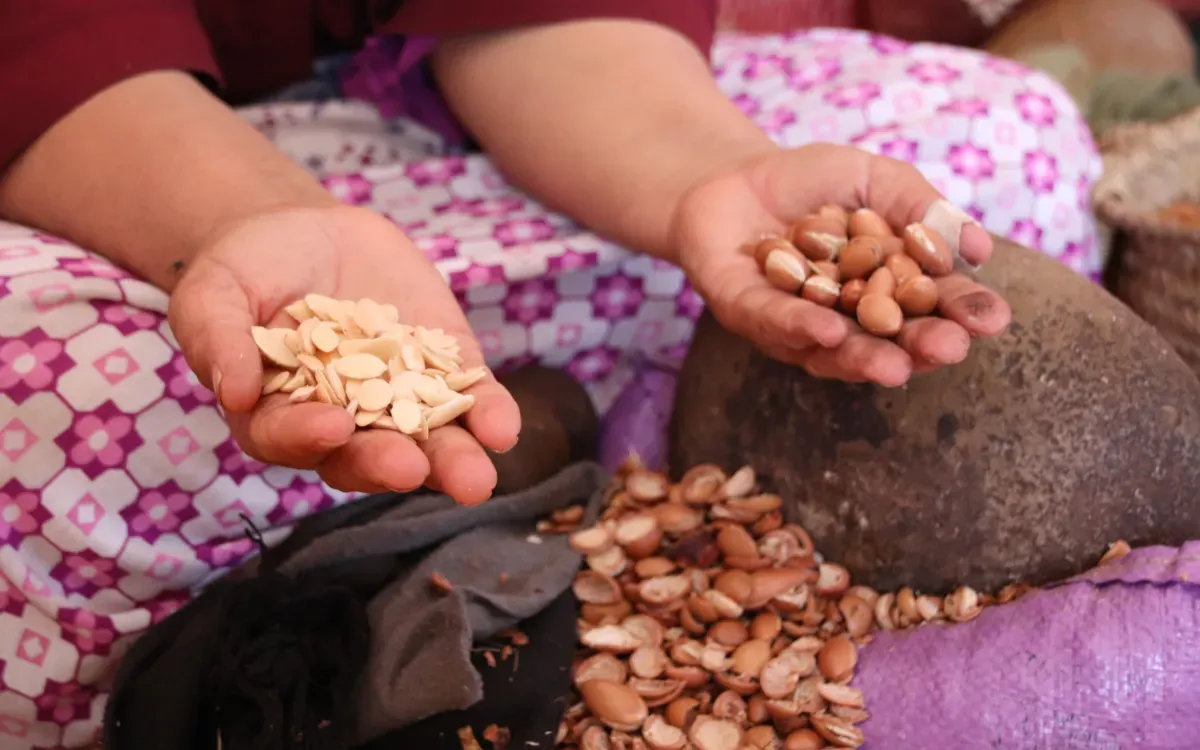

As of August 16, 2026, Morocco holds a near monopoly on the global argan oil market, yet the country struggles to capture the full value of this lucrative asset. According to the World Bank, a staggering 93% of Morocco's argan oil exports are shipped in bulk, only to be processed and sold overseas as finished products, thereby depriving the nation of significant economic benefits.
This alarming observation is detailed in the World Bank's Country Private Sector Diagnostic 2026, which identifies Morocco as the exclusive global producer of argan oil, with Israel being the only other nation contributing a mere 20,000 argan trees. The critical issue arises post-extraction, where the majority of the oil leaves the kingdom in containers larger than five liters, subsequently transformed into soaps, shampoos, creams, and other cosmetic products abroad. This practice leads to a significant portion of the value-added benefits being captured outside of Morocco.
Challenges Facing Local Cooperatives
The World Bank further highlights a concerning concentration within the sector, where just five companies and large cooperative unions dominate the majority of formal exports. In stark contrast, approximately 1,200 registered cooperatives, which employ over 8,500 women, remain sidelined from this economic success. This disparity is largely attributed to the financial challenges faced by many cooperatives in acquiring and storing argan fruits, especially when competing against private enterprises that possess greater capital and better access to international markets.
Despite these challenges, the potential for growth is substantial. The World Bank estimates that enhancing the transformation of argan and natural ingredients could attract around $600 million in additional private investments by 2035 and create approximately 17,000 jobs. Therefore, Morocco's challenge extends beyond merely producing a commodity for which it holds a near-global market share; it must also find ways to retain more of the value created when this oil is transformed into finished cosmetic products.
As reported by bladi.net.