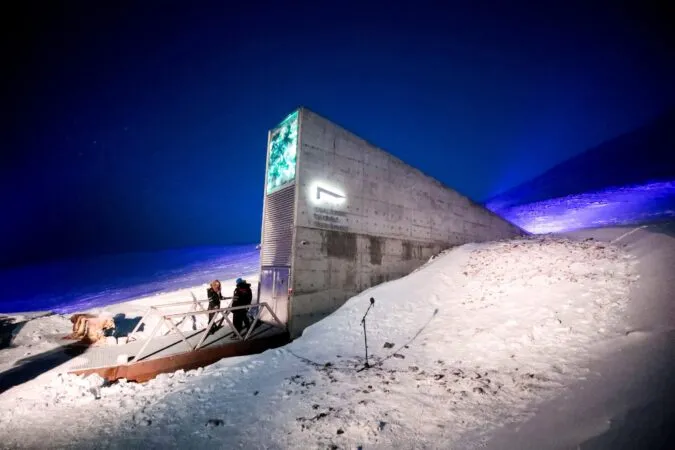
Recent reports indicate that the Kingdom of Morocco has taken a significant step in global agricultural preservation by storing rare seeds in the Svalbard Global Seed Vault, commonly referred to as the "Doomsday Vault." This initiative aligns with international efforts aimed at safeguarding the genetic diversity of crops and ensuring their sustainability in the face of natural disasters, armed conflicts, and climate change.
According to Deutsche Welle (DW), the Svalbard Vault is situated within a glacier in the Svalbard archipelago of Norway, close to the Arctic Circle. The naturally low temperatures in this region provide an ideal environment for long-term seed preservation, even in cases of power outages or major disasters. The facility houses over 1.4 million seed samples from around the globe, making it the largest seed reserve bank in the world.
The Moroccan shipment included local varieties of wheat, barley, and lentils, alongside other crops that form part of the nation’s agricultural genetic heritage. These varieties were selected for their exceptional resilience to drought, high temperatures, and their adaptability to semi-arid environments, as well as their efficiency in utilizing limited water resources. Such traits have gained increasing importance in light of the repercussions of climate change.
DW also noted that the primary objective of this vault is to provide a backup of global agricultural genetic resources, enabling countries to recover their seeds in case their gene banks are compromised due to wars, natural disasters, or other crises.
This mechanism has proven to be more than just a precautionary project; it has been actively utilized during the war in Syria when the gene bank in Aleppo suffered significant damages. This prompted the retrieval of seeds stored in the Svalbard Vault for replanting in secure areas, thereby preserving agricultural varieties that were at risk of extinction.
The Moroccan contribution, as highlighted by DW, underscores the importance of maintaining national genetic wealth as a cornerstone of food security, not only for Morocco but also within the broader context of global efforts to protect agricultural resources and ensure their sustainability for future generations amid escalating climatic and humanitarian challenges.
As reported by alyaoum24.com.