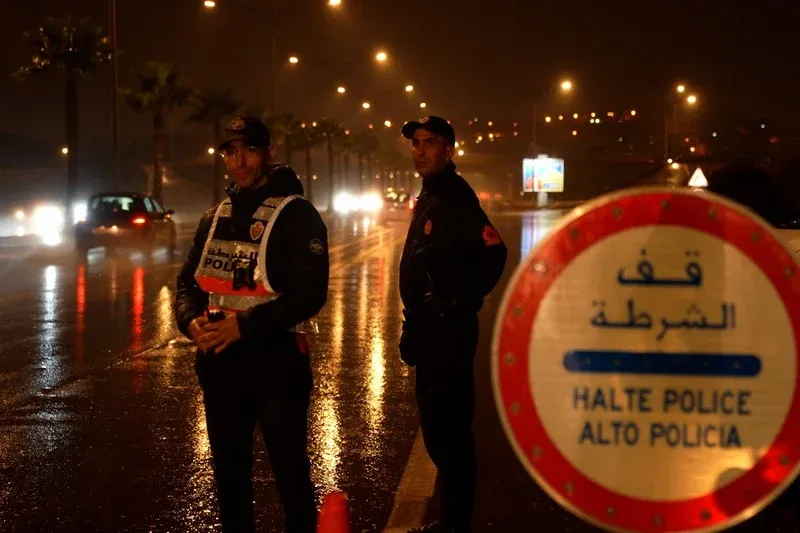

The **Moroccan Mission to the [European Union](https://elfarodeceuta.es/vivas-refuerza-bruselas-presencia-ceuta-instituciones-europeas/) and NATO** made headlines this Monday by sending a targeted letter to several Members of the European Parliament (MEPs), outlining Rabat's stance regarding the ongoing Ceuta crisis. This communication came just a day before the European Parliament convened in Strasbourg to discuss the unprecedented influx of [**80,000 migrants into the autonomous city on July 30 and 31**](https://elfarodeceuta.es/cronica-chantaje-mes-crisis-ceuta-plante-marruecos/). According to reports from _Europa Press_, this letter was received by MEPs from the **PSOE, PNV, and ERC** parties, while members of the **PP, Vox, Sumar, Compromís, Podemos, or BNG** were notably excluded from this correspondence. The remaining groups consulted had not responded by the time this information was published.
Dated **September 14**, the letter articulates Morocco's official position ahead of the upcoming vote regarding Ceuta, asserting that Rabat is committed to readmitting **“all affected individuals, including Moroccan nationals, unaccompanied minors, and nationals from third countries”** who entered the city at the end of July. The Moroccan diplomatic representation aims to provide clarification and contribute constructively to the European Parliament's debate on the matter.
Furthermore, Rabat claims that its authorities are diligently working to clarify **“the causes and actors”** behind the events in Ceuta, specifically highlighting the **“manifest role of disinformation spread through social media”** and the **“exploitation of vulnerable individuals by trafficking networks”** as contributing factors. One of the key points raised in the letter involves two essential questions posed by Morocco. The first queries **“what interest”** Morocco would have in **“creating a greater crisis with Spain and the European Union,”** particularly when Rabat recalls that the EU is **“Morocco’s primary partner”** and that bilateral relations are currently experiencing a phase of increased strengthening and consolidation.
The second question directly addresses the timing of the mass entry: **“Would Morocco have deliberately instigated a migration crisis on the day of the national celebration of the Kingdom, the Throne Day?”** This inquiry underlines Morocco's intention to challenge assumptions about its role in the crisis. Additionally, the letter reflects on the statements made by the Spanish government, which assert that the available information **“did not allow for attributing responsibility for these events to Morocco”** and acknowledges Morocco's **“swift and active cooperation”** in facilitating the return of most irregular migrants.
In this context, the diplomatic mission emphasizes Morocco's systematic adherence to **“its commitments to Spain and the European Union”** while working closely with its European partners. Citing data from **Frontex**, the letter reveals that this cooperation has successfully prevented approximately **75,000 individuals** from entering [**Spain**](https://elfarodeceuta.es/bruselas-concede-espana-millones-euros-afrontar-crisis-ceuta/) irregularly each year, with a total of **227,000 thwarted attempts between 2023 and 2025**.
The letter also addresses the sudden arrival of **“several tens of thousands of individuals”** within a short time frame, noting that many were determined to risk their lives crossing the Mediterranean. Morocco argues that managing such flows **“cannot be addressed through the use of lethal force.”** Furthermore, it emphasizes that the employment of such force cannot be considered a viable means or solution according to the applicable regulations for managing migration flows. This correspondence to MEPs arrives just before the European Parliament's debate on the events in Ceuta and as lawmakers prepare to vote on a **resolution concerning the crisis**. Through this communication, Rabat seeks to present its version of events directly to Spanish representatives in the European Parliament, reaffirming its commitment to **the repatriation of individuals who entered Ceuta and to cooperative migration efforts with Spain and the European Union**.
As reported by elfarodeceuta.es.