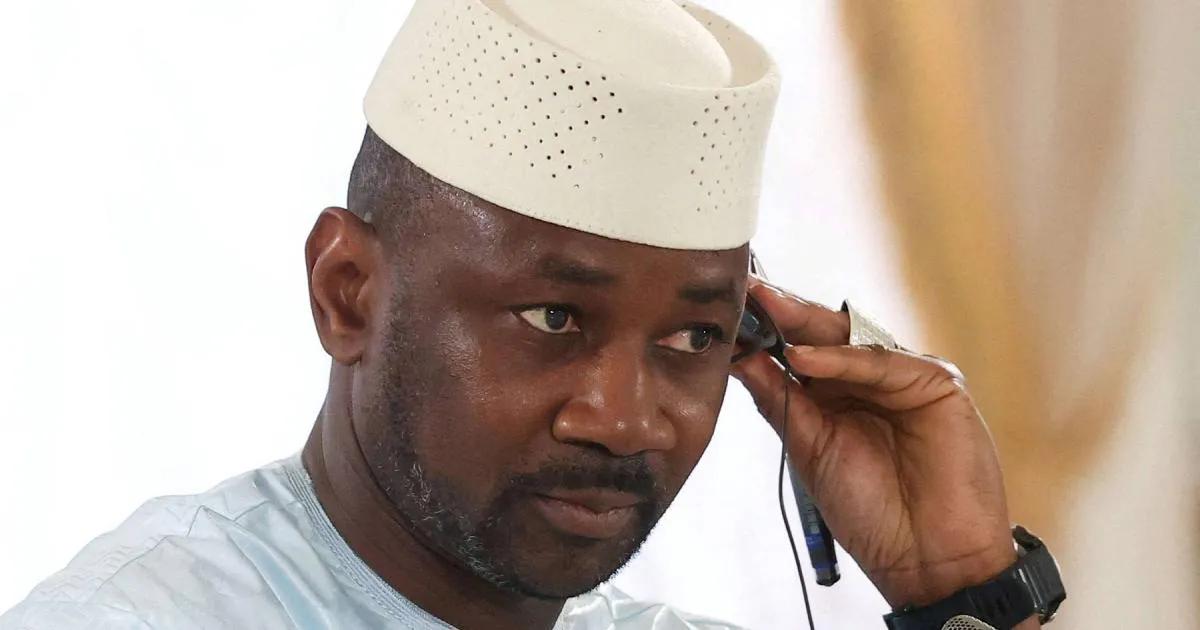

Morocco has played a pivotal role in facilitating the release of a French intelligence officer detained in Mali for nearly a year, showcasing its growing diplomatic influence in the Sahel region. The release of Yann Vezilier, who was pardoned by Mali's transitional President Assimi Goita on August 13, came after he was sentenced to 20 years in prison for allegedly undermining state security. However, the pardon did not annul his conviction, and he was required to leave Mali immediately. This diplomatic achievement was publicly acknowledged by the Malian government, which thanked a 'brother country' for its efforts without explicitly naming Morocco, although French media sources have confirmed that Morocco acted as the intermediary in the negotiations between Bamako and Paris.
The situation emphasizes Morocco's strategic decision to maintain open lines of communication with Mali, especially as the relationship between France and the military-led government in Mali has soured. Vezilier, who was an officer in France's foreign intelligence service (DGSE) and worked at the French embassy in Bamako, was arrested in August 2025 under accusations of participating in a plot to destabilize the Malian government. France, however, refuted these claims, arguing that Vezilier's diplomatic status provided him with protections under the Vienna Convention. The French Foreign Ministry expressed great satisfaction at his release, highlighting the sensitive nature of the case which intertwines the security interests of both nations at a time when Mali has expelled French troops and begun forging closer ties with Russia.
Morocco's approach has been notably different, as it has sought to maintain political, security, and economic relations with Bamako while steering clear of direct conflicts regarding Mali's geopolitical shifts. Mohammed Issam Laaroussi, the director of the Perspectives Center for Geopolitical and Strategic Studies in Rabat, noted that Morocco's diplomatic strategy has enabled it to keep communication channels open with governments that have distanced themselves from France. Abdelfattah El Fatihi, who leads the Sahara and Africa Center for Strategic Studies, highlighted that Morocco's 'quiet diplomacy' and consistent engagement have built trust among Sahel governments.
The Vezilier case is not an isolated incident; it follows a precedent where Burkina Faso released four French nationals accused of espionage in December 2024, thanks to the mediation efforts of King Mohammed VI. French President Emmanuel Macron publicly thanked the Moroccan monarch for his involvement in securing their release, further cementing Morocco's role as a key diplomatic player in the region.
Despite its growing influence, Morocco does not seek to supplant France's historical dominance in the Sahel. It lacks a comparable military presence in the area and instead pursues a different engagement model focused on diplomacy, economic investment, development initiatives, security collaborations, and deep-rooted cultural and religious connections. An example of this strategy is Morocco's Atlantic initiative, which aims to enhance landlocked Sahel countries' access to Moroccan Atlantic ports, thereby fostering economic ties.
Ultimately, the case of Vezilier underscores how Morocco’s established relationships can be leveraged for diplomatic gains when traditional channels may falter. As France's influence wanes in Mali, Burkina Faso, and Niger, and as nations like Russia and Turkey expand their foothold in the region, Morocco is positioning itself as a competent mediator capable of engaging with various competing factions.
As reported by middle-east-online.com.