
Morocco's Growing Influence in Latin America
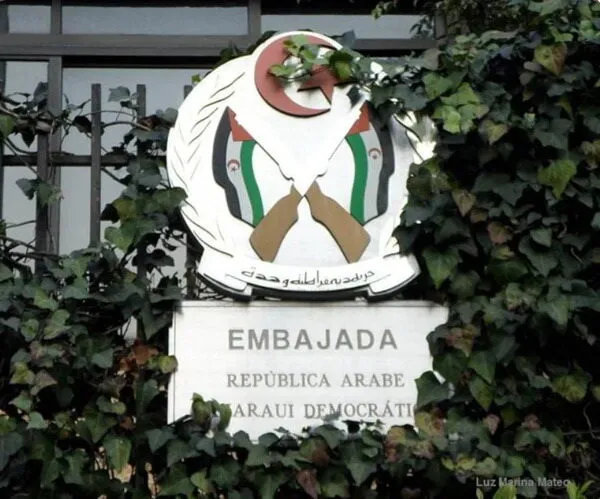
Recent developments in Latin America indicate a significant shift regarding the Western Sahara issue, a matter that has historically garnered substantial support for the Sahrawi cause. This change is not uniform across the region and cannot be solely interpreted through the traditional left-right political divide. Morocco has been making notable diplomatic strides in a region that has long been a bastion of international backing for the Sahrawi Arab Democratic Republic (SADR). Colombia serves as a clear example of this shift; under the new administration of Abelardo de la Espriella, Bogotá has frozen its relations with the SADR and has formally recognized Moroccan sovereignty over Western Sahara. This policy reversal not only contradicts former President Gustavo Petro's approach but also signals a commitment to enhancing collaboration with Morocco in various sectors, including trade, investments, food security, port infrastructure, and Atlantic connectivity.
Colombia is not an isolated case; similar patterns can be observed in other Latin American nations. Ecuador suspended its recognition of the SADR in 2024, while Bolivia severed its ties with the Sahrawi Republic in February 2026, simultaneously reestablishing relations with Morocco. Honduras has also made comparable moves, and the new Peruvian government has openly voiced support for Moroccan positions regarding the territory. These changes suggest a broader trend rather than isolated incidents, indicating a calculated Moroccan strategy that offers economic cooperation, investment opportunities, and trade markets while positioning Western Sahara at the forefront of its foreign relations agenda.
Complexities in Latin American Diplomacy
As Morocco solidifies its diplomatic presence, the situation has been evolving over the years within regional Latin American frameworks. In June 2022, the Latin American and Caribbean Platform of Solidarity with the Sahrawi People (PLACSO) alerted the Andean Parliament to Morocco's attempts to garner institutional support for its stance on Western Sahara. This warning is particularly significant when viewed from the 2026 perspective, as several nations that had previously maintained relationships or recognition of the SADR—namely Colombia, Ecuador, Bolivia, Peru, and Honduras—have since shifted their positions favorably towards Rabat. Furthermore, in 2025, an Andean Parliament plenary session held in Morocco featured the president promoting the kingdom as a strategic bridge between Africa, Europe, and Latin America, showcasing a continuity in diplomatic engagement that suggests Morocco is not merely reacting to changes in Latin American political landscapes but has been proactively building relationships and institutional presence.
Chile exemplifies the extent to which Morocco's narrative has permeated the region. The nation is rapidly deepening its economic ties with Rabat and has initiated discussions for what could become its first trade agreement with an African country. The Chilean government has echoed sentiments expressed in the Andean Parliament, framing Morocco as a 'gateway' to Africa. While this commercial logic is understandable given Morocco's strategic advantages in terms of ports, international connections, and a growing economic footprint across various African nations, it does not necessitate an endorsement of the accompanying political narrative. The complexities of international relations mean that diplomatic positions are often intertwined with economic considerations, and the relationship between Chile and Morocco regarding phosphates—a crucial input for Chile's agricultural export economy—illustrates how economic dependencies can influence diplomatic stances.
Despite Morocco's advancements, other Latin American nations continue to support the Sahrawi cause. Mexico maintains its relations with the SADR, advocating for the right to self-determination at the United Nations, while Venezuela even has an ambassador accredited to the SADR. Cuba has reiterated its support for Sahrawi self-determination, and Uruguay retains a strong tradition of solidarity with the Sahrawi people. Brazil represents a more nuanced case; while it does not recognize the SADR, it has cultivated significant economic relationships with Morocco and has adopted increasingly favorable language towards Moroccan efforts and autonomy proposals. Nevertheless, Brazil has emphasized that the resolution of the issue should remain within the United Nations framework, reflecting a distinct approach compared to other Latin American nations.
Argentina presents a different paradox. The current government, ideologically aligned with forces supporting Morocco, might be tempted to follow suit, yet the longstanding issue of the Malvinas introduces a structural constraint that transcends any individual administration. Buenos Aires has framed much of its foreign policy around the principles of decolonization and territorial claims within the context of the United Nations. This does not imply that Argentina equates the Malvinas and Western Sahara situations, as it explicitly argues that the principle of self-determination does not apply in the Malvinas case; however, it complicates the endorsement of unilateral resolutions of territorial disputes that remain on the decolonization agenda of the UN.
Chile embodies a third contradiction. Although it has never formally recognized the SADR, there have been longstanding pro-Sahrawi sentiments within its Parliament, political parties, and civil society. Concurrently, its economic relations with Morocco are expanding rapidly, reaching $80.2 million in bilateral trade by 2025, with imports significantly outpacing exports, particularly in phosphates. In 2026, both governments took the first step towards what could become Chile's inaugural trade agreement with an African nation. Morocco's offerings of fertilizers, markets, and promises of access to Africa create a compelling case for Chile, yet this does not imply that Moroccan policies dictate Chile's stance on the Sahara issue. Rather, it elucidates why Santiago approaches this matter with caution, contrasting with the robust support of the Sahrawi cause evident in segments of Chilean society and institutions.
However, it is crucial not to lose sight of the fundamental reality: Morocco is actively contesting the Latin American landscape for support against the Sahrawi solidarity movement and the SADR's own diplomatic efforts. Morocco has adeptly recognized what it can offer: business opportunities, cooperation, fertilizers, markets, ports, and the promise of access to Africa. The challenge arises when such diplomatic exchanges require a dismissal of the realities surrounding Western Sahara, a territory that remains on the path of decolonization. No trade agreement can erase the fact that the Sahrawi people have an undeniable right to self-determination, and no shift in Latin American governance diminishes this claim. While Morocco may achieve governmental support, declarations, and new trading partners, it is essential not to conflate a series of diplomatic victories with a definitive loss for the Sahrawi cause in Latin America. States that recognize the SADR, governments advocating for self-determination, and civil society entities remain deeply rooted in solidarity with the Sahrawi people. Moreover, governments are not static; diplomatic decisions that favor Rabat today may be revisited tomorrow, as evidenced by Latin America's historical pattern of recognition, suspension, and re-establishment of relations with the SADR.
Morocco's diplomatic capabilities have indeed grown, but it has yet to achieve the critical objective of resolving the Western Sahara as a pending decolonization issue or undermining the international legitimacy of the Sahrawi claim. Despite the setbacks, this remains the primary limitation on Morocco's advances. Africa does not begin and end with Morocco, and the Western Sahara issue does not vanish merely because it is inconvenient for business dealings.
After fifty years of occupation, the pertinent question may no longer be just what Morocco is offering in Latin America, but rather what some governments are prepared to overlook in order to accept such an offer.
As reported by resumenlatinoamericano.org.