
Morocco's Position in Economic Freedom Rankings
Recent reports from Moroccan media have highlighted the country's ranking of 54th out of 161 economies in a 2026 economic freedom assessment, boasting a score of 63.74. This ranking, attributed to the Legatum Institute, positions Morocco as North Africa's leader in economic openness. However, reconciling this figure with the Legatum Institute's published materials presents a challenge. The latest available Prosperity Index from Legatum, released in 2023, evaluated 167 countries and indicates Morocco's economic openness as 72nd in a study from 2020, which included 157 nations. Additionally, the Heritage Foundation's 2026 Index of Economic Freedom places Morocco even lower at 83rd out of 184 countries. The discrepancies among these rankings illustrate the complexity of assessing a country's economic climate, emphasizing that investment data may hold greater significance than any singular ranking.
Understanding the Economic Landscape
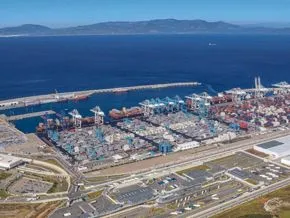
While the various indices may not align perfectly, they do converge on certain key insights about Morocco's economic environment. Legatum's 2020 study identified significant strengths in Market Access and Infrastructure, ranking Morocco 64th and noting improvements over the past decade. The report underscored the competitive nature of Morocco's mobile market, enhanced internet accessibility, and the robustness of its transport infrastructure, particularly highlighting Tanger Med as a pivotal container hub in the Mediterranean and Africa. This port complex has become integral to Morocco's industrial strategy, connecting Europe and Africa effectively.
However, the weaknesses identified across the assessments are equally notable. The Heritage Foundation's 2026 report highlights concerns regarding judicial effectiveness, government integrity, and labor freedom, while noting stronger scores in investment and financial freedom. Legatum's findings from 2020 echoed these sentiments, pinpointing domestic market contestability and labor-market dynamics as areas ripe for enhancement. Collectively, these indicators suggest that Morocco has successfully cultivated a favorable environment for export-oriented investment while facing challenges in its domestic economic competitiveness.
Morocco's success in attracting foreign investment is particularly evident in the manufacturing sector, with a focus on automotive assembly, aerospace, and electrical systems. The Office des Changes reported that merchandise exports reached approximately 456.3 billion dirhams in 2024, with automotive exports leading at about 157.6 billion dirhams. The New Investment Charter, which came into effect in 2023, aims to bolster private investment and diversify its distribution across strategic sectors.
However, the rankings themselves fall short of providing clarity on the intricacies of the Moroccan business landscape. Questions remain regarding market entry barriers for local firms, the efficiency of administrative processes, and the consistency of regulatory applications. These factors play a crucial role in determining whether Morocco's openness to foreign investment translates into widespread economic growth. Furthermore, the International Monetary Fund (IMF) projects Morocco's GDP to reach around $194 billion in 2026, with a growth rate of approximately 4.9% and a GDP per capita of about $5,100. While these figures are commendable for the region, they are relatively modest on a global scale.
In conclusion, when discussing Morocco's economic rankings, it is essential to specify the index, edition, methodology, and the number of countries evaluated. Investors should prioritize examining critical factors such as company formation, foreign direct investment, and regulatory execution over mere rankings. The true picture of Morocco's economic potential lies in these nuanced variables that composite indices often overlook.
As reported by ecofinagency.com.