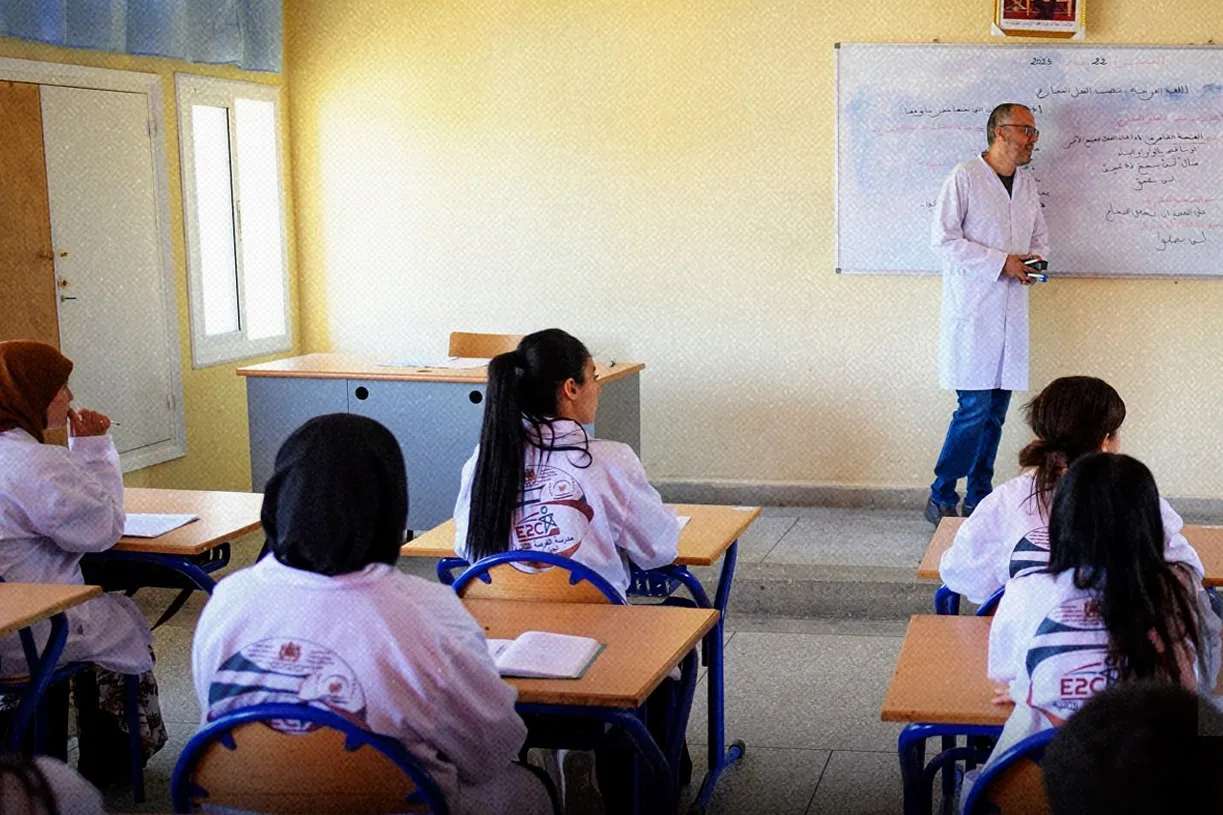

Agadir – The education system in Morocco is grappling with persistent challenges, evidenced by the recent findings from the OECD’s 2025 Programme for International Student Assessment (PISA). According to the assessment, Moroccan students recorded alarmingly low scores, ranking among the weakest performers out of 91 countries and economies evaluated. Specifically, Moroccan students achieved an average of 358 points in science, 321 in reading, and 355 in mathematics, all of which are significantly below the OECD averages for these core subjects. Furthermore, in the realm of computational problem-solving, Morocco’s average score was a mere 374 points, again falling short of the OECD benchmark.
The PISA 2025 results, released by the OECD, highlight the knowledge and skills of over 760,000 students worldwide, representing approximately 33 million 15-year-olds. This comprehensive assessment is designed to evaluate how well students can apply their knowledge, solve intricate problems, think critically, and communicate effectively in real-world contexts.
Alarming Proficiency Levels Among Moroccan Students
The report underscores a stark reality: a substantial majority of Moroccan students did not achieve the minimum Level 2 proficiency across the three core subjects assessed. Only 23% of Moroccan students managed to reach Level 2 or higher in science, starkly contrasted with 74% of their peers across OECD nations. In mathematics, a mere 16% attained at least Level 2, compared to an OECD average of 65%, while only 13% of students reached this level in reading, against an OECD average of 69%. On a more concerning note, the assessment revealed virtually no Moroccan students at the highest proficiency levels in science, mathematics, or reading, with only 0.1% reaching Levels 5 or 6, compared to 11.9% across the OECD. The overwhelming majority, approximately 73.2%, of Moroccan students remained below Level 2, highlighting a significant educational crisis in the country.
Declining Scores and Concerning School Conditions
When comparing the 2025 results to previous assessments, it becomes evident that Morocco is experiencing a downward trend. The average scores in mathematics and reading have declined since the last PISA cycle, with a drop of 10 points in mathematics and 18 points in reading. Although the science score remained relatively unchanged, it still marked a decline from 2022 levels. Looking back to 2018, Morocco’s average scores in all three subjects have deteriorated, with a notable increase in the percentage of low-performing students—up by eight percentage points in mathematics, 14 points in reading, and eight points in science during this period.
Beyond test scores, the assessment raises alarms about school attendance and classroom conditions. Approximately 36% of Moroccan students reported skipping at least one full school day in the two weeks leading up to the PISA test, significantly higher than the OECD average of 22%. Additionally, 62% admitted to skipping at least one class, compared to 24% in OECD countries, and 59% indicated they often arrived late to school. Disciplinary issues were prevalent as well, with 36% of students stating they struggled to concentrate in most or all lessons, and 41% reported that noise and disorder disrupted their science classes. Resource shortages are another pressing concern; 69% of school principals indicated that their students attended institutions lacking essential educational materials, including textbooks and IT equipment, while 52% cited physical infrastructure issues impeding the learning experience.
Despite these challenges, the PISA findings reveal a measure of resilience among Moroccan students. Approximately 67% expressed a willingness to exert extra effort when faced with challenging schoolwork, surpassing the OECD average of 60%. Furthermore, only 17% of students agreed that school had been a waste of time, which is lower than the OECD average of 24%. The findings also indicated that 82% of Moroccan students actively seek help from teachers when needed, and 84% turn to their classmates for assistance when they encounter difficulties in understanding the material.
As reported by moroccoworldnews.com.