
Morocco's Political Landscape and Relations with the U.S.
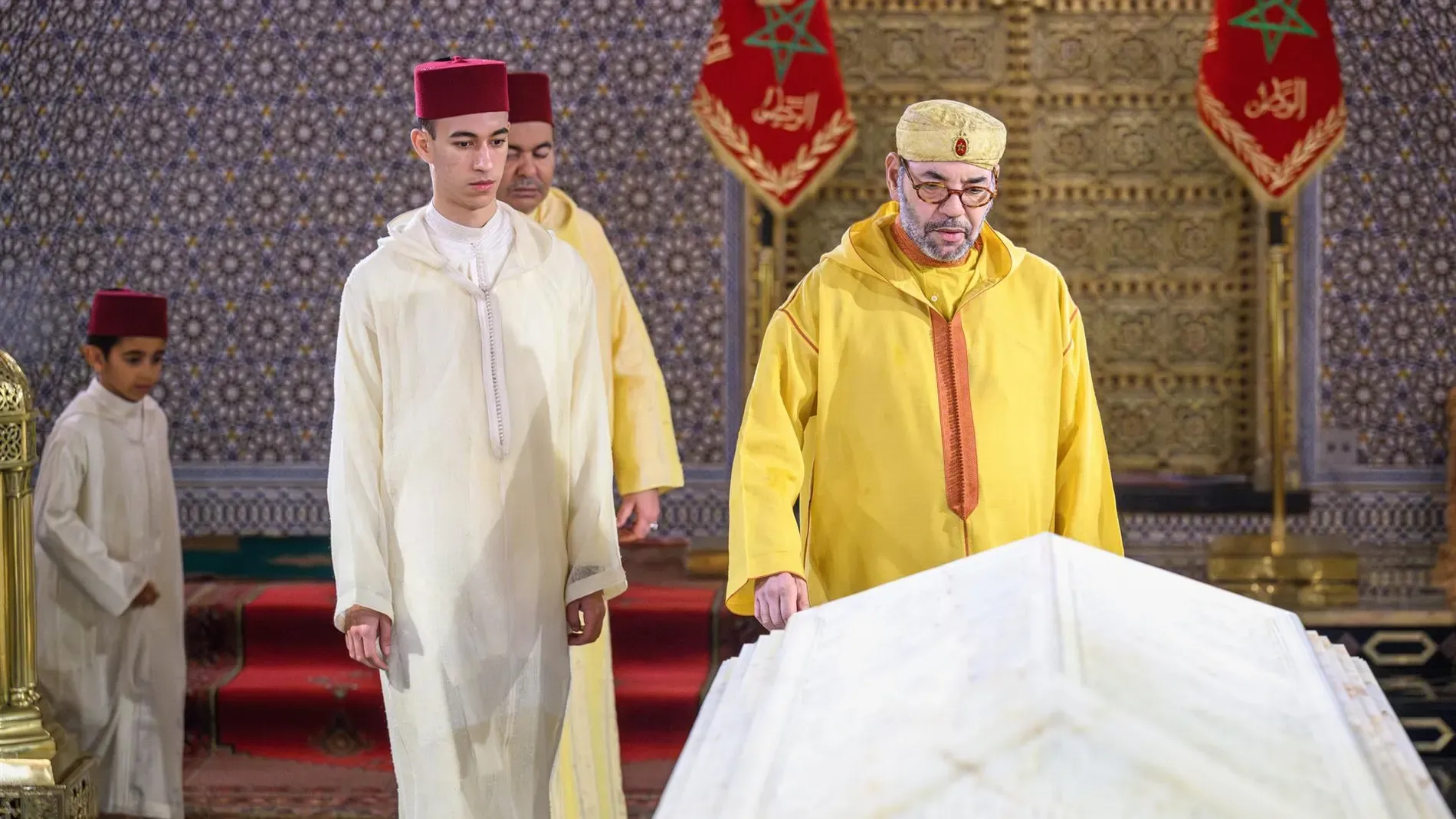
The Moroccan government may experience fluctuations in its political color, yet the strategic framework guiding Rabat's relationship with Washington remains steadfast. Echoing the sentiments of Hassan II, the father of the current king, Mohammed VI, an American diplomatic document from 1987 articulates a vision of U.S.-Morocco relations akin to a marriage, emphasizing that once established, such a friendship should endure indefinitely. This foundation of commitment was inherited by King Mohammed VI, who has not only maintained the alliance but has significantly expanded it through military procurement, infrastructure investments, and robust commercial ties, particularly in seeking U.S. support for Morocco's claims over Western Sahara. It is clear that no prime minister in Rabat can alter this fundamental equation.
The newly elected government will confront the unyielding political reality of a nation governed by an absolute monarchy, which is unlikely to alter the trajectory of its diplomatic relations with Washington, a relationship that predates even the friendship established with the Trump administration. Morocco's recognition of U.S. independence in 1777 and the Peace and Friendship Treaty signed in 1786, renewed in 1836, stands as the oldest such agreement still in effect, according to the U.S. State Department.
The Trump Highway: A Strategic Partnership
The historical ties between the two nations have evolved into a strategic partnership that has captivated Donald Trump. Notably, Morocco was among the significant diplomatic beneficiaries during Trump's initial term, especially following his recognition of Moroccan sovereignty over Western Sahara. The Moroccan Royal Palace has adeptly courted this relationship, as evidenced by the announcement in July that over 1,000 kilometers of highway connecting Tiznit to Dakhla will be named the "Donald J. Trump Highway." This roadway is pivotal for Morocco's plan to transform the southern region of the kingdom into a commercial corridor linking to Mauritania, West Africa, and the Sahel, as reported by Al Jazeera.
The parliamentary elections held on September 23 are unlikely to influence Morocco's foreign policy significantly. Traditionally, key portfolios such as Defense and Foreign Affairs remain under royal control, with the broader government policy being shaped by the king's environment, according to AP News. Furthermore, a roadmap detailing the future of bilateral relations has already been outlined, extending at least until 2036. In April, a military delegation from Rabat, led by Abdellatif Loudiyi, the Minister Delegate to the Head of Government responsible for National Defense Administration, and General Mohamed Berrid, traveled to Washington to formalize this roadmap during the XIV Morocco-U.S. Defense Consultative Committee meeting.
This new roadmap encompasses training, knowledge sharing, operational planning, joint exercises, material acquisition, technological innovation, defense industry collaboration, and cybersecurity initiatives, as reported by the Moroccan digital newspaper Médias24. This agreement signifies Morocco's ambition to transition from being merely a purchasing nation to a military-industrial partner. On July 13, U.S. Africa Command (AFRICOM) signed a memorandum with the Royal Moroccan Armed Forces to establish the Multidomain Training and Experimentation Center for Africa in Tan-Tan.
The project is designed with three major components: a multidomain training area, a drone academy, and an innovation and experimentation center, with expectations for its development by 2030 according to AFRICOM. The initiative is already in motion, as evidenced by the first live-fire demonstration conducted in August, aimed at testing long-range precision strike capabilities with the involvement of the U.S. defense industry.
As a direct outcome of the memorandum, Rabat is set to increase its military investments. Since 2004, Morocco has been the largest African buyer of U.S. military equipment, with active contracts valued at approximately $8.545 billion, as per State Department figures. This includes a range of systems such as F-16 aircraft, AH-64 Apache helicopters, HIMARS rocket systems, Abrams tanks, radars, missiles, communication systems, and ammunition.
Moreover, a recent joint statement issued by U.S. representative to the United Nations Mike Waltz, Moroccan Foreign Minister Nasser Bourita, and Israeli counterpart Gideon Sa'ar reaffirmed the Abraham Accords regarding cooperation in security, technology, trade, finance, agriculture, water, energy, and telecommunications, according to Global Security. The statement also urged Rabat and Tel Aviv to deepen their relations. Currently, Morocco allocates a significant portion, about 24%, of its military budget to purchases from Israel, based on data from El País.
Given these developments, the new Moroccan executive will have minimal leeway to alter the established relationships and agreements centered around the Royal Palace. The government emerging from the elections will primarily focus on managing the military relationship with Washington, counter-terrorism cooperation (which it also shares with Spain and Europe), technological collaboration, ties with Israel, U.S. support for Western Sahara, and relations with the often unpredictable Donald Trump. Beyond these parameters, the Moroccan Prime Minister will find his hands tied by the enduring power of the Alaouite monarchy.
As reported by larazon.es.