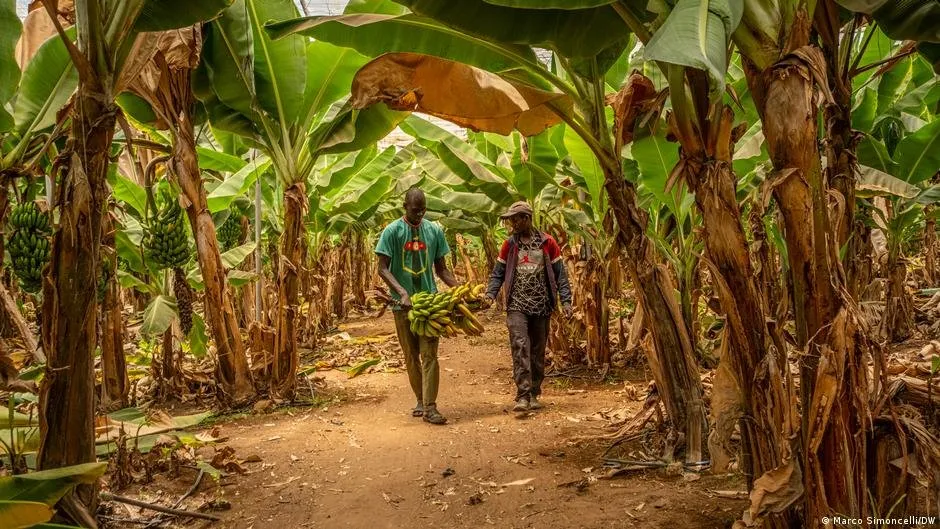

For many years, Morocco served primarily as a transit country for migrants, predominantly from sub-Saharan Africa, who aimed to reach Europe. However, this dynamic is undergoing a significant transformation as more individuals opt to stay in Morocco for extended periods, with some even choosing to establish permanent roots in the North African nation. Notably, the agricultural sector in Morocco has increasingly relied on these migrants, many of whom come from French-speaking countries in West Africa, highlighting a shift in the country's migration landscape.
The gradual transition of Morocco from a transit point to a destination for migrants is underpinned by various demographic trends that are reshaping migration patterns. Urbanization is a key factor, as many Moroccans have been moving from rural areas to cities in search of employment opportunities, leaving behind agricultural jobs. This exodus has created a significant demand for migrant labor, particularly in the agricultural sector, where there are ample job opportunities that local populations are unwilling to fill.
Moreover, stricter border controls enforced by Moroccan authorities, in collaboration with European partners, have made perilous sea crossings to the European Union increasingly difficult. Consequently, many migrants find themselves stranded in Morocco, attempting to adapt to their situation by seeking employment within the country. The actual scale of this trend remains challenging to measure, as a considerable number of migrants work in the informal sector, and Moroccan authorities have been hesitant to regularize their status, leaving official migration statistics unable to accurately account for irregular migration.
According to reports from the Reuters news agency, farmers and officials across various rural regions of Morocco are witnessing a pronounced demographic shift in migration patterns, reflecting broader economic and social changes. For instance, in the Souss-Massa region near the coastal town of Agadir, a significant agricultural facility has become a hub for migrant labor, addressing critical workforce shortages. Over 24,000 hectares of greenhouses thrive in the Chtouka plains, contributing to more than 80 percent of Morocco's fruit and vegetable exports, showcasing the area's economic importance.
One individual who has experienced this firsthand is Abdulfattah Aliou, a 23-year-old migrant from Togo. Aliou attempted to reach the European Union by entering one of Spain's northern enclaves but was intercepted and returned to Morocco. Following this setback, he was relocated further south by Moroccan authorities to discourage further attempts at crossing the border. Once settled in the region, he sought employment in agriculture, stating, "Working is better than asking for charity in the streets," reflecting the harsh realities faced by many migrants.
Another migrant, Alioun Dialou from Senegal, has been working on farms in the region for nearly two decades. He has observed significant demographic changes, noting that the local population has quadrupled since the late 1990s due to an influx of migrant labor. Despite living in difficult conditions, Dialou is focused on earning enough to support his family, including his 11-year-old daughter, who is integrating into the local school system. His story encapsulates the complex interplay of migration, labor demands, and the evolving social fabric of Morocco.
Many Moroccans have relocated to urban areas not by choice but due to the devastating impact of prolonged droughts that have ravaged the country's agricultural sector. Cities like Tangier, Rabat, and Casablanca have seen steady growth, with many Moroccans building new lives amidst dwindling rural opportunities. Official statistics reveal that approximately 1.7 million agricultural jobs have been lost since 2000, with the percentage of Moroccans engaged in agriculture halved over the past two decades.
Experts, including Rachid Benali, head of the national farm producers' confederation, COMADER, express concern that reversing this trend is unlikely, as urbanized individuals become less inclined to return to rural work. Following years of drought, the demand for farm labor has surged, leading to a reliance on migrant workers, who often accept significantly lower wages than their Moroccan counterparts. Abdelaziz El Maanaoui, a producers' association leader in the Chtouka plains, emphasizes that without sub-Saharan labor, many farms would struggle to operate effectively.
In light of the increasing dependence on irregular migrant labor in agriculture, there are growing calls to regularize the status of approximately 150,000 migrants in Morocco. El Maanaoui supports this initiative, highlighting the potential benefits for the agricultural sector as Morocco faces a declining fertility rate and an impending labor shortage. With the government's ongoing investments in urban infrastructure and the inevitability of continued urbanization, the agricultural industry must adapt to these changes to maintain competitiveness.
As the landscape of migration evolves, Morocco's role as both a transit country and a destination will continue to shape the lives of countless individuals seeking better opportunities. The dual challenges of labor shortages and the need for migrant regularization present a complex scenario for policymakers and stakeholders alike.
As reported by infomigrants.net.