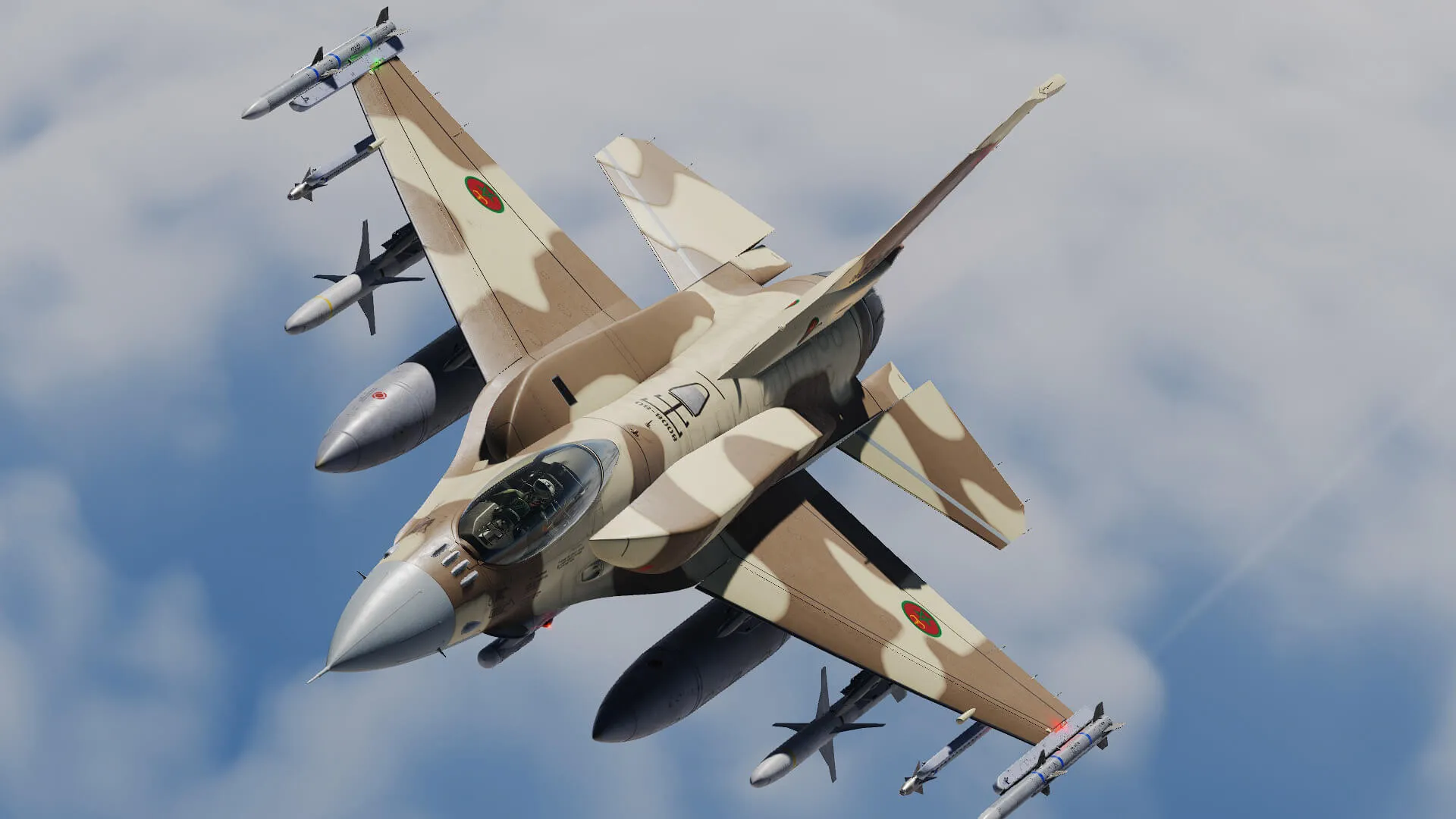

The Moroccan acquisition of 25 F-16 Block 72 fighter jets is progressing to a more advanced stage, coinciding with the commencement of new electronic warfare tests associated with this next-generation aircraft in the United States. Official U.S. documents reveal that Morocco has requested these state-of-the-art fighter jets, in addition to a separate initiative to upgrade 23 existing F-16 Block 52+ aircraft to the F-16V standard. Washington approved both deals in 2019, with an estimated maximum value of $3.787 billion for the new aircraft and $985.2 million for the upgrades.
Significant technological advancements in this deal were recorded on August 5, when L3Harris Technologies, a U.S. company specializing in defense and electronic warfare, announced the successful completion of a series of flight tests at Edwards Air Force Base. For the first time, both F-16C and F-16D aircraft participated, equipped with components of a comprehensive digital electronic warfare suite. The tests focused on the system's ability to detect, identify, and counter electromagnetic threats, ensuring its functionality in scenarios involving multiple aircraft. The company has noted that eight nations have opted for this system, and production is set to ramp up to meet a program currently encompassing 233 units.
However, it remains premature to assert that any delays in the Moroccan fighter jet program are solely linked to the Viper Shield system. The notice published by the U.S. Defense Security Cooperation Agency regarding the Moroccan deal in 2019 included 26 AN/ALQ-213 electronic warfare management systems and 26 AN/ALQ-211 AIDEWS systems, without specifically mentioning Viper Shield, which was still in later stages of development and integration at that time. As the F-16 Block 70/72 program advances, this new system has become part of the electronic warfare capabilities associated with several clients of this model, including Morocco, according to specialized defense sources. Hence, it can be stated that Viper Shield has now been integrated into the Moroccan variant of the fighter jet.
The enhancements introduced by the new fighter jets extend beyond just the electronic warfare system. U.S. deal documents indicate that the Moroccan version of the F-16 Block 72 will feature a wide array of advanced combat and electronic systems. This package includes the APG-83 AESA radar, modern mission computers, the Link 16 tactical data link system, encrypted navigation and communication systems, advanced targeting helmets, and Sniper targeting pods, along with armaments that comprise AIM-120C-7 air-to-air missiles and GBU-39/B small diameter bombs.
The APG-83 AESA radar is considered one of the most critical elements of this upgrade due to its enhanced capabilities for target detection, tracking, electronic countermeasure resistance, and managing multiple threats simultaneously. According to Lockheed Martin, the radar benefits from technologies and software developed from experiences gained in the radar families used on the F-22 and F-35 fighters. Furthermore, this combat package was strengthened in December 2024 when the United States approved the sale of up to 30 additional AIM-120C-8 missiles to Morocco, with an estimated value of $88.37 million. These missiles enhance the Moroccan fighters' ability to engage in air combat beyond visual range, aligning with the effort to elevate the F-16 fleet to a more homogeneous standard concerning detection, communication, armament, and networked operations.
With the completion of the delivery of 25 new F-16 Block 72 fighters, alongside the upgrade program for the 23 existing F-16 Block 52+ aircraft to the F-16V standard, Morocco is set to possess a fleet of 48 technologically similar fighter jets. This development signifies that the program transcends merely acquiring new aircraft, evolving into a broader initiative aimed at unifying the combat structure of the Royal Moroccan Air Force, encompassing radars, communications, electronic warfare, armament, and data exchange systems.
As reported by assahifa.com.