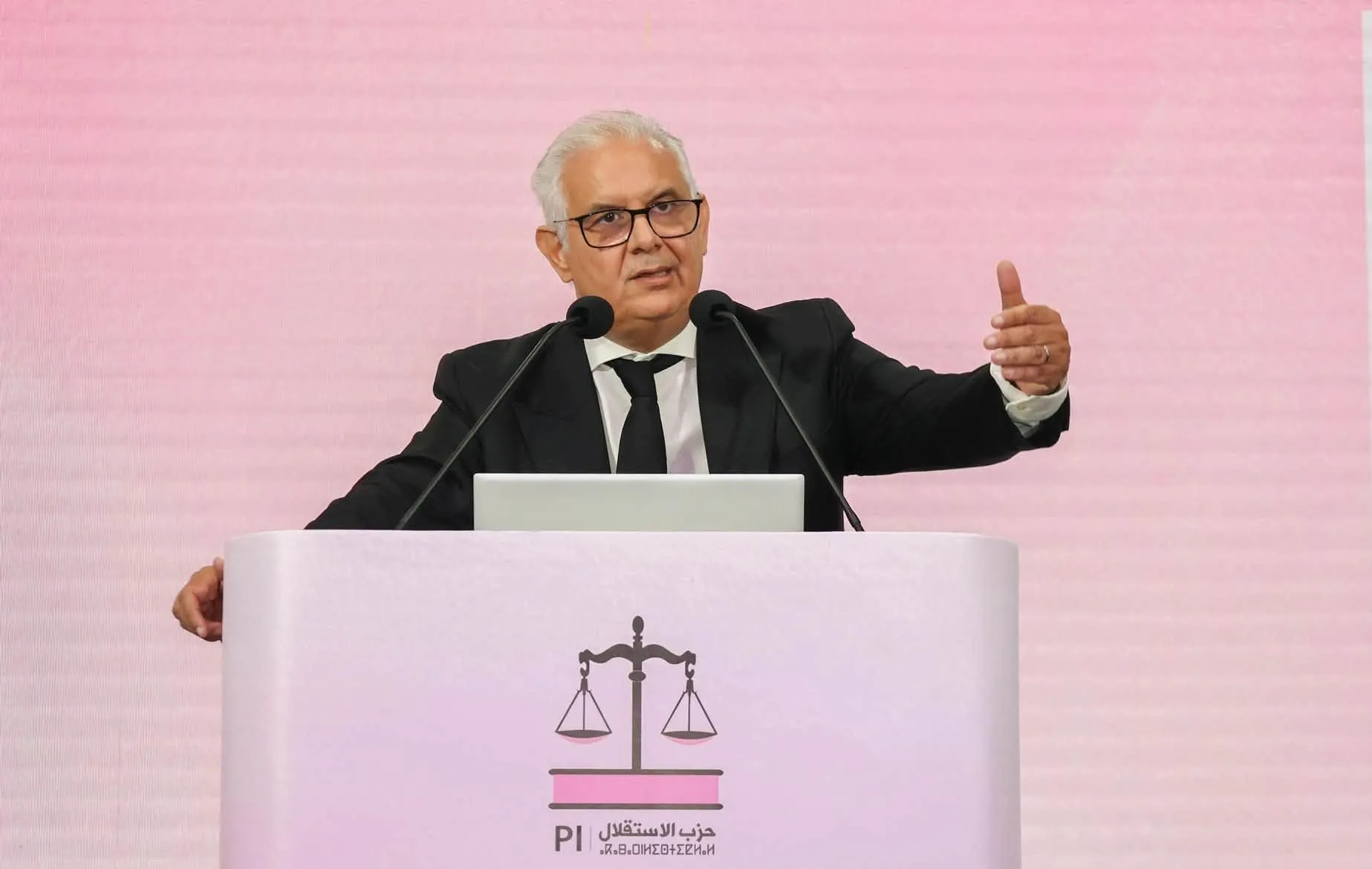

Nizar Baraka, the Secretary-General of the Independence Party and Minister of Equipment and Water, has reiterated Morocco's unwavering commitment to its territorial integrity, emphasizing that the Kingdom "will not concede an inch of its national territory." This statement adds a new political dimension to a series of recent Moroccan positions that have brought the issue of Ceuta and Melilla back to the forefront, coinciding with the escalating discussions in Spain regarding the future of these cities and the relations with Rabat.
During a meeting of the Independence Party in Rabat, Baraka described Spain as a "strategic partner" for Morocco; however, he clarified that such a partnership does not imply any retreat from the principles associated with national territory. He referenced the developments that followed the recent crisis in Ceuta and the tensions that ensued on the Spanish side.
Baraka's comments gain additional significance following a more explicit stance from Justice Minister Abdellatif Ouahbi, who affirmed on two occasions in August that Ceuta and Melilla are "Moroccan lands" and that the Kingdom possesses a "historical and geographical right" to them. He stressed that Rabat would continue to demand their return, asserting that dialogue with Madrid is the path chosen by Morocco to address this issue.
In between these positions, the remarks made by Minister of Awqaf and Islamic Affairs Ahmed Toufiq on August 24, before King Mohammed VI during the celebration of the Prophet's birthday, also referenced Ceuta as part of Morocco's scientific and political history, while highlighting the historical mobilization of Moroccans for the "liberation of occupied lands." Although this was not a direct royal statement, presenting it in the presence of the King added notable symbolic and political weight to his words, especially as the King is, according to the constitution, the head of state and its highest representative, playing essential roles in foreign relations and international treaties.
Consequently, the positions between Rabat and Madrid appear clearer than ever. Morocco views Ceuta and Melilla as integral parts of its territory, basing its claims on historical and geographical considerations, while Spain insists on its sovereignty over them, viewing them as Spanish cities. Historically, European control over Ceuta dates back to the Portuguese occupation in 1415, later succumbing to Spanish sovereignty, whereas Spain occupied Melilla in 1497. These historical facts serve as the foundation for Madrid’s assertion of the status quo that has existed for centuries, in contrast to Morocco’s claims which regard the two cities as a geographical and historical extension of Moroccan territory.
Amidst rising political pressures, governmental statements, demonstrations, and media discussions in Spain concerning Ceuta and the relationship with Morocco, Rabat has officially chosen not to engage in daily disputes over these positions. This silence reflects a stance that regards much of the ongoing debate in Spain as an internal political and media matter. Meanwhile, the Moroccan position has been clearly stated by various officials: there will be no compromise on the demand for the two cities, while maintaining political and diplomatic dialogue as the proposed means to resolve the disagreement.
As reported by assahifa.com.