
Morocco's Commitment to African Integration
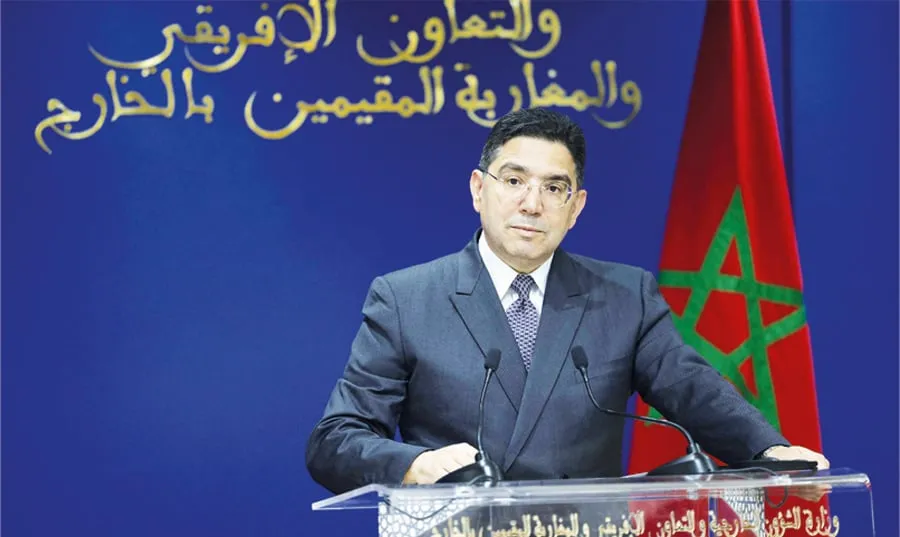
The Kingdom of Morocco has strategically positioned itself as a key player in Africa, emphasizing its African identity as a cornerstone of its foreign policy. This approach integrates political, economic, and security dimensions, while also highlighting the Western Sahara issue as the lens through which Morocco evaluates the authenticity of its partnerships and alliances. Recently, the celebration of 'Africa Day' by the Moroccan Ministry of Foreign Affairs served as a platform to reinforce the five foundational pillars of this African approach, which include a commitment to belonging, optimism, trust, a comprehensive foreign policy, and the exchange of experiences with other African nations. Nasser Bourita, Morocco's Minister of Foreign Affairs, asserted that Morocco is an inseparable part of Africa, emphasizing that the country’s constitution enshrines its African component as a fundamental aspect of Moroccan identity.
Bourita further articulated that Morocco perceives Africa not simply as a neighboring region or a temporary strategic option, but as an integral part of its identity. This sentiment echoes the words of King Mohammed VI, who, during the 28th African Union summit in Addis Ababa in 2017, declared, 'Africa is my continent and my homeland.' Since Morocco's official return to the African Union, the nation has shifted its focus from a defensive diplomatic posture to one centered on building influence through economic, security, religious, and developmental cooperation.
Strategic Initiatives and Collaborative Efforts
Morocco's vision towards Africa encompasses a comprehensive policy that spans diplomatic, economic, military, and humanitarian fields. Official sources indicate that Morocco has signed approximately 1,800 bilateral agreements with various African countries. This commitment to shared development and experience exchange is evident, as more than 1,200 African professionals participate annually in capacity-building programs through over 100 training courses offered by Morocco. The Moroccan strategy fundamentally posits that the Western Sahara issue cannot solely be managed within the confines of the United Nations; rather, it must also involve expanding alliances within Africa, creating mutual economic interests, and linking regional security to Morocco's territorial integrity.
Additionally, Morocco has co-hosted the 'First African Conference on Human Development' in conjunction with the United Nations Development Programme, striving to promote balanced and harmonious global human development through South-South cooperation and fulfilling commitments made at various international forums, particularly those related to Millennium Development Goals. In this context, Morocco has launched several regional initiatives to support African development and stability, including the 'Dakhla Atlantic Port Initiative' and the 'Gas Pipeline Project' connecting Nigeria and Morocco, which encompasses thirteen African nations along the Atlantic coast. Morocco has emerged as a leading exporter of automobiles in Africa and the continent's primary phosphate exporter, with the Tangier-Med Port serving as the main container port.
Recent reports from reputable institutions, such as the African Development Bank, indicate that Morocco has ascended to the status of 'Africa's top industrial economy,' surpassing South Africa. This achievement is attributed to sustainable industrial value growth, export diversification, and the adoption of a robust and effective industrial policy. In terms of education and training, Morocco has become a training hub for African youth, with over 60,000 African students currently pursuing higher education in the country through cooperation programs. Furthermore, Morocco has allocated 5,500 scholarships for African nations for the 2025-2026 academic year.
On the security front, Morocco participates in peacekeeping operations, reaffirming its commitment to the territorial integrity of African nations and the stability of the continent. The Moroccan perspective holds that stability in Africa is a fundamental pillar for development and must be built on partnership, cooperation, and trust. Additionally, the stability of the continent relies on combating separatist movements, terrorism, and organized crime networks.
International relations and conflict management scholars note that Morocco's involvement in UN peacekeeping efforts enhances its influence while safeguarding vital interests amid regional and international instability. They assert that Morocco has successfully positioned itself as a bridge between hard security and developmental stability. As part of the annual 'International Day of Peacekeeping' celebrated on May 29, researchers have indicated that Morocco's peacekeeping efforts reflect a gradual transition from 'participation' diplomacy to 'institutional engineering' diplomacy, with the Kingdom not only seeking a presence within the UN system but also aiming to contribute to shaping its priorities, particularly regarding African issues.
Under the leadership of Nasser Bourita, Morocco's foreign minister, the country is actively pursuing this direction through intensive engagements in Sub-Saharan Africa, whether through bilateral visits, hosting African ministers in Rabat, or promoting South-South cooperation projects. These efforts yield economic agreements and collaborations in banking, agriculture, energy, and security. Consequently, observers suggest that African economic diplomacy has proven more effective than traditional political discourse, yielding significant diplomatic gains, such as the increasing number of African nations opening consulates in Laayoune and Dakhla in Western Sahara, and the expanding support for Morocco's autonomy plan, which approximately two-thirds of African countries endorse, as recognized in United Nations Security Council Resolution 2797.
As reported by alquds.co.uk.