
Morocco's Political Turmoil and Public Discontent
The recent events surrounding Morocco's monarchy, particularly the throne day on July 30, have cast a shadow over King Mohammed VI's reign. During this ceremony, the royal entourage sped down a deserted highway from the king's coastal retreat in Mdiq to an event where elite members paid homage to him. In stark contrast, thousands of impoverished Moroccans flocked to Ceuta, a nearby Spanish enclave, after social media buzzed with news that the escape routes to Europe were wide open. More than 70,000 individuals, primarily Moroccans not partaking in the annual loyalty oath to their monarch, undertook perilous journeys on foot, by road, train, and boat, with around 100 tragically losing their lives in the process. This phenomenon highlights the growing disillusionment among the populace, where many have lost faith in the future under the current regime.
On paper, Morocco showcases itself as a unique model of Arab stability and modernization, boasting a burgeoning automotive industry, an expanding high-speed rail network, and the largest port in the Mediterranean. It attracts foreign investment, fosters close ties with Europe and America, and has developed a growing arms industry through its connections with Israel. The Moroccan monarchy has endured for four centuries, and a significant portion of the population still perceives the king, who holds the title of Commander of the Faithful, as possessing sacred authority. However, after 27 years of Mohammed VI's reign, many of the 36 million subjects are increasingly skeptical about their future.
Leadership Crisis and the Emergence of Conspiracy Theories
The king's investments in ostentatious projects, such as football stadiums for the 2030 World Cup, stand in stark contrast to the neglect of fundamental services like hospitals and schools. Recent global surveys have placed Morocco near the bottom regarding the education of 15-year-olds, while nearly one-third of Moroccan youths face unemployment. In response to mounting dissatisfaction, the king's security forces have resorted to repression, silencing a previously critical press, and jailing dissenters on dubious charges. Political parties, once promising change, have become so weakened that few citizens could articulate the significance of the parliamentary elections on September 23. The real decision-makers remain absent from the ballots, prompting many Moroccans to express their discontent through emigration.
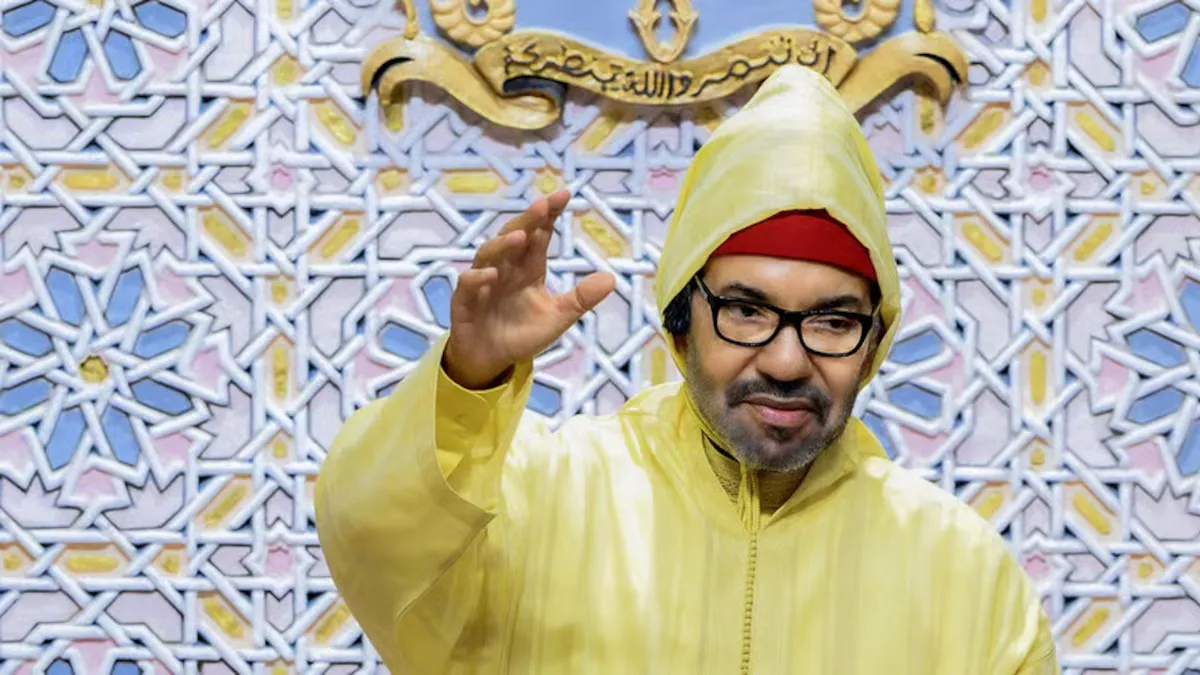
King Mohammed has become part of the problem. Known for his reclusive nature, he fled years ago with a boxing friend, Aboubakr Abu Azaitar, to escape the old court in the capital. Although only 63, he is reportedly in poor health, described by recent acquaintances as a visibly sick monarch with blue hands, deformed fingers, and swollen eyes hidden behind sunglasses. His rare public appearances and speeches indicate a man struggling to maintain his position as crises multiply, from the northern uprising in 2016 to the devastating earthquake in 2023, which left countless citizens homeless, and the recent exodus to Ceuta. In the aftermath, no high-ranking official offered condolences or explanations, further deepening the sense of power vacuum.
In this environment, conspiracy theories have flourished. Some suggest that security forces were diverted from their border duties to attend the lavish throne day ceremonies. Others posit that Donald Trump and Benjamin Netanyahu are using Morocco as leverage against Spain for opposing their wars in Iran and Gaza. The more far-fetched theories even claim that Moroccan nationalists, emboldened by U.S. and Israeli support, are preparing to confront Spain over its enclaves in the north. Analysts speculate whether Morocco is leveraging migration to pressure the EU into increasing its subsidies. However, the most credible theory among insiders indicates that the king's security chiefs are retaliating against Spain for sheltering an informant who possesses sensitive state secrets.
While these claims are challenging to verify, reports suggest that a mole within Morocco's internal intelligence agency, the DGST, fled with a list of suspects tracked down using Israeli spying software. From an operations room known as Office 21, allegedly involving Israeli agents, they hacked phones and CCTV cameras, surveilling prominent figures in both Morocco and Europe, with whispers that the king himself was a target. After fleeing to Tunisia and then France, the informant—code-named Safir, or diplomat—ultimately sought refuge in Spain, which offered him protection.
Moroccan officials feel betrayed by Spain's assistance to Safir. Nevertheless, the trend of defection to Europe has surged as the king's power wanes due to illness, and Moroccan security agencies compete for influence in the context of succession. The most significant rift appears between the old guard, led by Fouad Ali el-Himma, the king's childhood friend and main advisor, and the king's designated heir, Hassan, along with his mother, Salma. Following the king's divorce from Salma in 2018, el-Himma, at the king's behest, kept her under a form of house arrest. As tensions mount over the impending succession, fears grow that Salma, once Hassan ascends to the throne as queen mother, may seek retribution against el-Himma.
As reported by infobae.com.