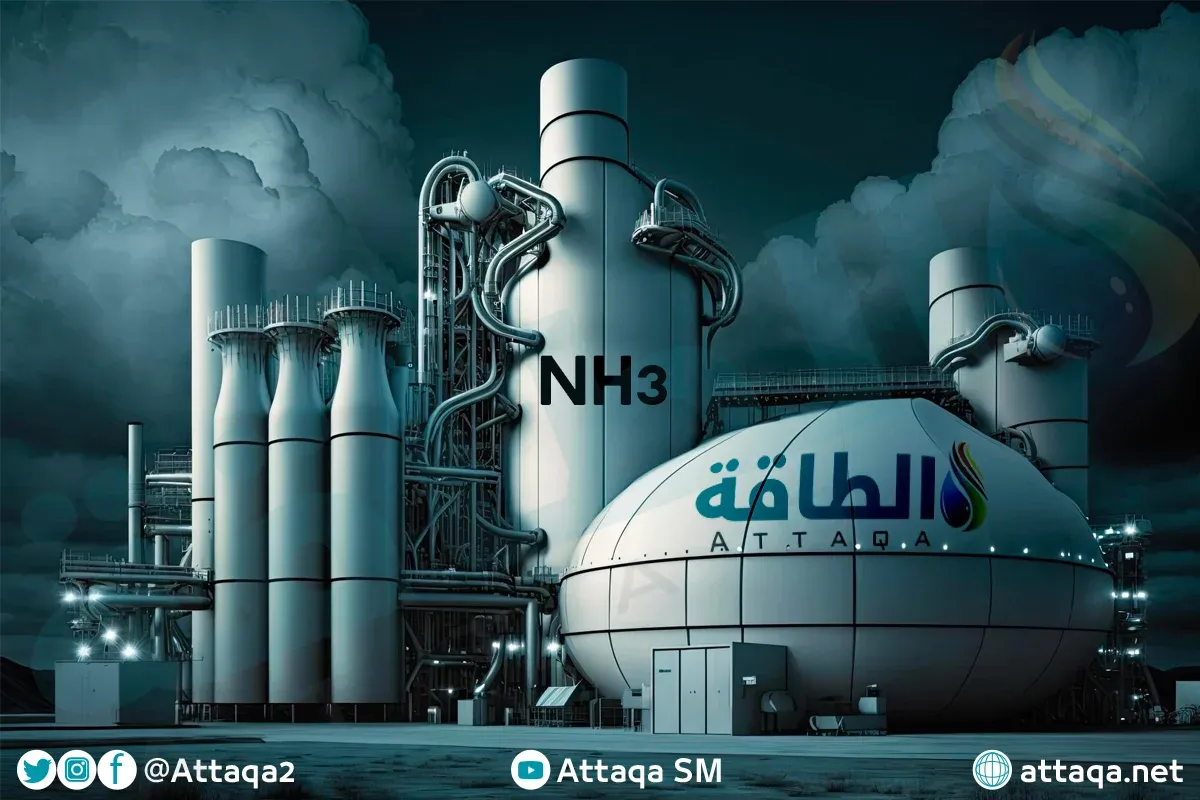
The production of green ammonia in Morocco is advancing into a new phase of development, following the receipt of direct U.S. funding for preliminary studies on one of the most significant projects planned in the city of Laayoune. This funding is a strategic move that bolsters the Kingdom's ambition to become a global hub for green hydrogen and its derivatives.
The U.S. Trade and Development Agency has signed a grant agreement amounting to $5.7 million with the American company Ornx, aimed at funding the engineering studies for the initial phases of the project, which is expected to produce 560,000 tons annually, as reported by the specialized energy platform based in Washington.
This initiative underscores the importance of green ammonia production in Morocco as part of a government strategy that seeks to harness wind and solar energy resources while attracting significant foreign investments. The Moroccan government has allocated approximately one million hectares for projects related to green hydrogen and its derivatives.
Project Details and Development Plan
In February, the Moroccan government signed an agreement with a consortium comprising Ornx and Urtos, alongside Spanish company Acciona and German firm Nordex, to reserve a land area for the implementation of the project in Laayoune, reflecting efforts to advance green ammonia production in the country.
The initial studies are set to commence this year, led by the American firm KBR, with participation from General Electric Vernova, Electric Hydrogen, and Terabase to assess the engineering, economic, environmental, and financial aspects of the project, as highlighted by the energy platform.
The total expected investment for this massive project is around $4.5 billion, with the first phase focusing on the establishment of a fully integrated industrial facility for green ammonia production. A financial model extending over 25 years will also be developed, including options for borrowing and investment.
Peter Geis, CEO of Ornx, stated that the grant represents a pivotal milestone to accelerate the project, emphasizing that the outcomes of the studies will lead to the final engineering design phase, paving the way for a final investment decision in the near future, as reported by Bloomberg.
The project relies on an integrated renewable energy system comprising more than 2 gigawatts of wind and solar energy, alongside electricity storage systems and 900 megawatts of electrolyzer units for hydrogen production. Additionally, a seawater desalination plant will support the green ammonia production efforts in Morocco.
Geis confirmed that the company will continue its collaboration with the U.S. Trade and Development Agency and the U.S. embassy in Rabat, along with other partners, to further develop the project and secure the necessary funding, ensuring its progression to commercial execution as planned.
Green Ammonia Production Projects in Morocco
In 2025, the Jorf platform emerged as one of the key strategic initiatives for green ammonia production in Morocco, being developed by the OCP Group in partnership with Hydrogel. This project aims to support the clean fertilizer industry and reduce emissions.
Recently, in February 2025, the project received a non-repayable grant of €30 million (approximately $31.31 million) from the German Green Hydrogen Mechanism, PTX, to support its implementation and accelerate its development and operational stages, as noted by the energy platform.
The platform aims to produce 100,000 tons of green ammonia annually by the end of 2026, leveraging electricity generated from wind and solar energy, thereby enhancing green ammonia production in Morocco and reducing emissions associated with traditional fertilizer manufacturing.
The project will be located within the existing fertilizer production site operated by OCP at the Jorf Lasfar port, benefiting from modern renewable energy infrastructure. Hydrogel will own the factory and will be the first buyer of ammonia for use in nitrogen fertilizer manufacturing.
Although the initial plan targeted an annual production of 200,000 tons when announced in 2023, the project is expected to contribute to a reduction of approximately 300,000 tons of CO2 emissions annually while providing specialized jobs and fostering innovation in green ammonia production in Morocco.
As reported by attaqa.net.