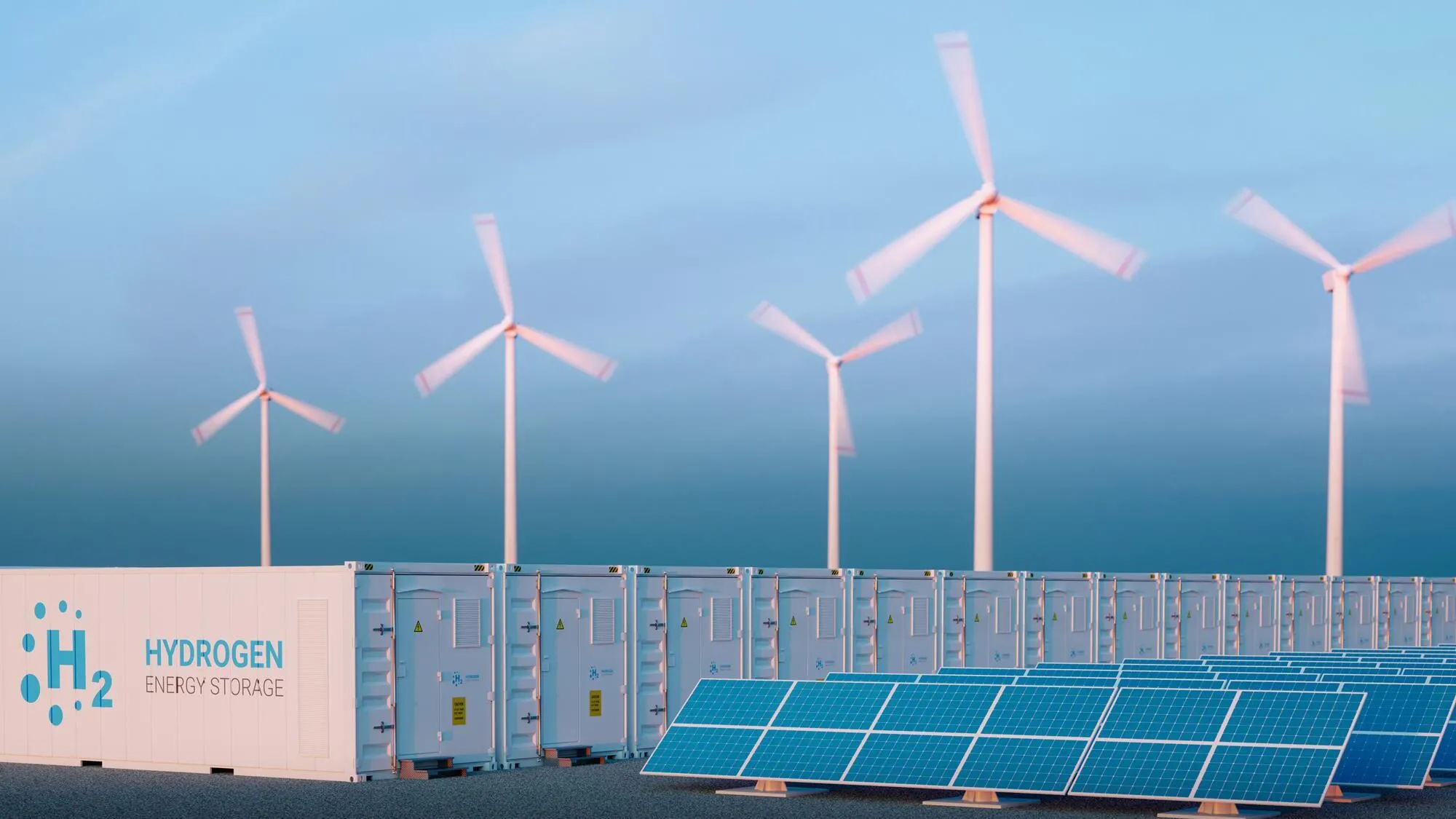

Transitioning to Green Hydrogen: Morocco's Strategic Initiatives
Morocco is poised to take a significant leap in its ecological transition by gradually integrating green hydrogen as a major lever for decarbonization within its industry. According to a joint report by the United Nations Industrial Development Organization, the Green Climate Fund, and the Ministry of Energy Transition and Sustainable Development, the Kingdom already possesses a comprehensive array of financial tools structured at three distinct levels: local, regional, and international, as highlighted by the daily newspaper L’Economiste.
At the national level, concrete mechanisms are in place to support the environmental initiatives of businesses. For instance, the Green Invest program by Tamwilcom offers guarantees that cover up to 40% of the costs of green projects, with a cap of 10 million dirhams per operation. Additionally, the Damane Istitmar program has been expanded to stimulate sustainable industrial investments, providing guarantees that can reach up to 20 million dirhams per project.
Financial Framework and International Partnerships Enhancing Decarbonization
The Moroccan market also benefits from a particularly dynamic green bond sector, governed by the guidelines of the Moroccan Capital Market Authority and supported by the International Finance Corporation. Local banks, along with their leasing subsidiaries, offer a diverse range of green loans developed in partnership with major international funders such as the European Bank for Reconstruction and Development, the European Investment Bank, the French Development Agency, and Germany's KfW. Additionally, key players like Masen, AMEE, Iresen, and ONEE actively contribute to the deployment of green investments.
On both regional and international fronts, the European Union stands out as a primary strategic partner. Under the green partnership established in 2022, several programs are designed to support Morocco's industrial decarbonization, including the National Initiative for Decarbonization and Green Industrialization and the European Fund for Sustainable Development Plus. These instruments aim to mitigate risks associated with private and public investments while enhancing the ecological competitiveness of small and medium-sized enterprises. Moreover, the Gulf Cooperation Council countries, particularly the United Arab Emirates and Saudi Arabia, are providing substantial sovereign funding for Morocco's green infrastructure, leveraging historical diplomatic and trade relations.
The financial support extends to global multilateral mechanisms, such as the Global Environment Facility, the Mitigation Action Mechanism, and the International Climate Initiative. Morocco is benefiting from Climate Investment Funds, notably the Clean Technology Fund and the Industrial Decarbonization Program, while also relying on financial assistance from the World Bank and the African Development Bank. Ultimately, additional resources will be mobilized through Article 6.2 of the Paris Agreement. The Kingdom has already concluded bilateral agreements with Switzerland, Norway, Singapore, and South Korea to accelerate the energy transition of its industrial fabric through renewable energies.
All these mechanisms converge towards a central objective: enabling the national industry to adopt green hydrogen to significantly reduce its carbon footprint, with financial needs estimated at $2 billion, or approximately 20 billion dirhams, by 2030. However, realizing this ambition necessitates the completion of several regulatory reforms currently underway, as noted by L’Economiste.
Three industrial sectors appear to be the most exposed to decarbonization requirements and are best positioned to seize these financial opportunities: fertilizers, steel, and cement. In the fertilizers sector, the OCP Group is emerging as a global pioneer, planning to source 100% green ammonia by 2030-2040. This commitment creates a solid and predictable domestic demand in the short term, significantly reducing the offloading risks for developers and attracting the attention of institutional investors.
In the cement industry, although hydrogen cannot fully replace the thermal energy of kilns, it offers a credible alternative to the most polluting fossil fuels, such as petroleum coke and coal, complementing existing thermal substitution efforts.
As reported by fr.le360.ma.