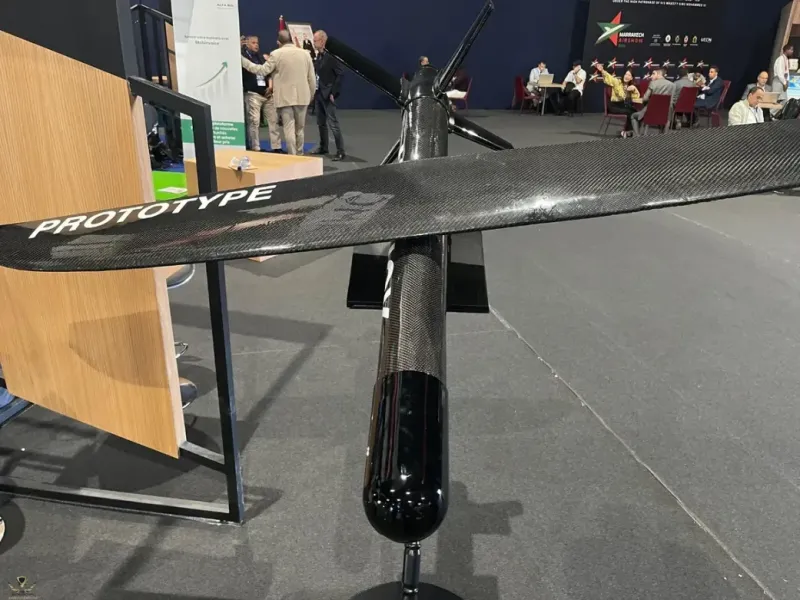

In a significant development for the Moroccan defense sector, the nation has awarded its first domestic contract for loitering munitions, with Aerodrive Engineering Services based in the Rabat area securing an order to supply 500 such weapons to the Royal Moroccan Armed Forces (FAR). This milestone, as reported by Unmanned Africa, signals Morocco's commitment to establishing a genuine domestic kamikaze drone industry, moving away from mere technology imports. This contract is part of a broader diversification strategy in the defense sector that Morocco has been pursuing with consistent determination since the early 2020s.
Understanding the Aerodrive Contract
While specific details regarding the Aerodrive agreement remain somewhat limited, regional defense analyses indicate that the anticipated production site will be located in Benslimane, an industrial center situated approximately 50 kilometers east of Rabat. This facility is projected to commence operations around 2027. Loitering munitions, often referred to as kamikaze or suicide drones, are unmanned aerial vehicles equipped with explosive payloads that hover over designated target areas. An operator identifies a target and directs the drone to strike, effectively merging reconnaissance capabilities with precision strike functions in a singular, cost-effective platform. These drones offer a strategic advantage, particularly for smaller or budget-restricted military forces, allowing them to engage specific targets without incurring the high costs associated with precision-guided missiles or the inaccuracy of conventional artillery. This trend has become increasingly pertinent in light of recent conflicts, including the ongoing war in Ukraine and tensions in the Middle East involving nations like Iran, Israel, and the United States.
Some reports suggest a connection between Aerodrive and Israeli technology, although the exact nature of this relationship—whether it be a formal partnership, a licensing agreement, or something less defined—has yet to be confirmed. Nevertheless, it is clear that Aerodrive's success does not exist in isolation. Its contract comes amid an established Moroccan loitering munition program that incorporates Israeli technology, raising intriguing questions about whether Aerodrive is a distinct competing initiative or affiliated with the existing program underway at the same industrial site.
A Broader Context of Military Modernization
The emergence of Aerodrive Engineering Services comes at a time when Morocco is actively diversifying its defense capabilities. In November 2025, reports indicated that BlueBird Aero Systems, a subsidiary of Israel Aerospace Industries, had hosted Moroccan engineers for specialized training on manufacturing the SpyX loitering munition. This indicates a strategic move towards establishing a dedicated manufacturing facility in the same Benslimane hub that Aerodrive is targeting. Morocco's defense upgrades are not limited to loitering munitions; the kingdom has also made significant investments in acquiring various unmanned systems. Since 2021, Morocco has procured the Bayraktar TB2 from Turkey and is set to host a manufacturing plant for Turkish drones, establishing itself as a key player in the regional drone production and distribution landscape. Additionally, Morocco has engaged with Tata Advanced Systems of India for armored platform production and adopted counter-drone technologies from Ukraine and Israel.
This comprehensive approach to defense procurement illustrates Morocco's ambition for military modernization, with a reported defense budget nearing 15.7 billion USD for 2026 as part of a five-year investment strategy valued at approximately 20 billion USD. The introduction of loitering munitions plays a crucial role in this strategy, particularly in light of ongoing border security challenges and asymmetric threats linked to the protracted Western Sahara conflict. A cost-efficient, precise strike weapon such as loitering munitions proves far more effective than traditional fighter jet sorties or larger strategic drones, especially considering the extensive air defense capabilities being developed by Morocco's regional rival, Algeria.
Establishing a domestic production capability for loitering munitions represents a pivotal shift for Morocco. Rather than relying solely on foreign suppliers, local manufacturing allows the kingdom to circumvent potential export licensing issues and political complexities associated with international arms procurement. Moreover, it lays the groundwork for Morocco to eventually export its technology, following the path taken by Turkey with its Bayraktar TB2 drones. Morocco's strategy, marked by simultaneous partnerships with multiple international suppliers, underscores the importance of building a robust loitering munition capability at home, independent of any single company or foreign country.
As reported by military.africa.