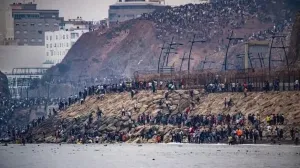

Moroccan journalists have sounded the alarm on the profound political and social crisis plaguing their country, exacerbated by rampant poverty and unemployment coupled with severe structural imbalances. The dire circumstances have driven tens of thousands of citizens to undertake a mass exodus from Morocco, an event that was deemed by many as the "largest public referendum on the degree of despair and frustration" felt by the populace. In light of these developments, prominent journalist Tawfiq Bouachrine expressed grave concerns regarding the future of the kingdom, stating that the situation is indicative of a significant political and social crisis with both regional and international ramifications. He highlighted that, within a mere two weeks, the Spanish city of Ceuta witnessed one of the largest waves of mass crossings in its history, with over 70,000 young Moroccans fleeing to a city whose population barely exceeds 80,000.
The plight of these migrants is particularly tragic; despite facing homelessness and hunger in Ceuta, many prefer to remain there rather than return to their home country. This stark choice underscores the depth of despair experienced by youth, who have, for many, come to view escape as their only viable option. Similarly, journalist and university professor Khalid Bakari shed light on the alarming increase in poverty and unemployment rates, juxtaposed against the growing wealth of the affluent, particularly those benefiting from rent-seeking and monopolistic economies. Bakari dismissed attempts by the Moroccan authorities to attribute the mass exodus to foreign interference, asserting that the real culprits are deeply rooted structural issues in the state's management.
Bakari concluded that the ongoing protests and confrontations driven by issues such as water scarcity, healthcare, education, and housing reflect clear public dissent, while attempts at irregular migration—despite the peril they entail—are symptomatic of a profound hopelessness. In a similar vein, journalist Ali Anozla highlighted that one of the most alarming revelations from the events in Ceuta is the contempt the authorities hold for their citizens. Anozla criticized the government's exploitation of citizens' suffering, pointing to the stark contrast between the silence of decision-makers during crises and the vacation of the Prime Minister on a private jet to Mallorca, all while witnessing impoverished citizens desperately seeking to escape.
After four days of shameful silence from those in power, a government spokesperson—lacking any genuine connection with the populace—read a dry security statement on national television, completely ignoring the root causes of the despair driving the youth towards hopelessness and disenchantment. To further compound this disregard, the communication effort devolved from a government employee to an anonymous 'official source,' as noted by Anozla. He concluded that the mass flight at the end of last month represented the largest public referendum, wherein over 70,000 Moroccans expressed their desire to abandon their homeland, leaving everything behind due to the overwhelming despair and frustration they face.
As reported by el-massa.com.