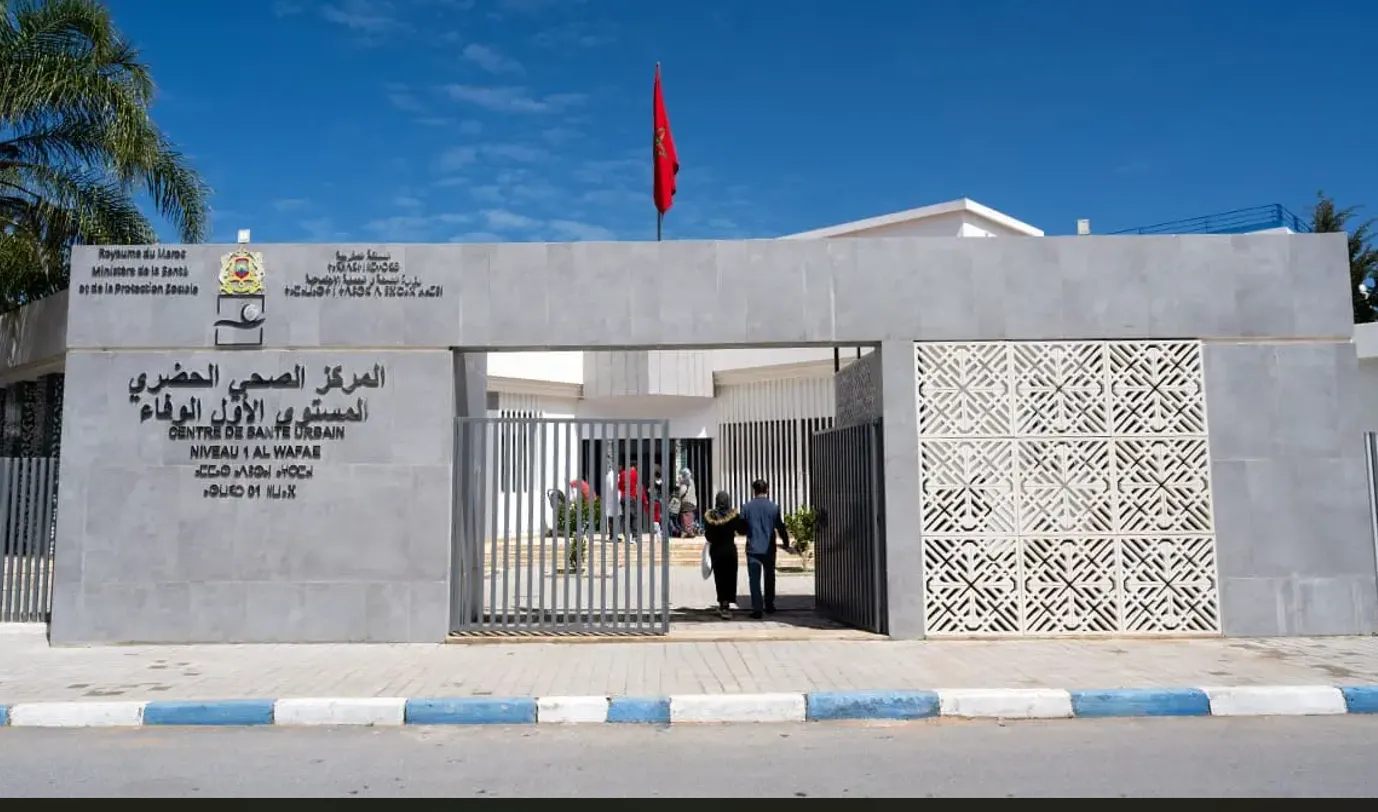

Morocco has recently inaugurated fifteen primary healthcare centers across six regions, marking a significant step forward in the nation's healthcare reform. While the establishment of these centers is undoubtedly a positive development, it simultaneously highlights a critical challenge that remains at the heart of healthcare reform: the recruitment and retention of qualified medical personnel.
The new healthcare facilities were opened on September 8 in regions including Casablanca-Settat, Guelmim-Oued Noun, Béni Mellal-Khénifra, the Oriental region, Tanger-Tétouan-Al Hoceïma, and Marrakech-Safi. These centers, which have been refurbished and equipped with modern amenities, are designed to serve a population of over 375,000 residents. However, despite the impressive statistics on paper, the reality on the ground reveals a more nuanced and serious challenge for the Moroccan healthcare system, which has long struggled with a lack of infrastructure, medical equipment, and hospital beds. While progress is being made in constructing physical facilities, the persistent issue remains: how to ensure a sufficient and continuous supply of doctors, nurses, midwives, technicians, and specialists who can translate these new buildings into effective healthcare services.
Each healthcare center may boast a modern facade, air conditioning, and state-of-the-art equipment, but if patients face long wait times or must travel great distances to see a specialist, the initial opening of these facilities will feel like a hollow success. The real mission of providing timely and accessible healthcare remains a work in progress.
Staffing Challenges Amid Expansion
The numbers behind this expansion are worth examining closely. To cater to a potential population of 375,677, the Ministry of Health has mobilized just 50 healthcare professionals. These individuals are responsible for a range of services including general consultations, nursing care, diabetes management, hypertension monitoring, respiratory health, maternal and child healthcare, school health initiatives, epidemiological surveillance, and mobile health services. It is unrealistic to expect that fifty professionals can adequately serve 375,000 Moroccans; these centers are part of a larger healthcare network, and the population served is not constantly in line. However, the stark contrast between the number of healthcare professionals and the population they serve underscores the enormity of the task at hand. Opening a healthcare facility is a noteworthy achievement, but maintaining its operations effectively is a daily challenge.
Healthcare centers require consistent staffing to replace absent practitioners, routine maintenance of medical equipment, replenishment of supplies, management of patient appointments, and triaging of patients to prevent simple consultations from turning into lengthy journeys through the healthcare system that lead from local clinics to provincial, regional, and ultimately university hospitals. Morocco is all too familiar with this complicated geography: as the demand for specialized care increases, so too does the distance patients must travel.
Addressing Human Resource Shortages
The challenge of healthcare reform now extends beyond the mere construction of facilities. Territorial health groups must reorganize healthcare offerings at the regional level, integrating planning, budgeting, human resources, and actual health needs. The goal is clear: to move away from a system where healthcare facilities and personnel have operated independently and without coordination for too long. The key to success lies in addressing the human resource issue, which is far more complex than simply building new clinics. Training a specialist cannot be accomplished through a simple procurement process, and no midwife emerges from construction work equipped with the necessary skills to provide care.
The Moroccan Minister of Health, Amine Tehraoui, has acknowledged the long-standing absence of proactive planning for human resources and specializations, which has led to structural imbalances in the healthcare system. Although the number of trained specialists is projected to increase by 83% between 2020 and 2025, with 1,204 specialists assigned to various regions, significant shortages persist, particularly in emergency medicine, intensive care, epidemiology, mental health, and maternal and child health. Morocco is certainly increasing its training efforts, but it must also focus on aligning training with actual needs, improving distribution of personnel, and retaining qualified staff.
In conclusion, while the opening of fifteen new healthcare centers is a welcome development in Morocco's healthcare landscape, the real challenge lies in ensuring these facilities are well-staffed and operational in the long term. As the country continues to invest in healthcare infrastructure, it must also prioritize the recruitment, training, and retention of healthcare professionals to ensure that these advancements translate into accessible and effective care for all Moroccans. Ultimately, the cutting of the ribbon at a new clinic is merely the first step in a much larger journey towards achieving sustainable and equitable healthcare for the nation.
As reported by libe.ma.