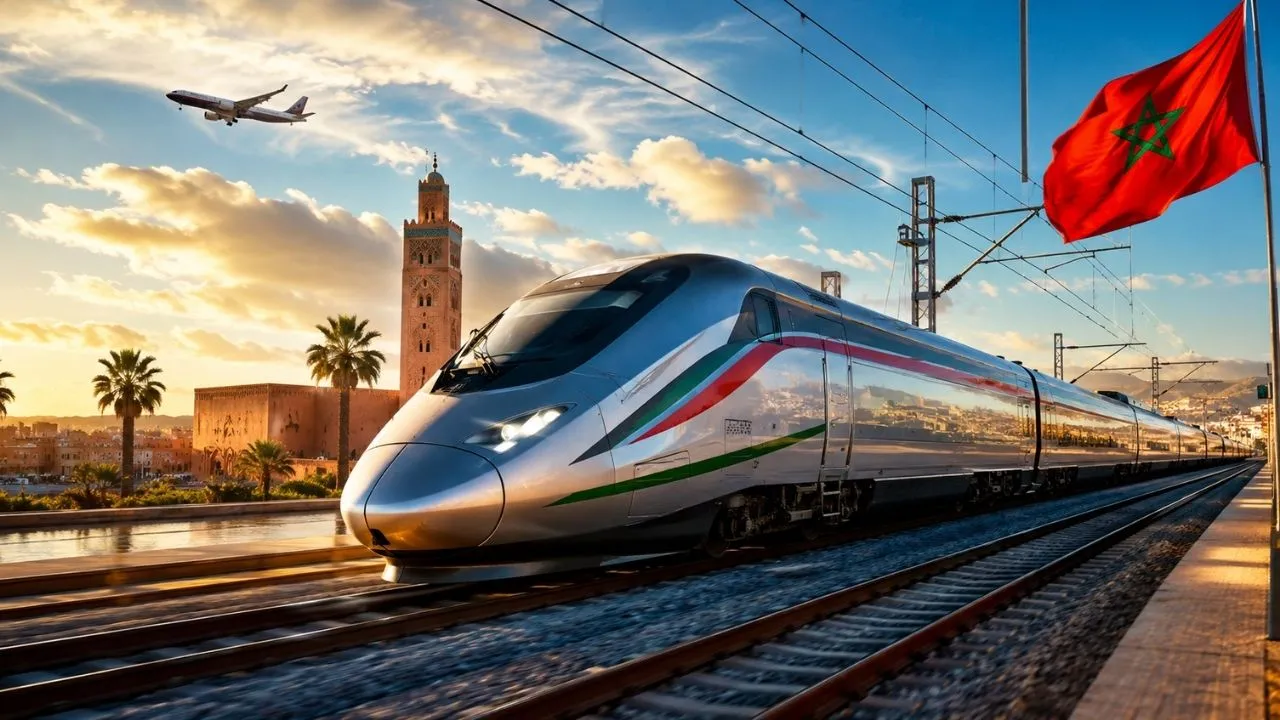

Transforming Travel in Morocco with High-Speed Rail
Morocco is embarking on an ambitious plan to construct a high-speed train line spanning 430 kilometers between Kenitra and Marrakech, with stops in the bustling cities of Rabat and Casablanca. This project, approved by King Mohammed VI on April 24, 2025, aims to reduce travel time significantly, cutting the journey between Marrakech and Tangier down to just 2 hours and 40 minutes. Furthermore, the connection from Rabat to Casablanca's main airport will be streamlined, allowing passengers to make the trip in only 35 minutes. This initiative is part of a broader investment plan that includes the acquisition of 168 new trains and the expansion of rail services to more cities across the country.
A Comprehensive Investment in Rail Infrastructure
According to a report by Reuters' Ahmed Eljechtimi, the total investment for this extensive railway program is estimated at 96 billion dirhams, approximately $10.3 billion. This funding will not only facilitate high-speed travel but will also enhance intercity train services, urban transport systems, and other critical infrastructure aimed at bolstering Morocco's railway industry. The Moroccan government envisions this high-speed train as a pivotal component of a comprehensive modernization strategy that encompasses fleet renewal and an increase in the number of cities served by the rail network. This expansion is particularly timely as Morocco gears up to host the 2030 World Cup alongside Spain and Portugal, necessitating improvements in transportation infrastructure to accommodate the expected influx of visitors.
The new high-speed line will commence in Kenitra, a city already integrated into Morocco's high-speed network, and will extend southward to Marrakech, passing through Rabat and Casablanca. These urban areas are essential for tourism, business, and international travel, and their connectivity will be greatly enhanced by this new railway. The project aims to make train travel a more viable option against road transport, especially as the high-speed line reduces travel times between major cities, thereby making the entire region more accessible.
As reported by clickpetroleoegas.com.br.