
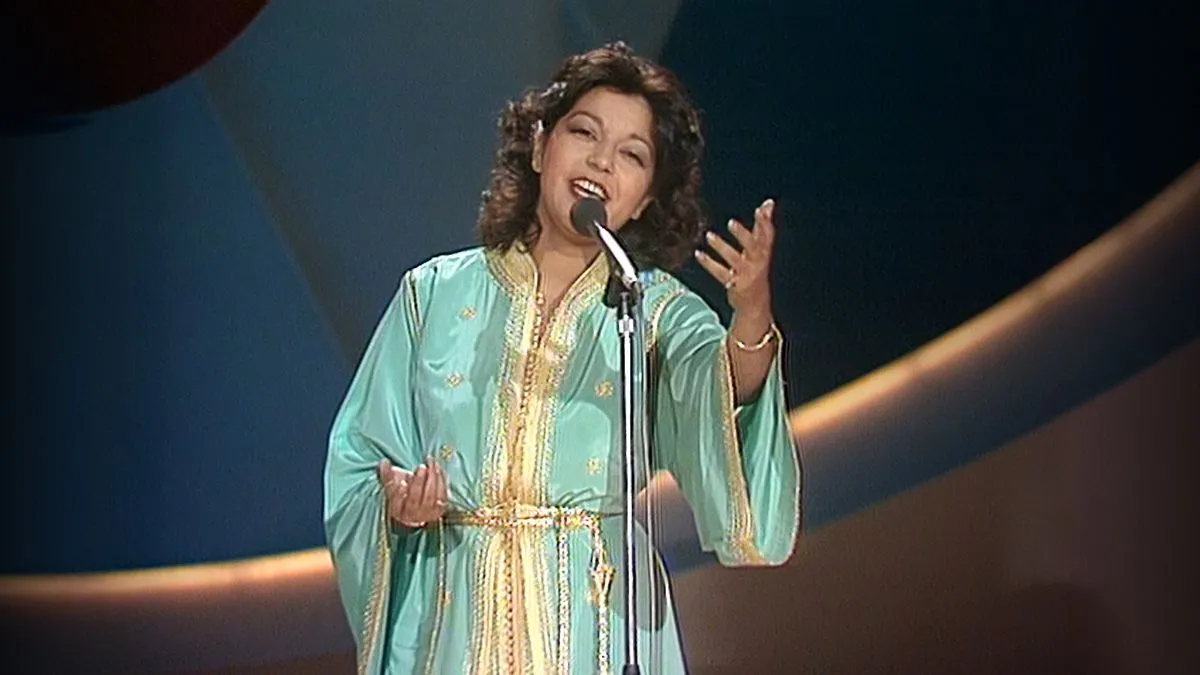

Morocco Makes Its Mark at Eurovision 1980
The Eurovision Song Contest celebrated its 25th anniversary in 1980, marking a significant milestone with the debut of Morocco, a country that has since left an indelible mark on the competition's history. Represented by the talented Samira Bensaïd, Morocco's entry, _Bitakat Hob_ (translated as 'Love Card'), not only showcased the nation's musical prowess but also made history as the first and only song performed entirely in Arabic within the Eurovision framework. Composed by Abdel Ati Amenna and featuring lyrics by Malou Rouanne, the song carries a poignant message of love and unity, aspiring for a world devoid of discrimination and hatred.
In the heartfelt lyrics, Samira expresses a desire for a peaceful coexistence among all people, echoing sentiments of brotherhood and harmony. Prior to the 1980 contest, the Moroccan broadcaster Radiodiffusion et de Télévision (RTM) submitted the English translation of the lyrics to the European Broadcasting Union (EBU), which beautifully encapsulated the song’s essence and its call for warmth and understanding in a divided world.
A Memorable Performance in The Hague
Samira Bensaïd's performance took place in The Hague, Netherlands, on April 19, 1980, where she was one of 19 performers representing their nations in this grand celebration of music. The event was notable for its innovative approach to the traditional 'postcards' that introduced each act; instead of video clips, the audience enjoyed actual photographs showcasing the performers in various picturesque locations across the Netherlands. Samira's introduction featured her at the scenic Scheveningen Harbour, narrated by Mohammed Bouzidi, adding a personal touch to her presentation.
During the voting process, which adhered to the familiar points system, _Bitakat Hob_ received a warm reception from the Italian jury, who awarded the song 7 points, marking the only points Morocco received that night. Interestingly, the Moroccan jury notably refrained from awarding any points to Ireland's eventual winner, Johnny Logan's _What's Another Year_, while also aligning with the jury decisions for both Germany and the United Kingdom, giving them 10 and 8 points, respectively. Despite finishing in 18th place, just ahead of Finland, the legacy of _Bitakat Hob_ extended beyond the contest, inspiring covers in French and Greek, and solidifying its place in the annals of Eurovision history.
Samira Bensaïd, who has since become a celebrated figure in the Arabic music scene, continues to honor her Eurovision roots, having performed _Bitakat Hob_ at various events, including a children's choir performance at the 2024 Mawazin festival. Although Morocco has not returned to the Eurovision Song Contest since that initial entry, the nation's broadcaster, now known as SNRT (Société Nationale de Radiodiffusion et de Télévision), remains a member of the EBU, keeping the door open for future participation.
As reported by eurovision.com.
